There is a story, repeated by later Jewish writers, that the Jews of Iberia helped open the gates. That they welcomed the invaders, kept the keys of captured towns, garrisoned cities while the Arab-Berber army pressed northward. Whether the detail is literal truth or grateful legend, it tells you everything about the state of Jewish life under the Visigoths. A community does not help change a regime - or celebrate the change so warmly that the legend takes root - unless the old order was genuinely intolerable. By 711, it was. The Visigothic councils of Toledo had spent more than a century trying to erase Jewish practice from the peninsula by legislation, by forced baptism, and, in the reign of Egica in the 690s, by a plan to enslave the entire Jewish population as punishment for an alleged conspiracy. The Muslims who crossed from North Africa were not liberators in any ideological sense - they had their own concerns, their own ambitions, their own hierarchies - but they brought with them a legal framework that made room for Jews. After what the Visigoths had done, that was enough.
The Islamic legal category of dhimmi - protected non-Muslim subject - was not equality. Jews paid a poll tax, the jizya; they could not build new houses of worship without permission; they were marked by certain sumptuary rules; they could not testify against Muslims in court. But they could practise their religion openly. They could run their own community institutions. They could study, teach, trade, hold property, travel. After decades of edicts that banned circumcision, Sabbath observance, and the reading of Torah, the dhimmi arrangement felt, and was, a restoration of ordinary life. The community that had been driven underground re-emerged. Within a generation, it began to flourish in ways that no one in the seventh century could have predicted.
The record
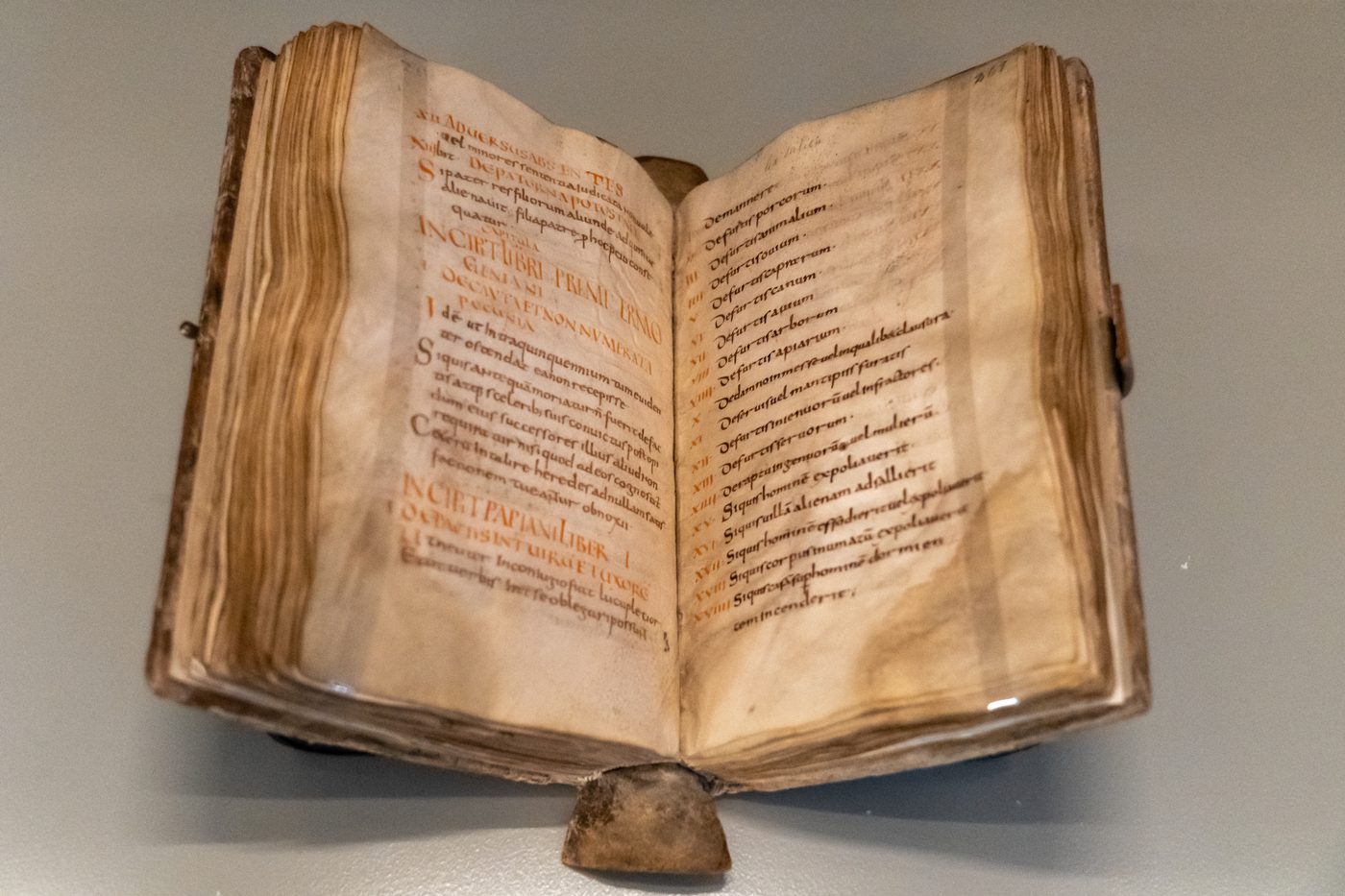
The Seventeenth Council of Toledo (694 CE), convened under King Egica, issued a decree - recorded in the Collectio Hispana, the canonical collection of Iberian church councils - condemning all Jews in the Visigothic kingdom to perpetual slavery, confiscation of property, and separation from their children (who were to be raised as Christians), on the grounds of alleged conspiracy with North African Jews against the kingdom. The decree applied to all Jews in Hispania and Septimania who had not already converted. It was not fully enforced before the kingdom's collapse in 711, but it represents the endpoint of a legislative programme that had begun with King Sisebut's forced conversions in 613 CE and continued through the prohibition of Jewish practice at successive Toledo councils. The council acts are edited in José Vives, Concilios visigóticos e hispano-romanos (CSIC, Barcelona-Madrid, 1963).
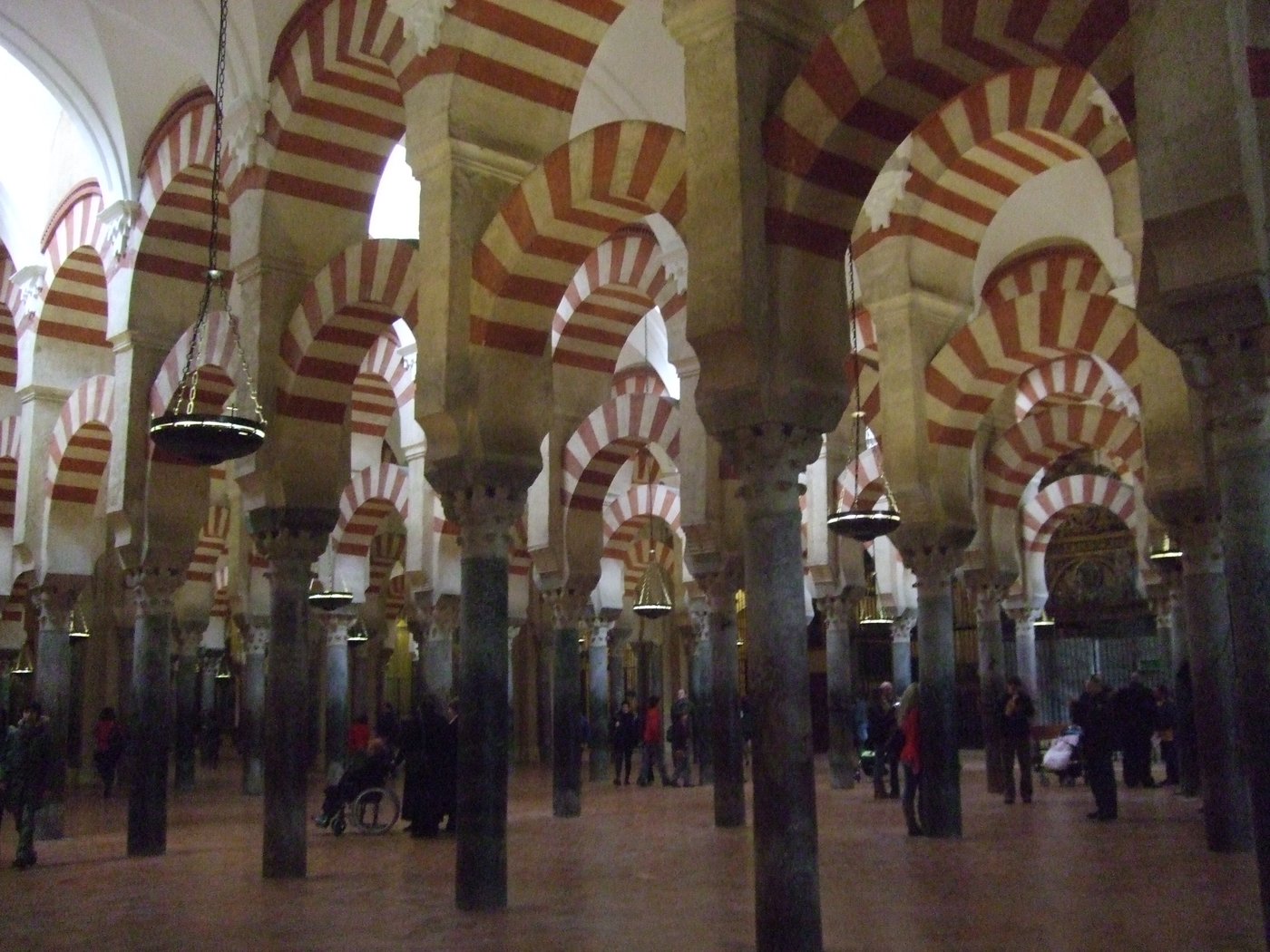
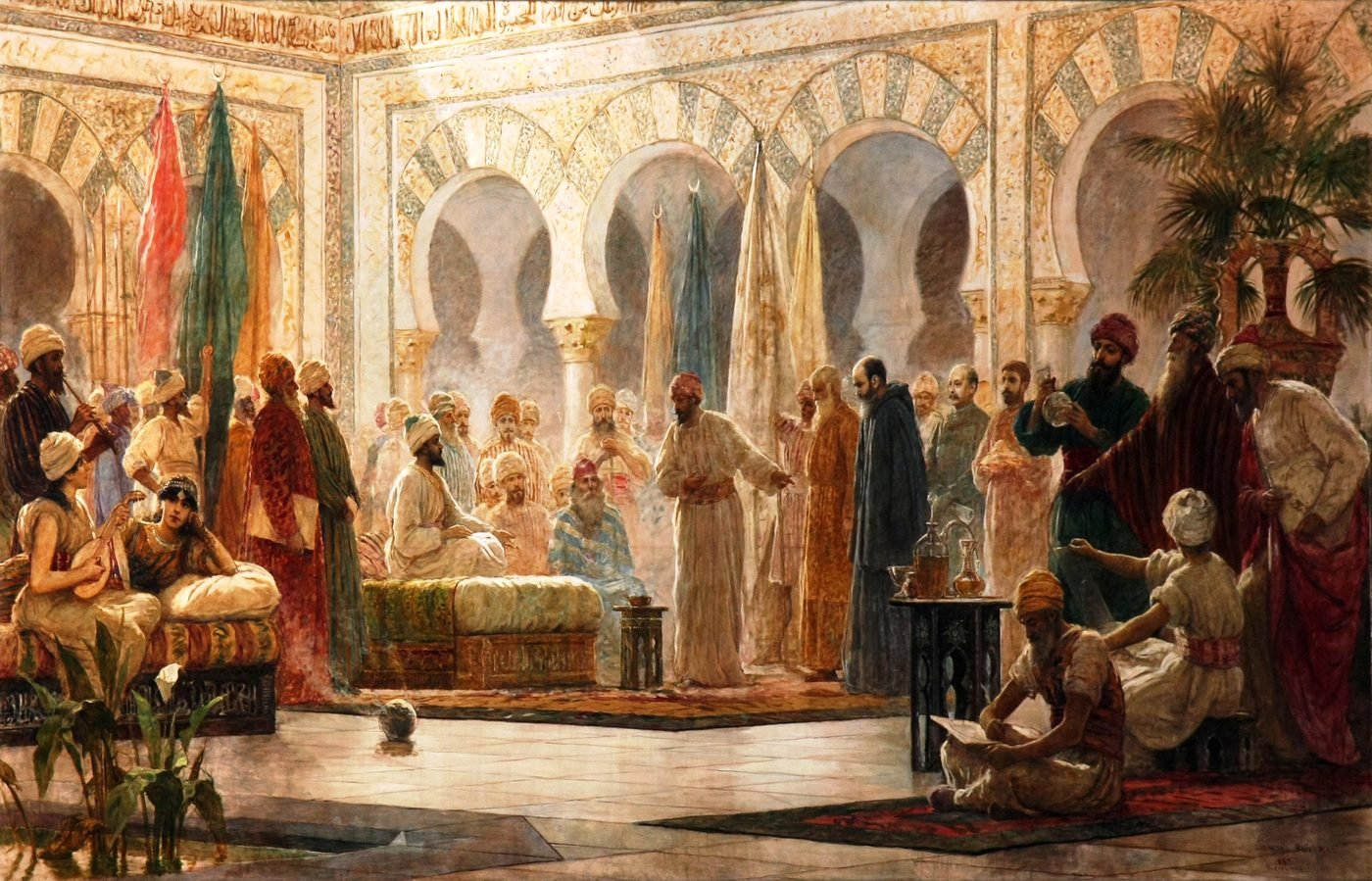
What grew in al-Andalus over the following three centuries was not a community surviving at the margin. Córdoba, under the Umayyad caliphate, became one of the most intellectually alive cities in the world, and Jews were part of its life at every level. Hasdai ibn Shaprut, physician and diplomat at the court of Abd al-Rahman III in the mid-tenth century, negotiated treaties with Byzantium and the Holy Roman Empire, corresponded with the Khazar kingdom's king about the rumoured Jewish state in the steppes, and patronised Hebrew poetry and grammar that seeded the entire Andalusian golden age. He did not flourish despite his Jewishness; his Jewishness - the languages it gave him, the networks, the textual culture - was part of what made him useful and brilliant. The story of 711 is not only what ended. It is what began.
The record
Hasdai ibn Shaprut (c. 915-970 CE) served as physician and foreign affairs adviser to Abd al-Rahman III and his son al-Hakam II, caliphs of Córdoba. A letter attributed to Hasdai, addressed to Joseph, king of the Khazars - seeking confirmation that a Jewish kingdom existed in the north - survives in the Kuzari corpus and in the Sefer ha-Kuzari anthology; the correspondence (including King Joseph's reply) is edited and translated by Paul Kokovtsov in Еврейско-хазарская переписка в X веке (Leningrad, 1932) and discussed in English by Norman Golb and Omeljan Pritsak in Khazarian Hebrew Documents of the Tenth Century (Cornell University Press, 1982). Hasdai also patronised Menahem ibn Saruq and Dunash ibn Labrat, whose debate over Hebrew grammar laid the foundations for all subsequent medieval Hebrew linguistics.
It is worth being precise about what 711 was and was not. The conquest did not create a paradise. The dhimmi framework had real teeth, and those teeth were sometimes used. Periods of Berber puritanism and, much later, the Almohad conquests of the twelfth century would reverse everything and drive the community north and east in conditions as desperate as anything the Visigoths had managed. The golden age was real and it was fragile, as golden ages usually are. But the community that emerged from the conversion edicts and slavery decrees of the Visigoths into the relative air of Umayyad Córdoba was able to build something - a literature, a philosophy, a legal corpus, a poetry - that the whole Jewish world would inherit. Rashi's commentaries in northern France cite Andalusian grammarians. Maimonides, born in Córdoba a century after the Almohads destroyed what 711 had made possible, carried the Andalusian synthesis with him into Egypt and through it to the entire subsequent tradition. The refuge was temporary. The thinking it sheltered was not.
The record
Menahem ibn Saruq (c. 910-970 CE), working under Hasdai's patronage in Córdoba, composed the Mahberet - the first comprehensive Hebrew lexicon written in Hebrew rather than Arabic or Aramaic - around 950 CE. His rival Dunash ibn Labrat, also patronised by Hasdai, adapted Arabic metrical forms to Hebrew verse, establishing the quantitative metres used by every subsequent Andalusian Hebrew poet, including Solomon ibn Gabirol and Judah Halevi. The Mahberet was edited by Filipowski (London, 1854) and by Sáenz-Badillos (Granada, 1986). The influence of Andalusian Hebrew grammar on northern European Jewish scholarship is traced in Ángel Sáenz-Badillos and Judith Targarona Borrás, Diccionario de autores judíos: Sefarad, siglos X-XV (El Almendro, Córdoba, 1988).
The tribe has always known how to read a political change. Not naively - the costs of the dhimmi arrangement were real and the community never forgot them - but practically: when a new order opens space, you use the space. What was built in al-Andalus between 711 and the Almohad invasions four centuries later became part of the permanent inheritance of Jewish thought. The Visigoths tried to erase a community. The community outlasted them, flourished under their successors, and contributed more to European civilisation in those four centuries than most of its tormentors managed in a millennium.