The story begins with a ship and a man named ibn Rumahis. Around 990 CE this Muslim sea-captain - a pirate in the service of the Caliph of Cordoba, or perhaps an independent raider - captured a vessel somewhere in the Mediterranean carrying four Jewish scholars: Rabbi Moses ben Hanokh, Rabbi Shemariah ben Elhanan, Rabbi Hushiel ben Elhanan, and a fourth whose name the later sources do not agree on. Moses later arrived in Cordoba with his young son Enokh. They had sailed from Bari in southern Italy, perhaps towards North Africa, perhaps on some other route the tradition has blurred. What the tradition remembers with precision is what happened next.
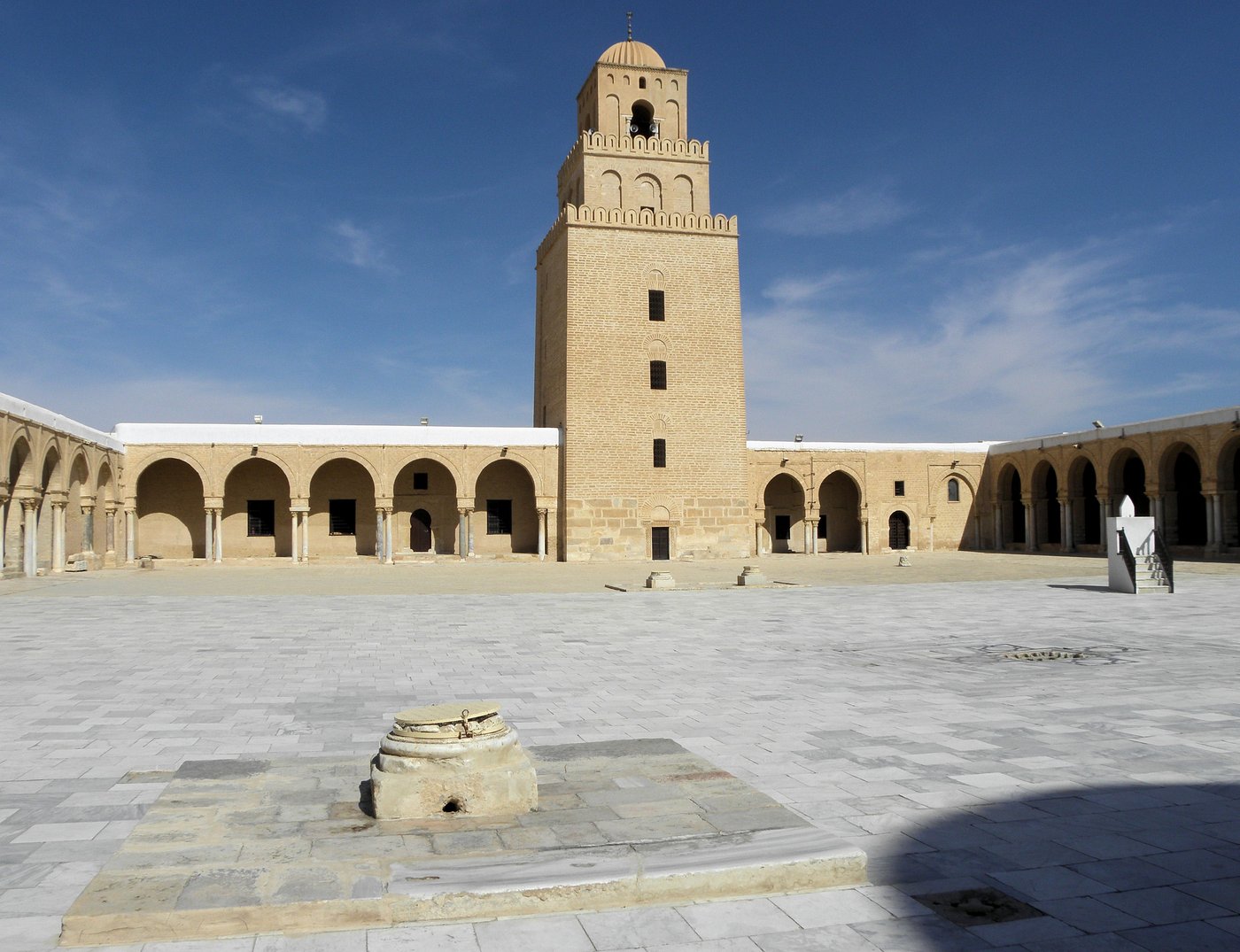
Ibn Rumahis held them for ransom. One by one, Jewish communities bought the captives free. Rabbi Shemariah was ransomed in Alexandria or Fustat and remained in Egypt, founding what would become the Egyptian centre of learning. Rabbi Hushiel ended up in Kairouan in present-day Tunisia, where he established a school that shaped the entire North African tradition. Moses ben Hanokh and his son reached Cordoba in al-Andalus. The fourth sage's destination varies by telling. Each community that paid a ransom got its sage back - and got, arriving with him, the living encyclopaedia of the Babylonian academies, planted now in the west.
The record
The primary account of the Four Captives appears in the Sefer ha-Qabbalah ("Book of Tradition") by Rabbi Abraham ibn Daud of Toledo, completed in 1161 CE. Ibn Daud was writing a polemical history intended to demonstrate that the chain of rabbinic transmission ran unbroken from Sinai through the Babylonian Geonim to the scholars of Spain, and the Four Captives story serves as his hinge: the moment Babylonian authority was legitimately transferred westward. Ibn Daud gives the names of three captives with confidence, describes their ransoms, and traces the subsequent rise of Cordoba, Kairouan, and Egypt as Torah centres. His text has been translated and critically edited by Gerson D. Cohen (A Critical Edition with a Translation and Notes of the Book of Tradition (Sefer ha-Qabbalah) by Abraham ibn Daud, Jewish Publication Society, 1967), which remains the standard scholarly edition.
The Cordoba chapter is the most celebrated. When Moses ben Hanokh and his son Enokh arrived, they were destitute - the ransom had stripped them. They presented themselves at the local synagogue, tattered and anonymous. The sitting judge, a man named Rabbi Nathan, was holding a Talmudic session, and the newcomer sat quietly among the listeners. When Nathan stumbled on a difficult passage, Moses - unable to stay silent - corrected the interpretation with ease. Nathan asked who he was. The answer changed everything. The community recognised that a scholar of the Babylonian calibre had landed among them, and Moses was appointed the judge of Cordoba in Nathan's place. Nathan's own reaction in the legend is striking: he is said to have welcomed the appointment with joy, standing aside for someone plainly better fitted. The story insists on this - no politics, no wounded pride, just the right man in the right seat. Cordoba's academy under Moses and then Enokh became the seedbed of what later generations would call the "Golden Age" of Spanish Jewry.
The record
The historical reality of the Four Captives has been assessed and debated by modern historians. Gerson D. Cohen's critical edition of ibn Daud's Sefer ha-Qabbalah identifies firm external evidence for Rabbi Hushiel in Kairouan: his son Rabbi Hananel ben Hushiel (c. 990-1055 CE) is independently attested as a major halakhic authority whose Talmud commentary survives and was used by Rashi. The Egyptian centre under Rabbi Shemariah is corroborated in the Cairo Geniza documents - the vast cache of medieval Jewish manuscripts discovered in the Ben Ezra Synagogue, Fustat (now Old Cairo), and studied since 1896 by scholars including Solomon Schechter and, later, S. D. Goitein (A Mediterranean Society, University of California Press, 1967-1988). These documents show a functioning Egyptian Jewish scholarly community in the late tenth century consistent with the ibn Daud account.
What ibn Rumahis actually sold, and what the ransoming communities actually purchased, was intellectual independence. For centuries the great Babylonian academies at Sura and Pumbedita had held a kind of monopoly over Jewish legal rulings. Communities across the diaspora sent questions to Babylon and received responsa - formal answers from the Geonim, the heads of those academies - often waiting months for replies that carried the weight of authoritative decision. The arrangement was not exploitative in intention, but it created a dependency: Jewish communities in Spain, North Africa, and Egypt needed Babylon to know what Judaism required of them. After the captives arrived and their successors matured, the communities could answer their own questions. They had the learning in-house. Babylon's prestige did not collapse overnight - Hai Gaon, the last great Gaon of Pumbedita, was still a towering figure until his death in 1038 - but the trajectory had shifted. The diaspora had become self-sufficient.
The record
The decline of the Babylonian Geonate is independently documented. By the mid-eleventh century Sura had effectively ceased to function as an academy, and Pumbedita closed after the death of Hai Gaon in 1038. The shift of scholarly authority to Spain, North Africa, and Egypt is reflected in the changing distribution of rabbinic responsa literature: queries that had gone to Babylon were now addressed to figures like Rabbi Isaac Alfasi (the Rif, 1013-1103) in North Africa and later Lucena. Alfasi's major legal code, the Sefer ha-Halakhot, became the dominant practical reference text across the Sephardic world and was composed entirely within the western tradition that the Four Captives helped to establish. (For the transition, see Robert Brody, The Geonim of Babylonia and the Shaping of Medieval Jewish Culture, Yale University Press, 1998.)
The legend of the Four Captives is, among other things, a story about what knowledge weighs. A pirate looked at four men on a ship and saw hostages - bodies to be sold back to the people who needed them. The communities that paid saw it the other way around: that what they were buying was not the return of a person but the arrival of a tradition. Every ransom payment was also a founding grant. The Talmud crossed the sea not in a chest but in four sets of minds, and when the ships docked the map of Jewish learning was redrawn. The academies that grew from those ransoms outlasted the Geonate that had produced the scholars and the caliphate whose pirate had scattered them.