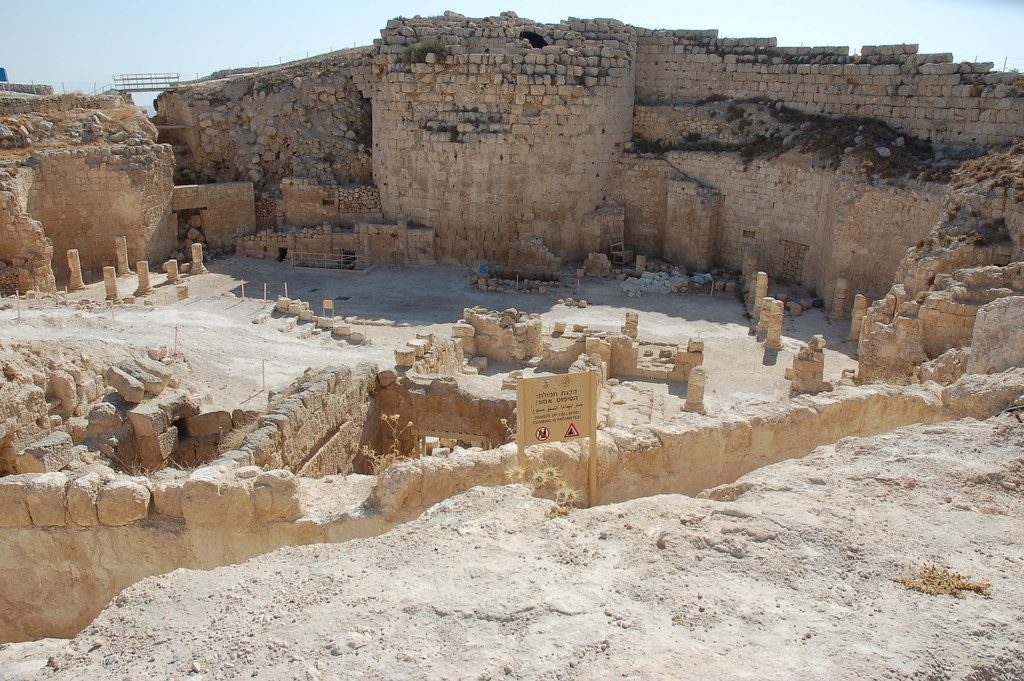
Beth Zur sits where a hill road narrows and history gets practical. South of Jerusalem, the site mattered because armies had to pass it. In the Hasmonean period that made it a frontier point, the sort of place where a kingdom learns to keep the road in view.
The site is not glamorous. That is part of the appeal. It proves that control of the land often begins with a slope, a wall and somebody willing to stand there longer than the next army can manage.
Fortress logic
In the Hasmonean era Beth Zur was tied to the struggle over Jerusalem’s southern approaches. The place shows up in the books of Maccabees as a battlefield and strategic point. Later archaeology confirmed that the ridge kept mattering long after the fight itself moved on.
That is a reassuring pattern in Jewish history: not every important place needs to be a capital. Some places just need to be in the way at the right time.
Battle of Beth-Zur
1 Maccabees places a major battle at Beth Zur in 164 BCE, when Judas Maccabeus fought to secure the hill country south of Jerusalem. The site’s literary record is blunt, and that is useful: this was a frontier worth fighting over.
1 MaccabeesAfter the battles
Beth Zur later appears in archaeological discussions as a layered site with Bronze Age, Iron Age and later remains. A rare coin inscribed with the name of a governor, and other material from the hill, keeps the place from becoming a mere story. The ridge really was used, watched and held.
Some places just need to be in the way. Beth Zur was one of them.
The governor's coin
A rare coin inscribed with the name of a governor, found in the Beth Zur area, is one of the small hard facts that keep the site anchored to real administration. The ridge was not just a battlefield. It was part of the apparatus of rule.
Avraham Negev and Shimon Gibson, Archaeological Encyclopedia of the Holy LandWhat the hill says
Beth Zur says that Jewish sovereignty in the Hasmonean world was won on practical ground. Roads, ridges and chokepoints are unglamorous things until you need them. Then they become destiny.