Beth Shean was never just a mound. It sat on a corridor of water, roads and farm villages, which made it a good place for empire and an even better place for records. In late antiquity, Jewish life in the valley spoke in stone. The rules of agriculture, the names of priestly courses, the borders of the land - all of it made itself legible on mosaic floors.
That is an unusually Jewish kind of confidence. Not loud, not apologetic, and not waiting for a future historian to tidy things up. The communities around Beth Shean wrote themselves into the floor and then walked across it every day.
Flooring the law
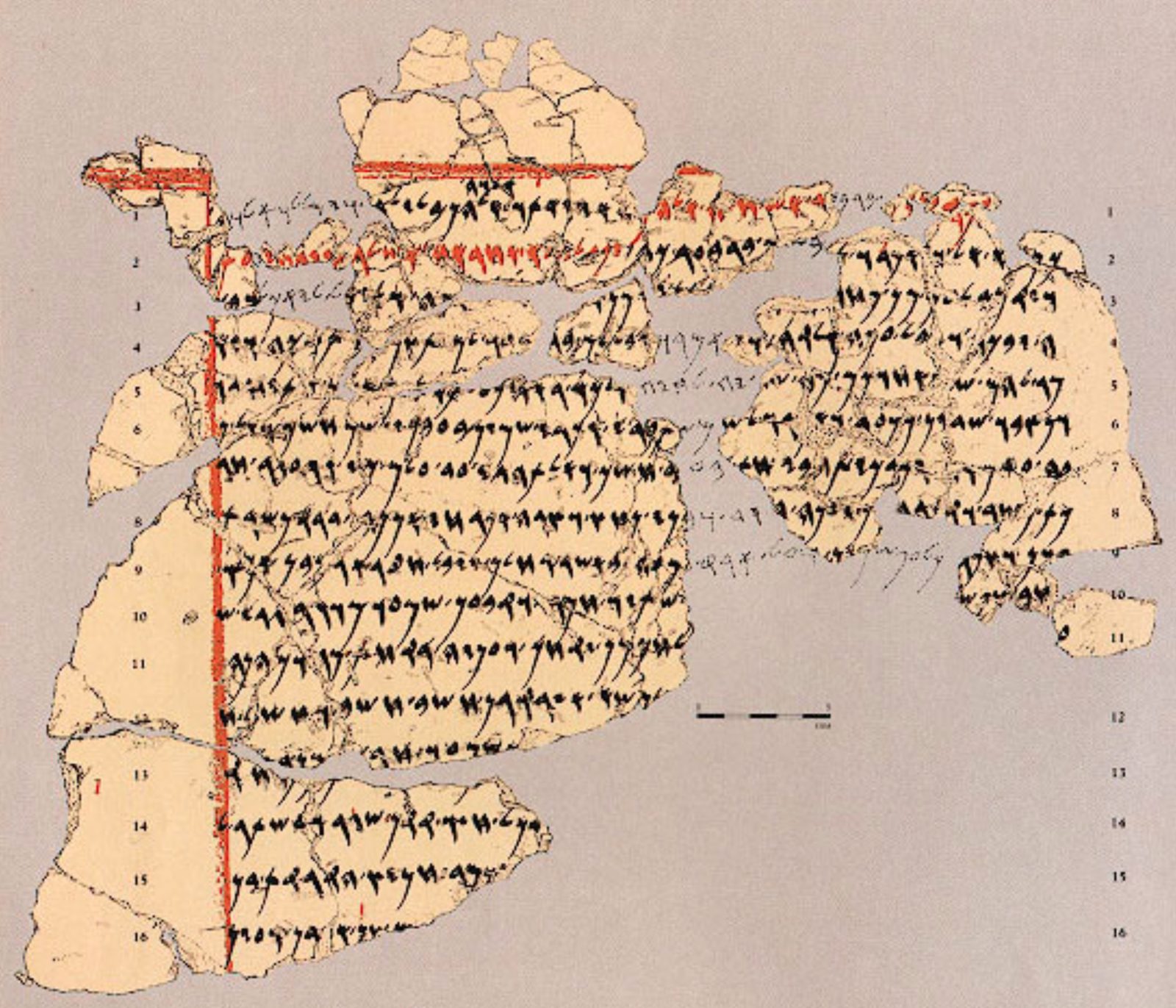
The famous Rehob mosaic came from a synagogue near Beth Shean and lists towns, produce and agricultural boundaries in late Mishnaic Hebrew. It is not decorative in the usual sense. It is a legal text set down in tesserae. You can stand on it and still know that it was written for people who wanted the land’s rules to stay visible.
Nearby Beth Alpha gives the other half of the picture: a sixth-century synagogue with the familiar zodiac floor, the Ark, the menorah, the visual grammar of late antique Jewish worship in the Galilee and the valley country. Together the sites show a Jewish landscape that was not only remembered. It was engineered.
Mosaic of Rehob
The Mosaic of Rehob, now in the Israel Museum, is the longest known Hebrew text on a mosaic floor in Israel and one of the key late antique witnesses to Jewish agricultural law in the Beth Shean valley. It names places, defines boundaries and leaves no doubt that local Jews meant to keep the land’s rules public.
Israel MuseumA working landscape
The valley matters because it shows a Jewish life that was not confined to the synagogue interior. These were farming communities with law, memory and liturgy built into ordinary movement. The point was not spectacle. The point was continuity - what grows where, what counts as inside the land, what must be remembered when harvest comes round again.
Beth Shean therefore sits in the atlas as a hinge: Roman city, Byzantine village, Jewish legal landscape. A place where the record became so durable that the floor itself became part of the argument.
The floor itself became part of the argument. That is a serious community.
Beth Alpha synagogue
Beth Alpha, near Beit She'an and now a national park, preserves a sixth-century synagogue floor with the zodiac and ritual symbols that have become shorthand for late antique synagogue art. It is a companion piece to Rehob: one speaks law, the other speaks worship, and both keep the valley in view.
Israel Nature and Parks AuthorityStill readable
Beth Shean matters because it reminds us that Jewish life in the Land of Israel has always been more than a story of cities. It was also villages, harvests, roads and the places where a legal culture learned to mark its own ground. The valley kept the record. We are still reading it.