Gibeon sits in the Benjamin hill country, where the landscape itself is a record of settlement. The ancient town appears in the Hebrew Bible, but the archaeology keeps it from floating away into pure story.
This was a place that stored things, handled water, and sat within the practical world of the early monarchy.
A town in the ground
Excavations at el-Jib identified the site with biblical Gibeon and uncovered a deep system of hewn chambers and water installations. The town was a lived civic centre, not a scenic label on a map.
That matters because it turns a scriptural name back into a neighbourhood.
Gibeon jars and the wine complex
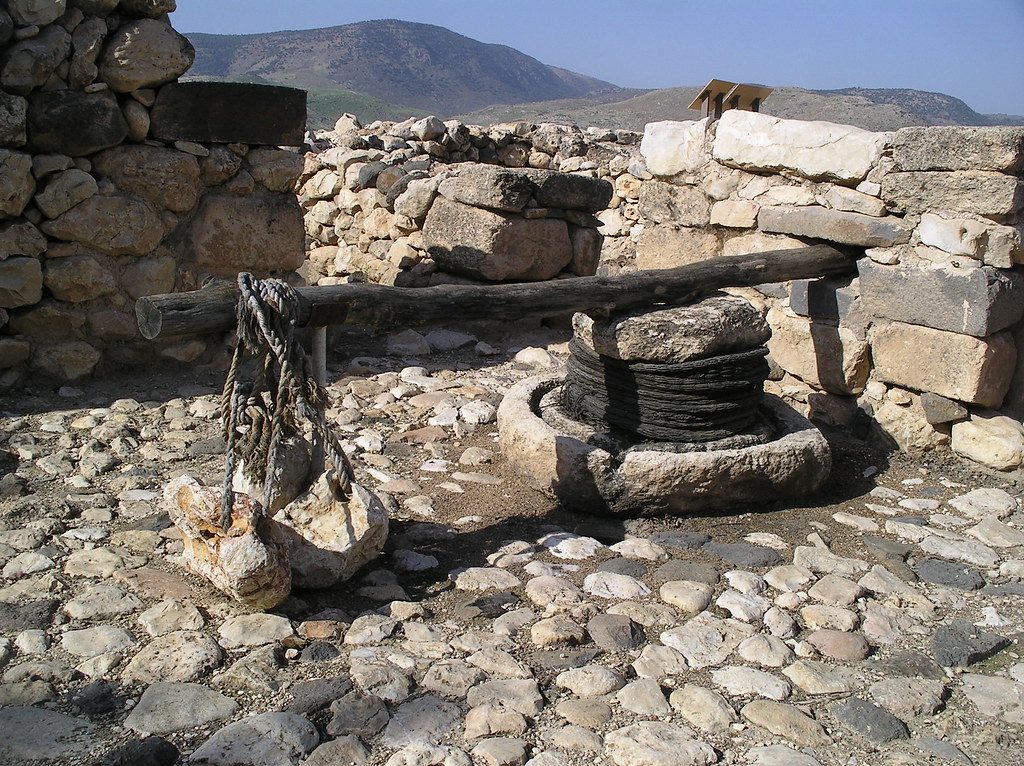
Excavations at Gibeon uncovered a large wine production complex and a set of jar handles stamped with the place name. The finds showed a working settlement with storage, trade, and administration in the Iron Age.
Penn Museum; excavation publicationsThe biblical town becomes visible
Gibeon appears in the biblical narrative as a place of oath, stratagem, and later royal administration. Archaeology does not flatten the story; it gives it a floor.
That floor is made of stone, storage, and the ordinary labour of a settlement that wanted to last.
The hewn rock-cut pool, with its spiral stair descending to the water table, is the find that turned excavation reports into something a visitor can climb down into.
Gibeon is the sort of place that proves ancient towns had plumbing before they had legend.plumbing before legend
The Gibeon excavation identifies the site
James Pritchard’s excavations at el-Jib brought the site of Gibeon into sharp archaeological view. The pool, the cisterns, and the storage spaces gave the biblical name a measurable body.
University of Pennsylvania MuseumA place you can stand in
Gibeon matters because it resists the drift from place into symbol.
Here, the hill country still has weight in the hand.