Some towns are remembered for what stood in them. This one is remembered for what walked out of it and kept going. Aleksandrów Łódzki sits just west of Łódź, a small Polish manufacturing town that would scarcely register on the wider map. Yet say the word "Aleksander" in a Hasidic study hall in Bnei Brak or Boro Park and you have named a living court - one of the two largest in Poland before the war - whose address is still, in effect, a Polish town that no longer holds a single one of its Jews.
The town's Jewish life began in earnest in 1830, when Jews from nearby Lutomiersk founded an independent community there. It grew steadily: a little over a thousand in the 1850s, nearly two thousand by 1879, more than three thousand by 1909. By the eve of the Second World War some 3,500 Jews lived in Aleksandrów, roughly a third of the whole town. That is the ordinary half of the story - a market town with a Jewish third, much like a hundred others across the Polish lands.
The extraordinary half is the court. In the second half of the nineteenth century, a Hasidic dynasty took root here and took the town's name as its own, and that name travelled far further than the town ever did.
The court that became a name
The Aleksander line was founded by Rabbi Yechiel Danziger (1828-1894), a disciple of the Vurka school, who established his court in the town. His son Yerachmiel Yisrael Yitzchak Danziger (1853-1910) drew an enormous following and gave the dynasty its characteristic flavour: a Hasidism that leaned on ethics, devotion and warmth rather than relentless Talmudic dialectic. People did not come to Aleksander to be out-argued. They came to be lifted.
By the 1920s and 1930s the Aleksander Hasidim were reckoned the second-largest Hasidic group in Poland, after Ger, with tens of thousands of adherents. A second branch had even budded off in Łódź itself under Betsalel Yair Danziger from 1914. None of this fit comfortably inside one small town, and it didn't have to. A Hasidic court is not a building. It is a relationship between a rebbe and his people, and it can be carried anywhere a Jew can walk.
The founding of the Aleksander dynasty
Rabbi Yechiel Danziger (1828-1894) established the Aleksander Hasidic court in Aleksandrów Łódzki, drawing on the tradition of Vurka Hasidism. Under his son Yerachmiel Yisrael Yitzchak (1853-1910) it became one of the largest Hasidic movements in Congress Poland. The dynasty's published teachings, such as Yismach Yisrael, remain in print and in use.
YIVO Encyclopedia of Jews in Eastern Europe1939, and after
The end came as it came everywhere in Poland, only faster than memory can quite hold. The Aleksander community of the town, and the great mass of Aleksander Hasidim in Łódź and Warsaw, were deported and murdered, most at Treblinka and Auschwitz. The rebbe of the day, Rabbi Yitzchak Menachem Danziger, refused to abandon his people for the Land of Israel and died with his family in Treblinka. A movement of tens of thousands was reduced almost to nothing.
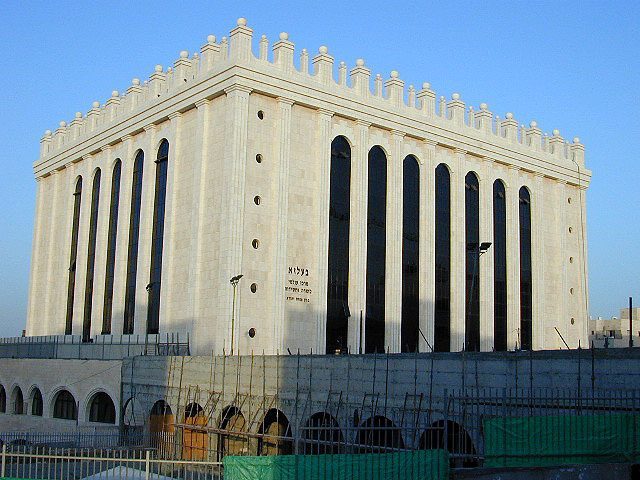
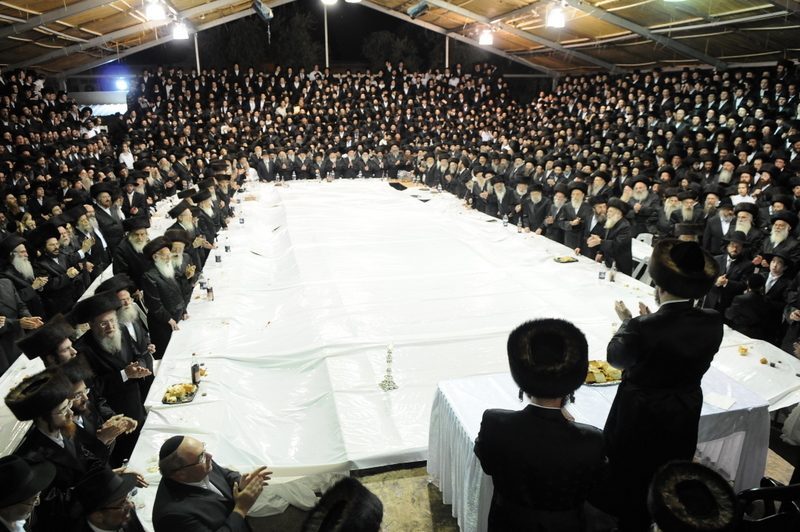
Almost. The survivors regathered around Rabbi Yehuda Moshe Danziger, who re-established the court in Israel and set down what could be recovered of pre-war Aleksander life. The dynasty took fresh root in Bnei Brak, with shtiblech later in Boro Park, Monsey, Lakewood, London, Antwerp and Zürich. The Polish town has no Jews. The Polish town's name is said in prayer every day, in a dozen cities, by people who have never seen it.
A small town near Łódź lost its Jews entirely. Its name now belongs to a living court that meets nowhere near it, and never forgets it.
Rebuilt in Bnei Brak
After the Holocaust the surviving Aleksander Hasidim asked Rabbi Yehuda Moshe Danziger to lead them, and the court was re-established in Israel, centred in Bnei Brak. In 1971 he published Me'oran shel Yisrael, gathering survivors' recollections of pre-war Aleksander Hasidism. The line continues today under the Danziger family.
Herzog Institute for Hasidism; Aleksander community recordsWhat the name carries
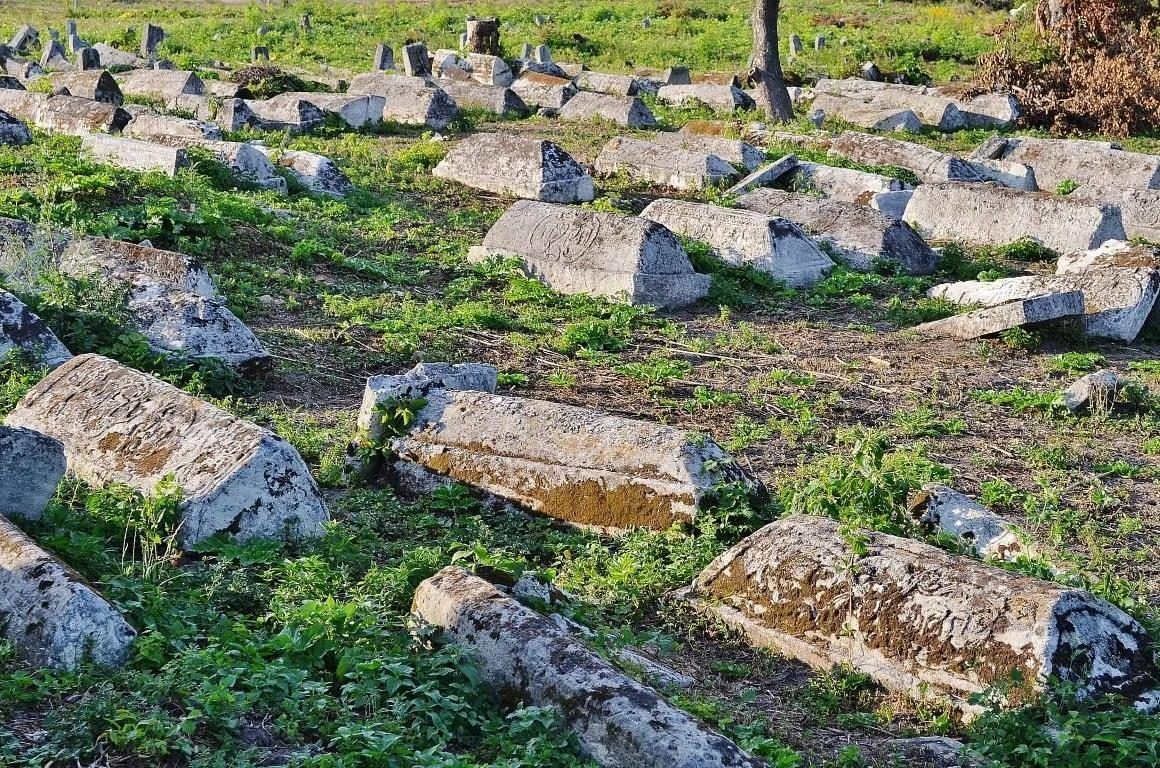
It is tempting to write a town like this only as a grave. That would be both true and incomplete. The cemetery was smashed and the community annihilated, and no honest account skips past that. But the more durable fact is that a place this small managed to plant something that the largest catastrophe in Jewish history could not finish off. The buildings are gone. The lineage is not.
That is what a court is for. It is a way of binding a teaching to a name, and a name to a people, so tightly that even when the place is taken the thing it held survives the taking. Aleksandrów Łódzki is on no one's list of great cities. It is on every Aleksander Hasid's lips. That is the kind of permanence the tribe has always specialised in.
Further reading