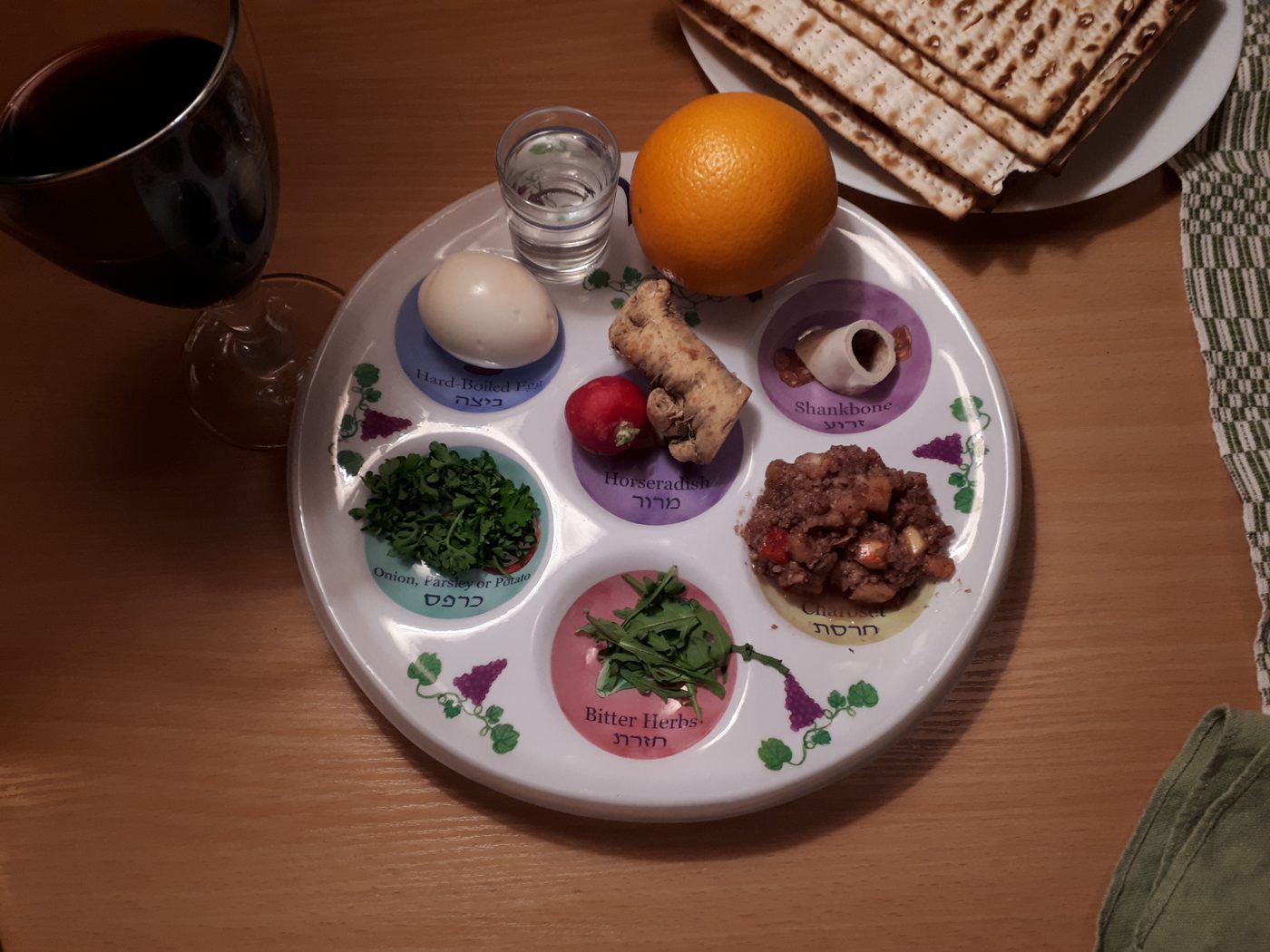
On the Seder plate sits a small heap of something sweet, and it is pretending to be mortar. Charoset, the paste of fruit and nuts and wine, is supposed to recall the clay the enslaved Israelites mixed for Pharaoh's bricks. It is a strange thing to ask of a food, that it taste of bondage, and charoset cheerfully refuses. It is delicious. That refusal is the whole point. On the same plate as the bitter herb, the symbol of slavery's bitterness, sits this sweet brown mortar, and the message is unmistakable: we remember the suffering, but we will not be reduced to it. Jewish memory declines to be only bitter.
What makes charoset worth a long look is that it is the same symbol everywhere and almost never the same recipe twice. Every community made it from whatever the local trees gave them. Apples and walnuts in the cold north, dates and figs and almonds in the warm south, coconut where coconuts grew, a fistful of pepper where the cooking ran hot. The meaning held fast for two thousand years. The ingredients changed at every border. Spread the recipes out on a table and you have something close to a map of where the Jews have lived.
The name itself points at the clay. Charoset comes from the Hebrew cheres, meaning earthenware or clay, the stuff of the bricks. And the texture is meant to match: rough, thick, the consistency of something you could, at a stretch, build a wall with. A few traditions push the symbolism further and stir in something stringy - shredded apple, or strands of date - to suggest the straw worked into the mortar. It is theatre you can eat, which is exactly the kind of teaching the Seder does best.

The old argument in the Haggadah
Charoset is older than any of the regional recipes, and the rabbis argued about what it was for. The Mishnah, edited around the year 200, records that charoset was brought to the table but notes a dispute over whether it counts as a religious obligation or merely a custom. In the Talmud the sages give it two layers of meaning at once. One opinion has it recall the mortar of the bricks. Another, gentler, reads it as a memorial to the apple trees of the Song of Songs, under which, by one midrash, the Israelite women bore their children in defiance of Pharaoh. So even at the root the food is doing two jobs: the bitterness of forced labour, and the sweetness of stubborn survival. Every later kitchen inherited both.
Some medieval authorities tried to pin the recipe to the symbolism. The instruction appears that charoset should contain fruits to which the people of Israel are compared in scripture - the apple, the fig, the date, the pomegranate, the nut - and spices, cinnamon or ginger, beaten to threads to stand for the straw. It is a lovely idea and it was followed unevenly, because cooks are practical people and a fig tree does not grow to order. The symbol stayed canonical. The shopping list stayed local.
Apples, walnuts and sweet wine
The version most familiar in the English-speaking world is Ashkenazi: grated apple, chopped walnuts, sweet red wine and a heavy hand of cinnamon, sometimes ground almost smooth, sometimes left chunky. It is the charoset of the lands where the apple was the reliable fruit and the date was an import - the kitchens of the Rhineland, Poland, Lithuania and Russia, carried from there to New York, London and wherever Ashkenazi Jews settled. Sweet, pale and apple-forward: that is the northern dialect of the dish.
Ashkenazi Passover customAround the Mediterranean and beyond
Travel south and the bowl darkens. In the Sephardi and Mizrahi world the base is usually dates - boiled down to a thick paste sometimes called silan - with figs, raisins, almonds or pine nuts, and the warm spices of the region: cinnamon, ginger, cloves, sometimes a grind of black pepper to wake the whole thing up. Italian Jews made elaborate versions with chestnuts and pears. Greek and Turkish kitchens reached for dates and oranges. Persian charoset, the haleq, became a small architecture of its own, layering dates, pistachios, almonds, walnuts and a long list of spices into something closer to a confection than a condiment.
And then the diaspora kept moving, and the recipe kept dressing for the climate. The Jews of Cochin and Bombay folded in coconut and dates from the Indian market. The community of Suriname, on the edge of South America, reached for what the Caribbean grew and made charoset with coconut, cherries and dried fruit. Yemenite cooks built theirs from dates and figs with a fierce quantity of spice. Five continents, one plate, and on every one of them a cook deciding that the mortar of the bricks should be made from the sweetest thing in the house.
Dates, spice and the haleq
Across the Sephardi and Mizrahi world the charoset is date-based, often built on the thick date syrup known as silan and darkened with figs, raisins, nuts and warm spices. The Persian version, called haleq, is among the most elaborate, layering dates, several kinds of nut, and a long list of spices into a dense paste. These versions, unlike the apple-and-walnut Ashkenazi one, sit much closer in colour and texture to actual mortar - the symbolism, in the south, is harder to miss.
Sephardi and Mizrahi Passover customWhat the recipe remembers
Because charoset was never locked to a single recipe, it became something a fixed recipe could never be: a record. A jar of it tells you where a family has been. Coconut in the paste, and someone passed through India or the Caribbean. Date silan and rosewater, and the line runs through the Islamic world. Apple and sweet wine, and you are looking at the cold north. The dish carries genealogy in its ingredients. It is edible diaspora, reassembled on a table once a year, and no two families' versions are quite the same because no two families took quite the same road.
That is the quiet brilliance of making a symbol out of fruit rather than fixing it in a formula. A rule would have travelled rigid and probably broken. A meaning travelled light and dressed wherever it landed, and so it survived everywhere, from Vilna to Cochin to a kitchen table in Buenos Aires, the same idea in a thousand local accents. The mortar of Egypt, remembered in the sweetest thing each diaspora could lay its hands on. Slavery recalled, and outlasted, one spoonful at a time.
Tell me what is in your charoset and I will tell you the road your family took out of Egypt and everywhere after.
Further reading