Most teaching tools are dull. This one you can eat. The Seder plate sits at the centre of the Passover table looking like a decorative arrangement of odd foods, and it is in fact one of the oldest and cleverest pieces of educational design the tribe ever produced - a lesson plan you can point to, smell, taste and argue with. A child too young to read a word of the story can still reach out, touch a charred bone, dip a finger in salt water, bite something bitter, and start to ask why. The whole evening is built to provoke exactly that question. The plate is the bait.
This is not an accident of custom. Passover is, at its heart, a commandment to tell - to pass the story of the Exodus from one generation to the next, in the first person, as though you yourself had come out of Egypt. A story told flatly is forgotten. A story you have to taste is not. So the tradition turned abstract ideas - slavery, bitterness, haste, tears, the hope of freedom - into objects on a plate, because an idea a child can point at is an idea a child can hold. Jewish memory is so often edible for precisely this reason: edible memory refuses to stay abstract. It has to be prepared, served, questioned and passed across the table.

Six things and what they say
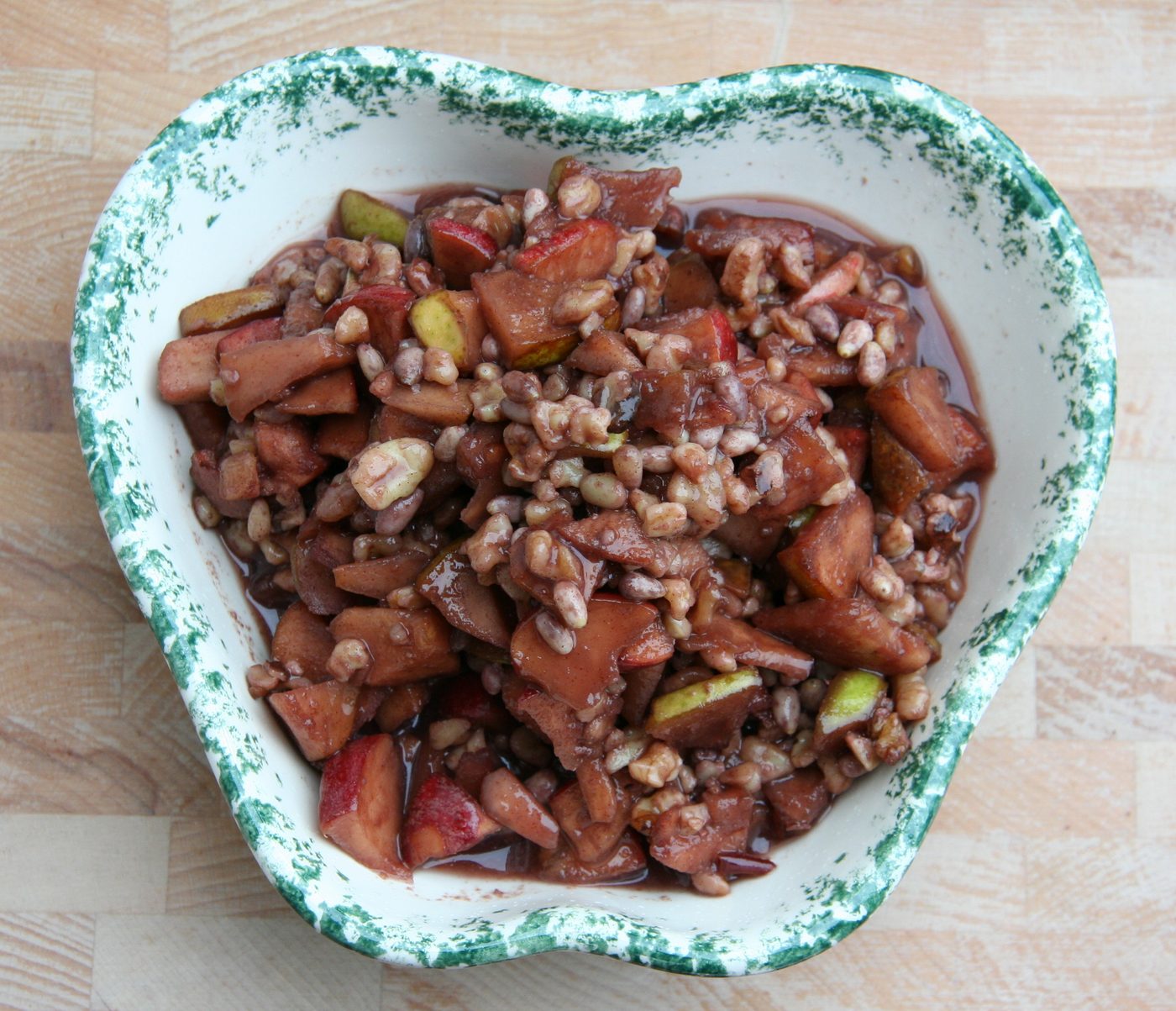
The arrangement varies between communities, but the classic plate carries six symbols, each a sentence in the story. There is maror, the bitter herb, usually horseradish or romaine, for the bitterness of slavery - and it is meant to be felt, not merely tasted, the sting in the nose standing in for generations of suffering. There is charoset, a sweet paste of fruit, nuts and wine, the colour and texture of the mortar the slaves used to build Pharaoh's cities - bitterness and its remedy sit side by side, and at one point in the meal you eat them together.
There is karpas, a green vegetable, often parsley, dipped in salt water at the start of the meal - spring and new life, dipped in tears. There is the egg, beitzah, roasted, a symbol of the festival offering and, in many readings, of mourning and of the cycle of life that turns even in grief. And there is the shank bone, the zeroa, charred, recalling the lamb of the original Passover sacrifice in Egypt. Many plates carry a sixth item, chazeret, a second bitter vegetable used in the ritual "Hillel sandwich". Six small things, and between them they hold an entire national memory.
None of these is eaten casually. Each has its moment in the order, its blessing, its place in the unfolding argument of the night. The plate is read across the evening the way you read a page from top to bottom, and by the end the child who started by pointing has been walked, mouthful by mouthful, through the whole shape of the story: down into slavery, through bitterness and tears, and out into freedom.
The order, first written down
The structure of the Passover Seder is laid out in the Mishnah, tractate Pesachim (chapter 10), compiled around the year 200 CE under Rabbi Judah the Prince. It prescribes telling the story of the Exodus, eating matzah and bitter herbs, and drinking four cups of wine, beginning with disgrace and ending with praise. The Seder plate gathers the symbolic foods that this rite requires into a single visible arrangement.
Mishnah, Pesachim 10The script and its accents
If the plate is the set of objects, the Haggadah is the script - the book read aloud at the table that tells participants what to say, when to lift the cup, when to dip, when to ask. The word means "telling", and the book exists to discharge the commandment to tell. It is among the most widely printed and most lovingly illustrated of all Jewish books; thousands of editions exist, from medieval illuminated manuscripts to the free supermarket pamphlets of the twentieth century, each generation adding its own commentary and its own art.
But a shared script does not produce identical evenings, because every community gives it a different accent. The charoset of a Moroccan family - dense with dates and figs - is not the charoset of a Polish one, made with apples and walnuts. Some Sephardi and Mizrahi families strike one another lightly with spring onions during a song about the slaves' labour; some hold the Seder plate over the heads of the children. The Mishnah set the bones; the kitchens and customs of a hundred countries supplied the flesh. That is the deep pattern of Jewish life: one fixed order, observed everywhere, dressed in the local cloth of wherever the family happens to be.
One script, countless editions
The Haggadah, the text recited at the Seder, exists in thousands of printed editions, including richly illustrated medieval manuscripts such as the fourteenth-century Sarajevo Haggadah, now in the National Museum of Bosnia and Herzegovina. While the core order is shared, the specific symbolic foods, recipes and customs of the Seder plate vary widely between Ashkenazi, Sephardi and Mizrahi communities.
Sarajevo Haggadah, National Museum of Bosnia and HerzegovinaA teaching machine that runs once a year
What the Seder plate finally teaches is a method, not just a story. It says that the way to keep something alive across three thousand years is to make every child re-enact it, with their own hands and their own mouth, until the memory is no longer something they were told but something they did. Slavery and freedom are not lectured at the Passover table; they are eaten. The plate is the proof that the tribe worked out, very early, something modern education keeps rediscovering: that we remember what we taste, argue over and ask about, and forget almost everything else.
An idea a child can point at is an idea a child can hold. Slavery and freedom are not lectured at this table; they are eaten.
Further reading
Story & Stone · Food - Food as Transmission
Next: the book that scripts the night, the Haggadah →