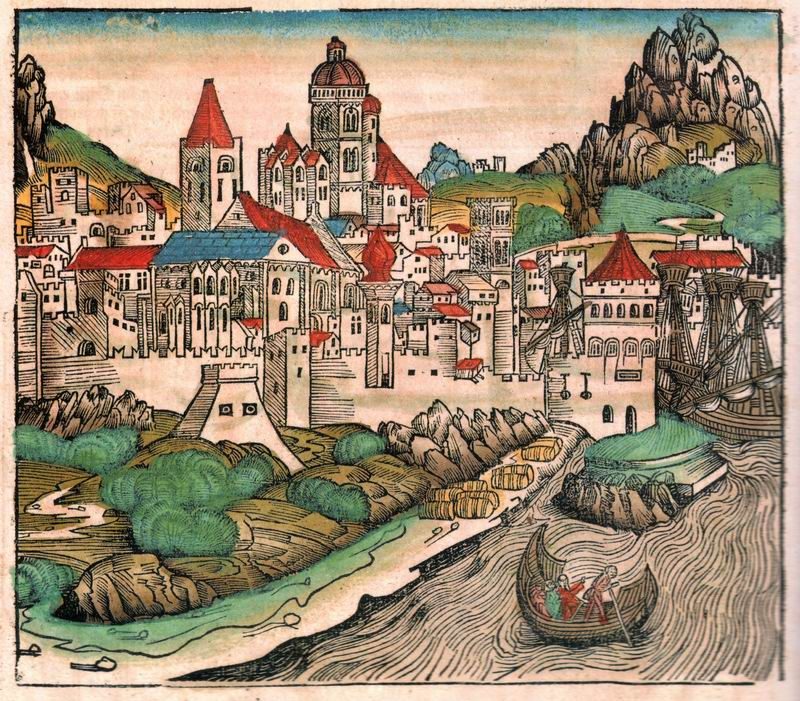
The Rhine is not a border. That is the first thing a merchant learns. It is a road - the longest, most reliable road in northern Europe, fed by tributaries that reach east into Swabia and west into Burgundy, with the North Sea at one end and the Alpine passes at the other. In the ninth century, if you needed to move silk from Byzantium, pepper from the Levant, or a letter of credit from one palace to another, you knew which river to stand beside.
Jewish merchants had been moving along this road since the Roman garrison towns first grew into cities: Colonia (Cologne), Mogontiacum (Mainz), Augusta Treverorum (Trier). These were not new arrivals picking their way into alien territory. They were a trading people operating in a landscape they had inhabited, in some form, for the better part of eight centuries. What changed after Charlemagne was the scale of the invitation.
The record
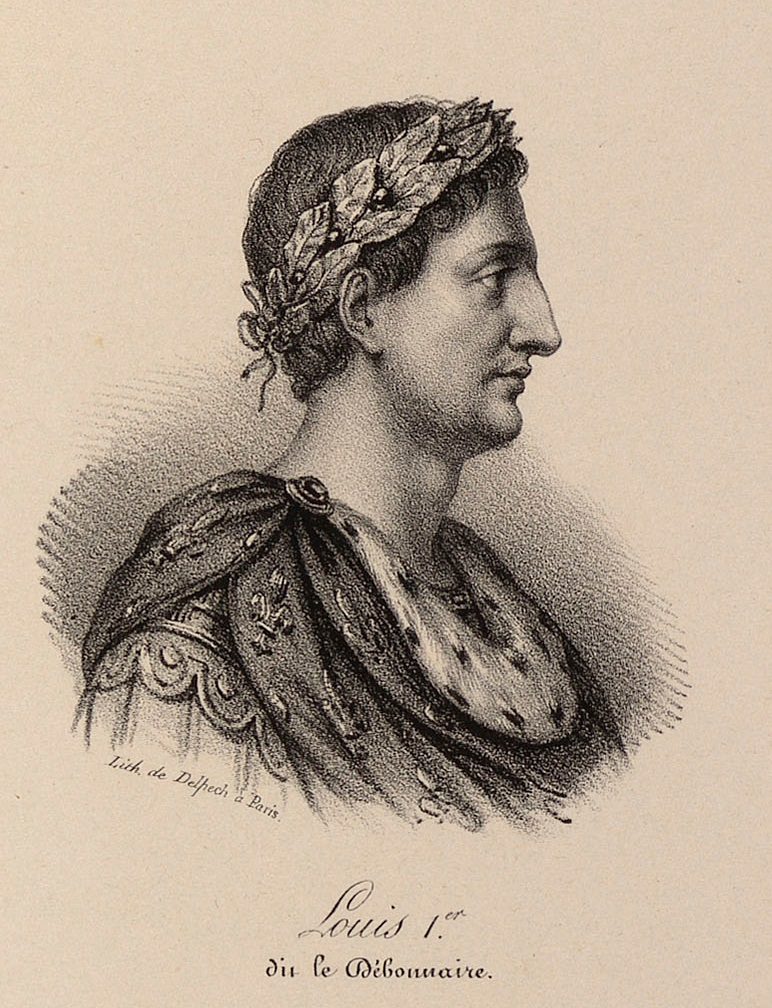
Between 825 and 828, Louis the Pious issued a series of charters - known as the privilegia Judaeorum - granting named Jewish merchants and their households the right to travel freely throughout the Frankish realm, to employ Christian workers, and to be judged by their own communal law in commercial disputes. The charters were preserved in copies held at the Imperial Abbey of St Gall (Switzerland) and are discussed in detail by historian Michael Toch in The Economic History of European Jews (Brill, 2013). They name specific families in Lyons and in the Rhine cities, confirming that these were established, property-owning households - not itinerant traders - by the 820s.
The Carolingian invitation was pragmatic and unsentimental. The empire needed people who could operate across linguistic, cultural, and political frontiers simultaneously - who had kin in Baghdad and creditors in Toledo and could read a contract in Aramaic, Arabic, and Latin without calling for a translator. Jewish merchants were those people. They served as the sinews of long-distance trade at a moment when the Frankish crown had ambitions that ran well past the Rhine. In return, they received the charters - protection from arbitrary seizure, the right to keep their Sabbath and their calendar, and a measure of communal self-governance. It was a deal, not a gift. Both sides knew it.
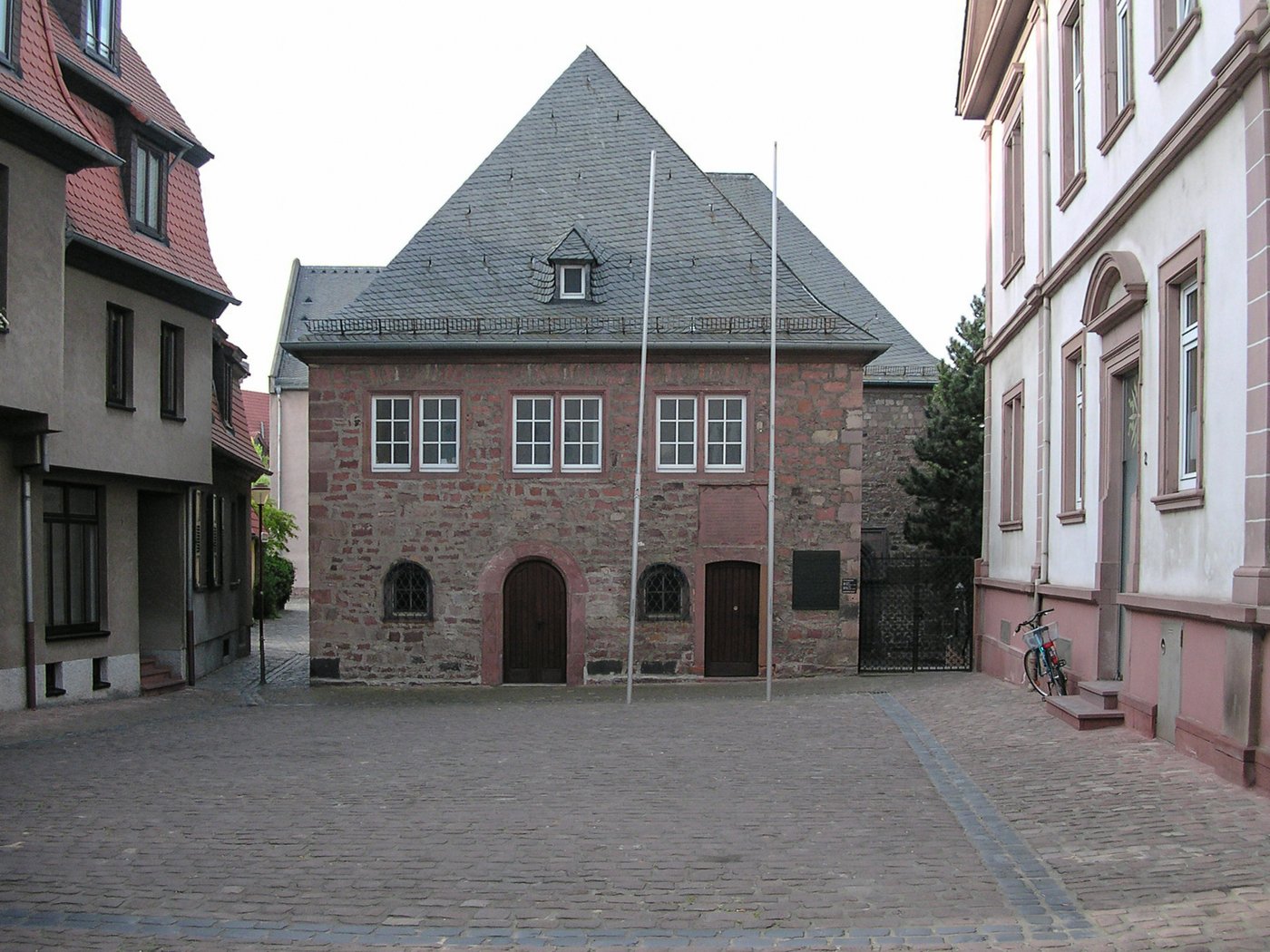
What the merchants built on those terms, however, was something the charters could not have predicted: a civilisation. The communities planted at Mainz, Worms, and Speyer - ShUM, as the Hebrew acronym would have it - became the seed-beds of Ashkenazi culture. The learning that began in those Rhine towns would eventually produce Rashi, the Tosafists, the Machzor Vitry, and an entire tradition of legal scholarship that still shapes Jewish practice today. None of it happened because the merchants were thinking about posterity. They were thinking about the next consignment of spice. Civilisations have a habit of emerging from counting-houses.
The record
The Jewish community of Mainz (Mayence) is attested in documentary sources from at least 906 CE, when Bishop Hatto I granted Jews the right to conduct commerce in the city, and local tradition and archaeological evidence point to an early presence by the early Middle Ages. Mainz became the pre-eminent centre of Ashkenazi learning in the tenth and eleventh centuries, home to the great Talmudic authority Rabbi Gershom ben Yehudah (c. 960-1040), known as Meor ha-Golah - the Light of the Exile - whose rulings on monogamy, divorce, and the sanctity of private correspondence became binding across the Ashkenazi world. His community and its records are documented in Avraham Grossman's The Early Sages of Ashkenaz (Magnes Press, Hebrew University, 1981), the foundational modern study of the Rhine communities.
The road north along the Rhine was not only a trade route. It was also the route by which a people brought their whole selves into a new landscape - their prayers, their disputes, their stories about who they were. The merchants carried goods and they carried books. They debated contracts and they debated Talmud. They buried their dead and named the cemeteries in Hebrew. By the time the charters of Louis the Pious were three generations old, the Rhine valley had ceased to be a corridor and become a home - and the word Ashkenaz, a biblical place-name repurposed as the Hebrew name for the German lands, had become one of the great addresses in Jewish history.
The record
The term Ashkenaz as a Hebrew designation for the German lands appears in Jewish sources from the ninth century onwards, drawn from Genesis 10:3 (where Ashkenaz is listed as a grandson of Japheth). By the eleventh century it was in common use to describe the distinct cultural and legal tradition of the Rhine communities. The oldest surviving Jewish cemetery in Germany, the Heiliger Sand in Worms, contains graves dated to 1076 CE and is recognised by UNESCO as a World Heritage Site (inscribed 2021, as part of the ShUM Cities of Worms, Speyer, and Mainz). It is the oldest Jewish cemetery in Europe still in use.
The merchants came for the markets. They stayed for the centuries. That is not a small thing to notice. The Rhine route began as a commercial calculation and became one of the longest-running chapters in the story of this tribe - a chapter that would last, in richness and in pain, until the twentieth century. The counting-houses are gone. The cemeteries remain. So does the learning.