Galilee in the early first century CE was crowded with teachers. The Jewish villages strung around the freshwater lake the Romans called Lacus Gennesareth - Capernaum, Magdala, Bethsaida, Chorazin - were small, basalt-built places, many with a synagogue that served as a place of prayer and community gathering. Scholars disagree about how many of these village synagogues existed before 70 CE, but the archaeology of Magdala, where a first-century synagogue was uncovered in 2009, makes clear that they were real, local, and in use. Into this world of Torah reading, Shabbat meals, fishing boats, and Roman tax collectors came a man from Nazareth, a village in the hills of lower Galilee above the Jezreel Valley. His name was Yeshua - Joshua in the older form, rendered in Greek as Iesous. He was a Jew. He lived as a Jew, observed the festivals, debated Torah, and was addressed by his followers and opponents alike in the categories of Jewish religious life: prophet, teacher, healer, and - the charged word that would echo loudest - king.
The Galilee he moved through was a province of argument as much as of agriculture. The Pharisees, a renewal movement devoted to extending priestly purity to everyday life, were active in the towns. The Essenes had withdrawn to the desert. The followers of John the Baptiser - another Jewish preacher executed by Herod Antipas, the Roman client ruler of Galilee - were still gathered around the Jordan. Apocalyptic expectation ran high: many in Judaea and Galilee believed they were living at the hinge of the ages, that ה׳ would intervene in history and restore Israel's sovereignty. These were not fringe opinions. They were the live questions of the time, debated in synagogues and around Passover tables and on the road to Jerusalem. A teacher who addressed them, who healed, who ate with the disreputable and preached the imminent turning of the age, was intelligible - even if controversial - within the Jewish world that produced him.
The record
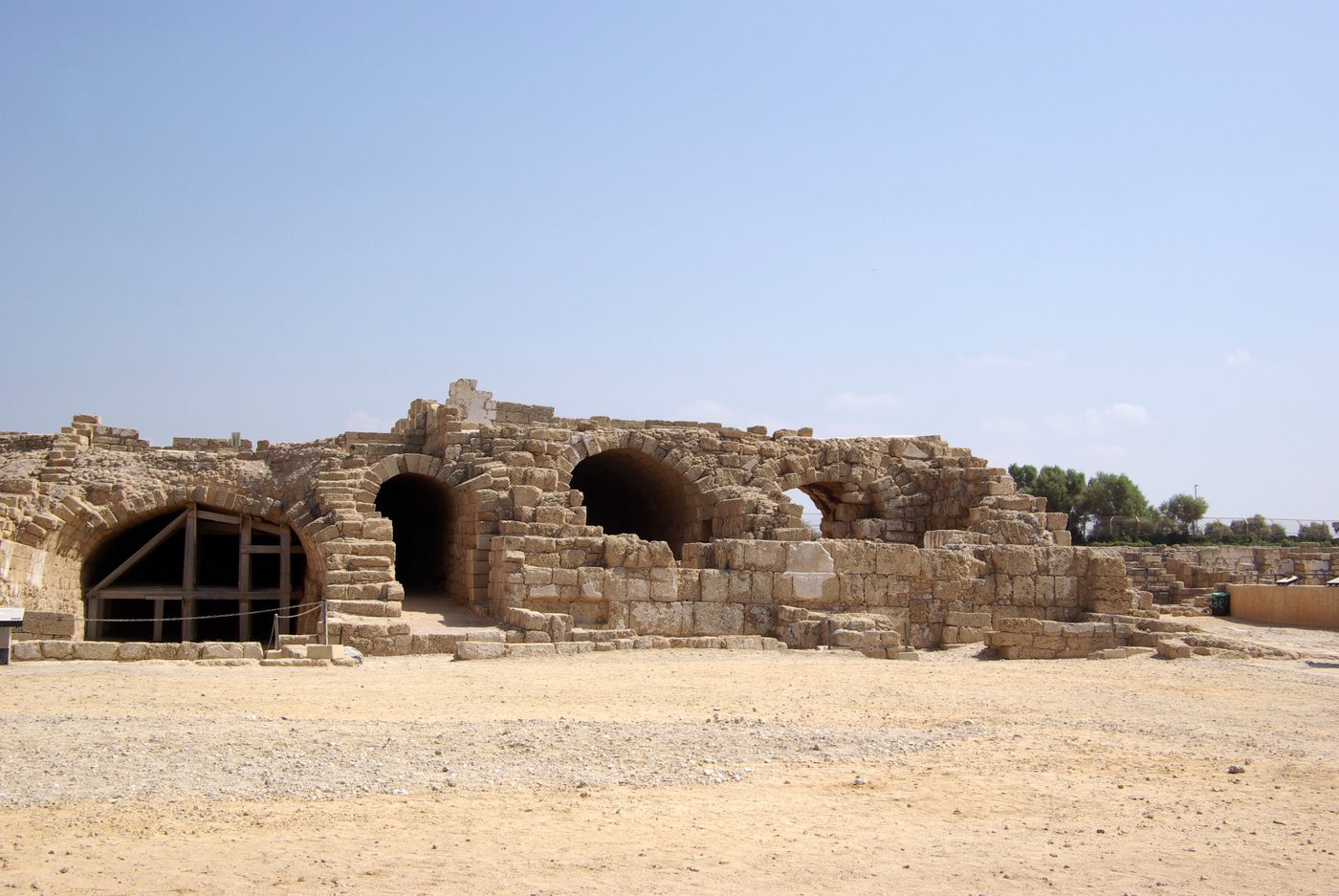
The most direct Roman source for the execution is Tacitus, writing around 116 CE in his Annals (15.44). Describing Nero's persecution of Christians after the 64 CE fire in Rome, Tacitus explains who the Christians were: "Christus, from whom the name had its origin, suffered the extreme penalty during the reign of Tiberius at the hands of one of our procurators, Pontius Pilatus." The passage is hostile to the movement but matter-of-fact about the historical event. Tacitus was writing a century later and is not a sympathetic source - which makes his account the more useful. The Pilate who ordered the execution is further attested in a limestone inscription discovered in 1961 at Caesarea Maritima, the Roman administrative capital of Judaea. The stone - now in the Israel Museum, Jerusalem - names Pontius Pilate as "prefect of Judaea" and is the only surviving contemporary Roman inscription that does so. It fixes Pilate in office, in the province, in the period (26-36 CE), and confirms the title Tacitus uses.
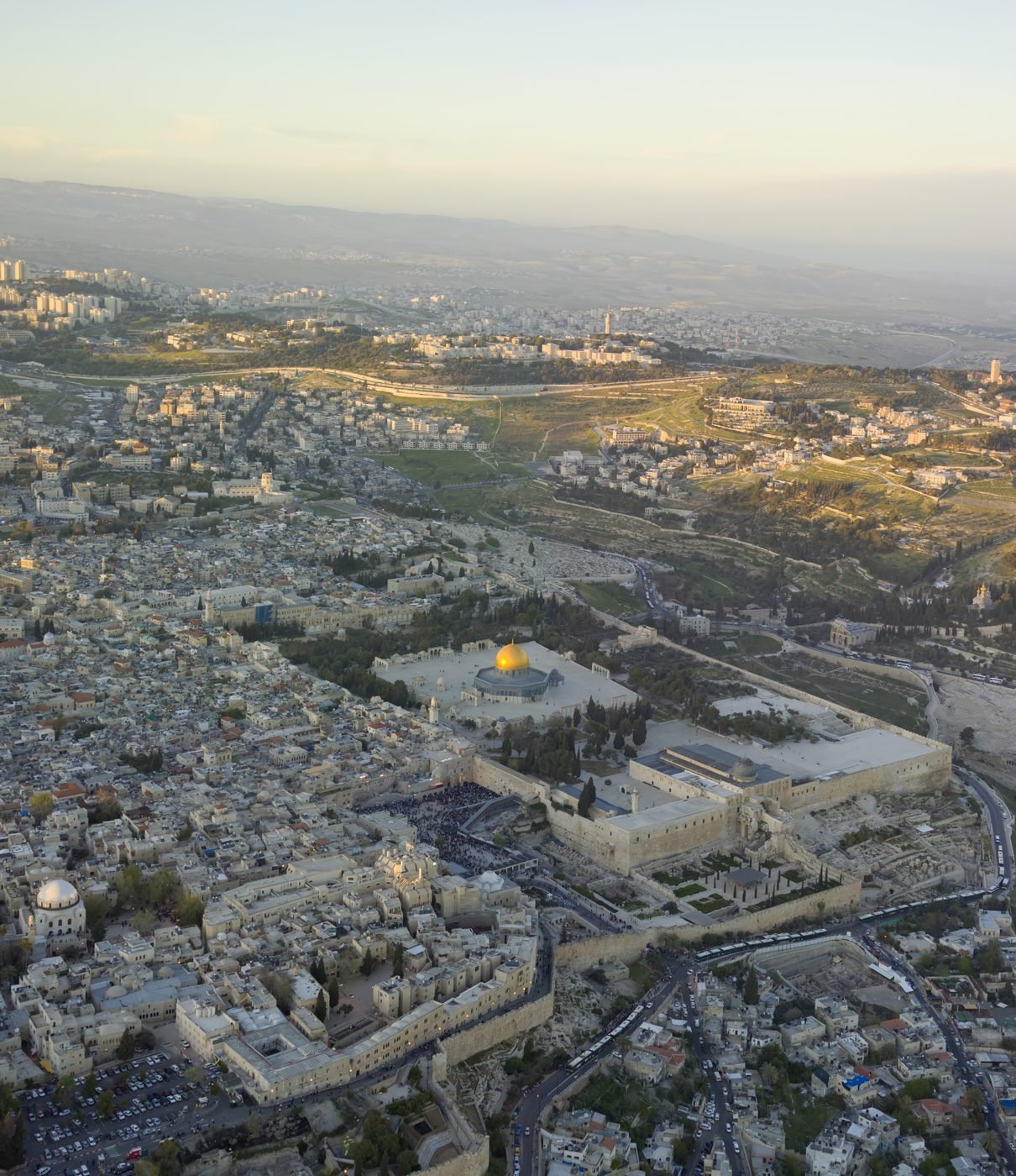
Passover was the hinge of the story. Every year, the pilgrimage festival brought tens of thousands of Jews up to Jerusalem from across the land and the diaspora - a compressed, charged gathering at which Roman prefects routinely reinforced the garrison and watched for trouble. The road from the Galilee to Jerusalem was well travelled; teachers and their students made the journey regularly. When Yeshua of Nazareth arrived in the city in the final week before Passover, with a following from the north and a reputation that preceded him, he arrived into a situation the Roman prefect had every reason to manage aggressively. The execution by crucifixion was a Roman method, applied to those deemed a threat to public order. It was not a Jewish punishment. The chain of events that led from the teaching ministry in Galilee to the cross outside Jerusalem is complex - contested in detail by historians - but the ending was Roman in its mechanics and Roman in its authority.
What happened next belongs to the history of a new religion, not to the history of the Jewish people in the direct sense. The movement that grew from the events of 30 CE became, within a century, majority non-Jewish. It eventually became the dominant religion of the Roman Empire. The consequences of that transformation for the Jews of the empire were severe and long-lasting. But the man at the beginning of that chain was a Jew of Galilee - and the Galilee he came from, the synagogues he taught in, the Passover he died celebrating, the Torah arguments he engaged in - all of that is Jewish history, plain and legible.
The record
Flavius Josephus, the first-century Jewish historian writing in Rome after the destruction of Jerusalem, refers to Yeshua twice in his Antiquities of the Jews. The briefer passage (20.200, written c. 93-94 CE) mentions "James the brother of Jesus who was called Christ" in the context of a conflict with the high priest Ananus - a passage generally accepted as authentic. The longer passage (18.63-64), known as the Testimonium Flavianum, is widely regarded as interpolated in its surviving form: the enthusiastically Christian phrasing ("he was the Christ," "he appeared to them on the third day") fits poorly with Josephus's own careful Jewish perspective. Most historians accept that a genuine Josephan notice underlies the Testimonium but that later Christian copyists added or amplified theological claims. The archaeology of first-century Galilean synagogues is represented most concretely by the Magdala stone - a carved stone block found inside the first-century Magdala synagogue (excavated from 2009 by the Israel Antiquities Authority and the Studium Biblicum Franciscanum), which bears a menorah relief and is considered the oldest synagogue artefact depicting a menorah from the period of the Temple. It is now displayed at the Magdala Archaeological Park on the western shore of the Sea of Galilee.
The Galilee that produced Yeshua of Nazareth was destroyed in 66-70 CE, when Jewish revolt against Roman rule ended in the siege and burning of Jerusalem and the demolition of the Temple. Many of the villages around the lake - the villages whose synagogue benches a travelling teacher would have sat on - were destroyed or depopulated. The community of the lake region reconstituted itself in the following generations, and the Galilee became the centre of rabbinic Judaism in the centuries after the catastrophe, home to the Sanhedrin, the academies, the redaction of the Mishnah. The world that produced the teacher from Nazareth was Jewish from end to end. It is part of the Jewish story - not a departure from it.