The Temple was not a silent place. Every morning when the gates were opened and the daily offering was set alight, the Levite musicians took their station on the fifteen curved steps that led from the Women's Court up to the Nicanor Gate and the Israelites' Court beyond. They carried harps, lyres, cymbals, and trumpets. The eldest and most senior stood at the centre; the apprentices, who were permitted to play only if barefoot - a mark that they had not yet completed their training - flanked them. When the priestly signal came, the music began. It was not incidental. The offering and the song were a single act.
The tribe of Levi had been set apart from the moment of the wilderness. When the other tribes received their land-portions in Canaan, the Levites received none - they were distributed among the towns of Israel, their inheritance being service rather than territory. Within that tribe, the sons of Kohath, Gershon, and Merari bore the sacred furnishings during the desert march. But it was David, working ahead of his son Solomon, who organised the Levites into their permanent singing office. The books of Chronicles record him counting and assigning four thousand Levites to praise and music, with 288 trained soloists arranged in twenty-four courses. By the time Solomon dedicated the First Temple in Jerusalem, the infrastructure of sacred song was already generations deep.
The record
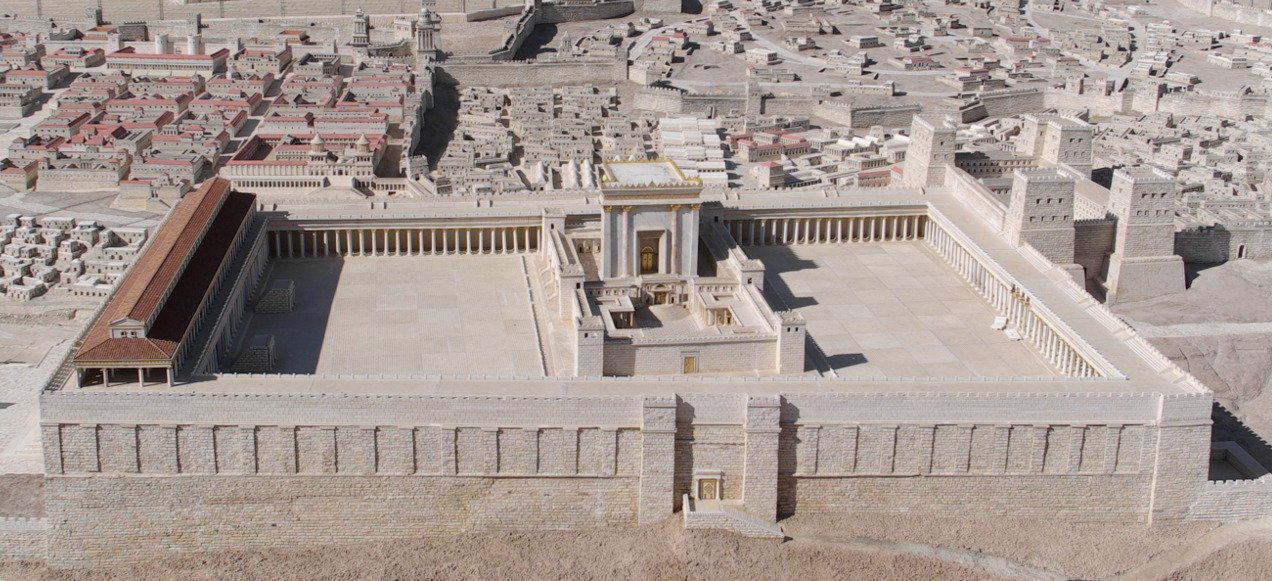
The Mishnah tractate Middot ("Measurements"), composed c. 200 CE and drawing on Temple-era memory, describes the fifteen steps in precise architectural detail: semicircular in plan, each step half a cubit in rise and one cubit in depth, ascending from the Women's Court to the Nicanor Gate (Middot 2:5). Tractate Sukkah (5:1-4) records the full choreography of the Simchat Beit HaSho'evah - the Water-Drawing Celebration during Sukkot - when the Levites played through the night on the steps, and pious men danced with torches before them. The Mishnah notes that "he who has not seen the rejoicing of the Water-Drawing Festival has never seen rejoicing in his life." These tractates were compiled at Yavneh and Usha after the Temple's destruction; their level of procedural detail is consistent with living oral memory from priests and Levites who had served there before 70 CE.
The fifteen steps almost certainly gave their count to the fifteen Psalms of Ascent - Psalms 120 to 134 in the Hebrew Bible, each headed "Shir HaMa'alot," a song of the ascents. The rabbinic tradition recorded in Sukkah holds that each step had its Psalm, and the Levites would mount them one by one, singing. Whether that practice goes back to the First Temple, to Solomon's era, or was formalised only in the Second Temple period is a question scholars debate without resolution - the Psalms themselves give no date. What is not in doubt is the connection. These fifteen poems form a miniature pilgrimage sequence: they begin with longing for Jerusalem from afar (Psalm 120, "I dwell among those who hate peace") and arrive at a full-throated summoning of blessing from Zion (Psalm 134, "Bless the Lord, all you servants of the Lord who stand in the house of the Lord by night"). They are travel songs that end at the top of the steps. The architecture and the poetry fit one another too well for the connection to be accidental.
The record
Josephus, writing in the late first century CE, describes the Levitical musicians in his Jewish Antiquities (Book XX, 9:6), recording a controversy during the reign of Agrippa II (c. 60 CE) in which the Levites petitioned the king for permission to wear linen robes like the priests and for the Temple singers to be allowed to learn the sacred hymns. Agrippa granted both requests. Josephus remarks that "these things were contrary to the ancestral laws" - suggesting that even on the eve of the Temple's destruction, the Levites were pushing at the boundaries of their defined role, and that their musical status was taken seriously enough to require royal sanction. The passage is in Book XX of Antiquities, available in the Loeb Classical Library edition (translated by L. H. Feldman, Harvard University Press, 1965).
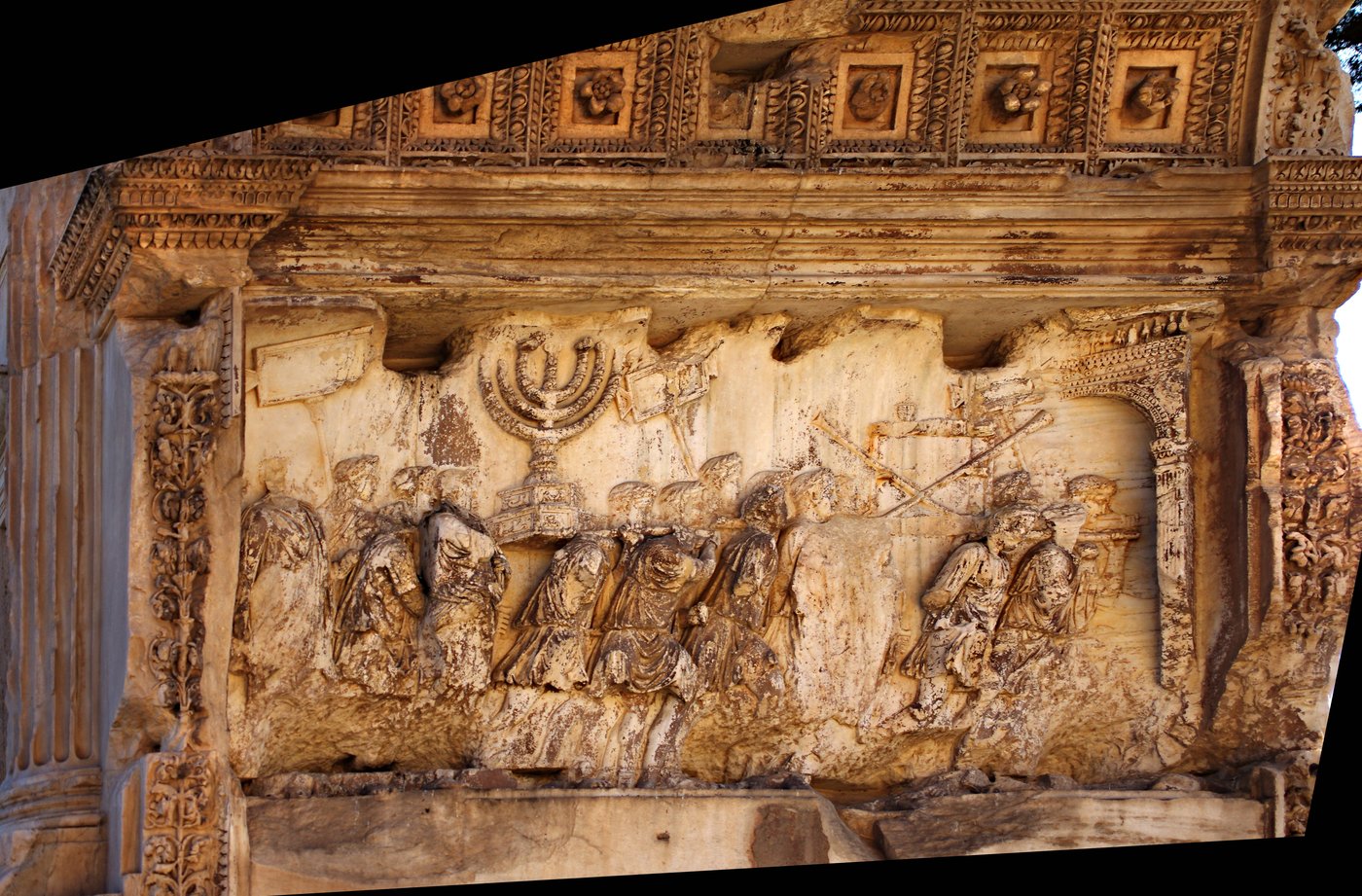
The Temple fell in 70 CE. The steps are gone - the southern wall of the Temple Mount still preserves the probable site, and archaeologists working under Benjamin Mazar in the 1970s excavated broad stone stairways along the southern facade, some stones of which have been tentatively identified as part of the approach to the Huldah Gates. But the music did not end. The Psalms of Ascent moved into synagogue liturgy, where they have been sung every Shabbat afternoon since. The instruments went quiet, as an act of mourning - rabbinic law prohibited the full musical instruments of the Temple in the diaspora - but the voices did not. The choir of fifteen steps became the choir of every community that ever opened Psalm 120 on a Saturday afternoon. That is what it means to carry a tradition: not in stone, but in the mouths of people who have not forgotten what the steps were for.
There is something quietly astonishing about the continuity. Men trained by their fathers, who were trained by their fathers, who stood on those fifteen steps and counted their way up through fifteen poems - that sequence has never actually been interrupted. Every congregation that sings Shir HaMa'alot is standing, in some sense, on the step where the Levites stood. The Temple is an absence. The Psalms are still there.