Three times a year the roads to Jerusalem filled. From the Galilee and the Shephelah, from the Jordan valley and the Judean hills, families gathered their animals, packed their first-fruits and their peace-offerings, and went up. Not because they felt like it. Because it was commanded: "Three times in the year all your males shall appear before the Lord" (Exodus 23:17). The Hebrew is terse and exact - shalosh pe'amim ba-shanah, three times in the year - and it left no room for negotiation. You go. You go again. You go a third time. Then the year has been kept.
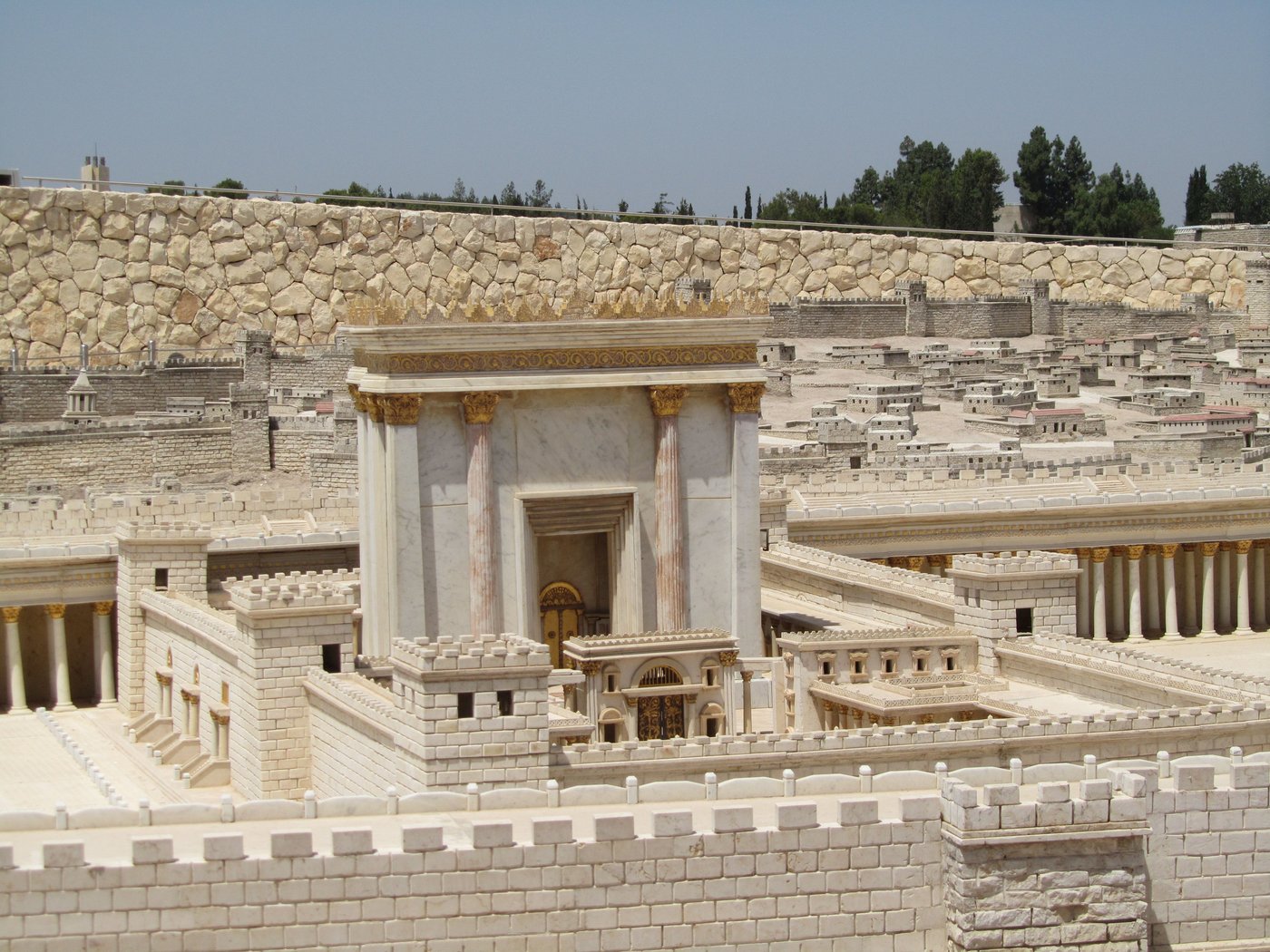
The three occasions were Pesach, Shavuot and Sukkot. They are called in Hebrew the shalosh regalim - the three foot-festivals, the word regel meaning both foot and pilgrimage. The name is entirely literal: these were the feasts you kept on foot, in motion, arriving somewhere. Standing still was not an option. The whole shape of the Israelite religious year pointed toward a city, toward a Temple, toward a physical destination. The festivals could be read as an argument about creation, freedom and harvest. But they could also be read more simply: as the reason to go up.
The record
Exodus 23:14-17, Exodus 34:22-23, and Deuteronomy 16:16 each command the three pilgrimages independently, with slight variations in detail - a sign of the tradition's deep roots across different textual strands. The Book of Deuteronomy adds the requirement that no one appear "empty-handed": each pilgrim was to bring an offering proportionate to how well the year had treated them. The text makes the obligation communal but the gift individual. These three passages, in the Hebrew Bible preserved at major collections including the Jewish Theological Seminary Library in New York, are among the oldest calendar-commands in the Torah.
What the pilgrimage looked like on the ground is not hard to reconstruct. The Mishnah tractate Bikkurim - First Fruits - describes processions arriving from provincial towns, singing as they approached Jerusalem, the residents of the city coming out to meet them. "How great are you, our brethren from such-and-such a place, that you have come!" The Temple Mount received them. The priests received the offerings. Then the pilgrims ate, rested, and - most of the time - went home. For Sukkot many stayed the full seven days, dwelling in booths as the festival required. For Pesach the city swelled. Josephus, writing in the first century CE, gave crowd-figures for the Passover pilgrimage that historians have always argued over, but the essential picture is consistent: Jerusalem was not a city that held this many people. It became that city three times a year by choice.
The record
The Mishnah tractate Bikkurim (First Fruits), compiled around 200 CE and preserved in the Babylonian and Jerusalem Talmuds, describes in detail how pilgrims brought their first-fruit baskets to the Temple: wealthy arrivals in silver and gold baskets, poorer families in wicker ones, but the priests accepting from both with the same ceremony. The tractate also records the liturgy spoken at the moment of presentation - a paragraph drawn from Deuteronomy 26 that tells the story of descent into Egypt and ascent into the land. The pilgrim recited their own history at the moment of arrival. The act of going up was inseparable from the act of remembering why.
The Temple was destroyed in 70 CE and has not been rebuilt. The pilgrimage in its original form ended with it. What Jewish life did next is one of its most characteristic moves: it kept the destination in view while finding ways to live without it. The shalosh regalim became synagogue festivals, celebrated at home and in community. The aliyah l'regel - going up by foot - became aliyah l'Torah - being called up to the reading. The physical journey compressed into a liturgical one. But the word aliyah never lost its directional charge. It still means going up. It still means arriving somewhere you were meant to be. The roads that filled three times a year for a thousand years did not simply empty. They became the imagination of a people who had not yet stopped expecting to use them again.
Every year, on the night before Yom Kippur, Jews say: "Next year in Jerusalem." At the end of the Passover seder, they say it again. The three-times-a-year pilgrimage was the original practice behind that hope. The command that set it in motion was simple, even domestic in scale: leave your house, go to the place, bring what the year has given you. The Jewish people has been answering that command, in one form or another, for roughly three thousand years. The foot-festivals teach that the way to belong to something is to go to it, repeatedly, on purpose, until the going becomes who you are.