For three centuries after the destruction of the Temple, the Galilee had been the beating heart of Jewish life. It was here, in the academies of Tiberias, Sepphoris, and Caesarea, that the Mishnah was compiled, the Yerushalmi assembled, the calendar fixed, and the ordination of new judges maintained. At the centre of it all stood the Nasi - the Prince, the Patriarch - a figure whose lineage was traced to the house of David, whose authority was recognised both by the Jewish communities of the diaspora and, formally, by the Roman imperial administration. The Patriarch collected a voluntary tax from Jewish communities across the empire, appointed the teachers, and carried in his person the idea that Israel still had leadership in the Land. When you wanted to know what day Rosh HaShanah fell on, when you needed a judge ordained, when the scattered communities of the empire needed someone to speak in their name - you looked to the Galilee. You looked to the Patriarch.
Then, in 425 CE, the Emperor Theodosius II issued a rescript to the Praetorian Prefect of the East: the office of the Patriarch would not be filled. Gamliel VI - the last of a line stretching back to Rabban Gamliel I of the Second Temple period, a lineage that had run for four centuries - had died. The empire declined to permit a successor. The Patriarchate was extinguished. The tax was abolished. The right to appoint judges and teachers was revoked. What the Romans had permitted, tolerated, and eventually taxed for their own benefit was ended in a bureaucratic stroke, and the institutional framework that had held Jewish life in the Land of Israel together was gone.
The record
The abolition of the Patriarchate is documented in two imperial rescripts preserved in the Codex Theodosianus, the great compilation of Roman imperial law issued in 438 CE. A rescript of 415 CE (Codex Theodosianus 16.8.22) already stripped Gamliel VI of his honorary rank of praefectus praetorio and forbade him to build new synagogues - a signal of deteriorating relations. The definitive abolition came after his death in 425 CE via a further rescript (Codex Theodosianus 16.8.29), which directed that the tax formerly collected for the Patriarch (aurum coronarium) was henceforth to be paid into the imperial treasury. No successor was recognised. The Codex Theodosianus is available in English translation by Clyde Pharr (Princeton University Press, 1952); the relevant passages are analysed in Lee I. Levine, The Rabbinic Class of Roman Palestine in Late Antiquity (Jewish Theological Seminary of America, 1989).
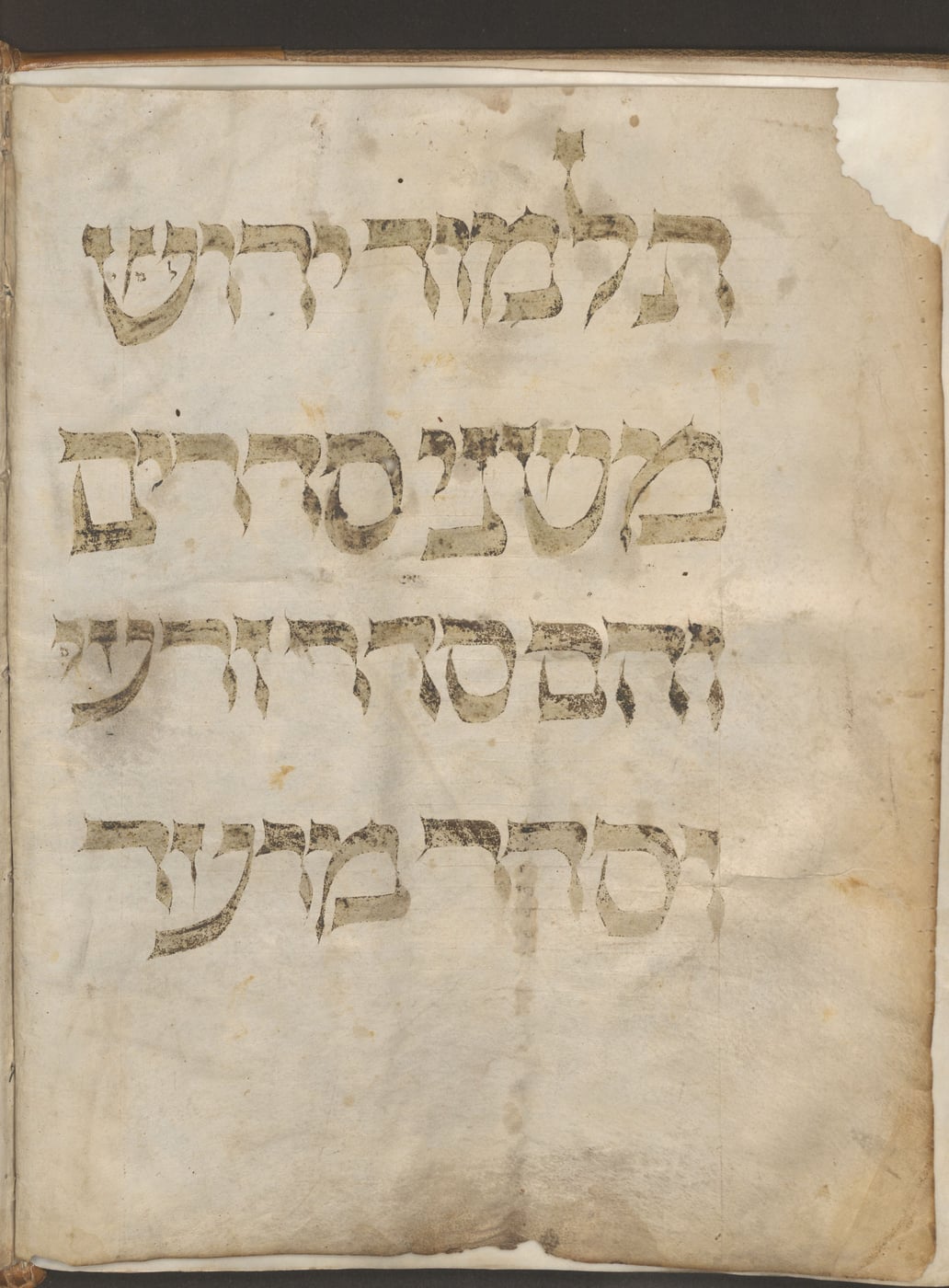
The academies did not close all at once. Institutions do not die on the day their patrons do. Scholars continued to teach; legal questions continued to be put and answered; the study-house in Tiberias remained open for years after 425. But the change was structural, and its consequences were irreversible. Without the Patriarch, there was no longer a central address. Without the aurum coronarium flowing in from diaspora communities, there was no institutional budget to sustain the academies at the scale they had maintained. Without the right to ordain, each academy became, in time, a local affair rather than a node in a network that spanned the empire. The scholars who had studied in the Galilee and then returned to their communities in North Africa, Asia Minor, and Italy could no longer look to Tiberias as the place that certified them. Babylon - where the academies of Sura and Pumbedita had been growing in authority throughout the fourth and fifth centuries - was ready. It did not replace the Galilee so much as fill the vacuum the Galilee's diminishment had left. By the sixth century, when Justinian's anti-Jewish legislation made life for Jewish scholars in the Byzantine empire considerably harder still, the Babylonian academies were the unchallenged centre of world Jewry. The Jerusalem Talmud, the text that the Galilean sages had assembled under Roman rule, was never polished and completed in the way the Babylonian Talmud would be. It preserved, in its very roughness, the mark of what had happened: the work was cut short by history.
The record
The ordination (semikha) that the Galilean Patriarchs had controlled was not merely a credential; it was the legal basis on which rabbinic courts could impose the full range of penalties and rulings. The Babylonian Talmud itself records the awareness of this rupture: tractate Sanhedrin 14a discusses the conditions under which ordination is valid, noting the land of Israel as its proper locus. Once continuous ordination in the Land broke, the rabbinic authorities understood that no court outside the Land held full Sanhedrin-level authority. The transfer of authority to Babylon was thus not a simple geographical shift but a formal reduction in the reach of Jewish law - a fact that rabbinic literature acknowledges with considerable unease. The standard historical account of the transition from Palestinian to Babylonian primacy is given in Salo Baron, A Social and Religious History of the Jews, vol. 2 (Columbia University Press, 2nd ed., 1952), chapters 9-10. For the question of ordination and its consequences, see David Goodblatt, Rabbinic Instruction in Sasanian Babylonia (E. J. Brill, 1975).
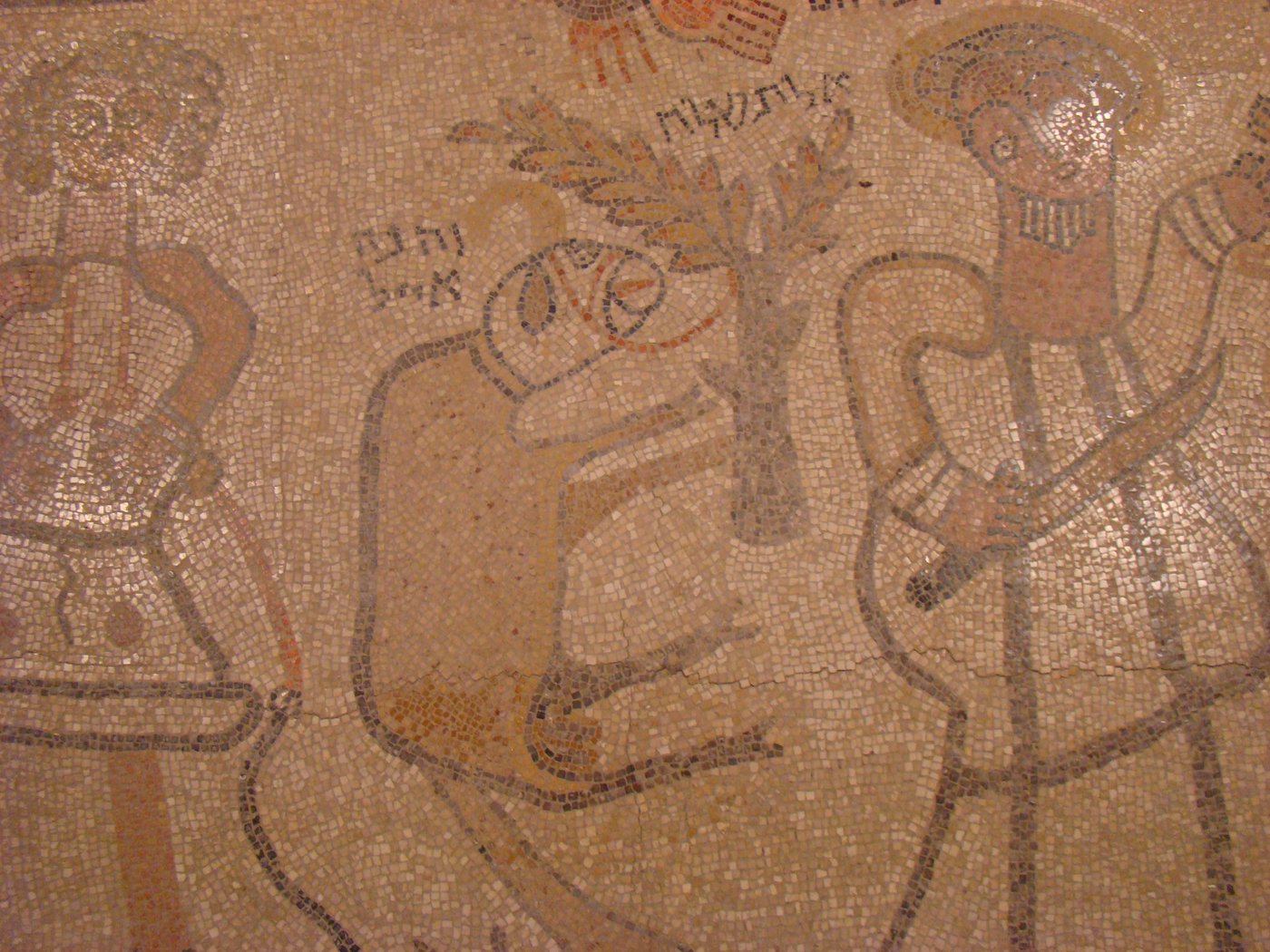
There is something worth holding about what the Galilee had been. It was not only an administrative centre or a legal institution. It was the place where the voice of the tradition spoke in the accent of people who still lived on the soil of Israel - who farmed its fields, fished its lake, buried their dead in its hillside tombs and carved menorot on the lintels of their synagogues. The synagogues of the Galilee from the third, fourth, and fifth centuries - at Capernaum, at Beit Alpha, at Hammat Tiberias - are among the most remarkable architectural evidence we have of a Jewish community that was not simply surviving in its land but investing in it, decorating it, rooting itself in it. The mosaic floors at Hammat Tiberias, with their zodiac wheel and their image of the sun-god in the nave, were laid in the fourth century by Jews who clearly had a confident, creative relationship with their own tradition. These were not a people preparing to leave. They did not choose to leave. The institutions were ended by an empire that had converted to a faith that found Jewish continuity in the Holy Land theologically inconvenient. That is the record. And what remains - the synagogue floors, the carved stones, the rough and urgent text of the Yerushalmi - is what a people left behind when the lamp was put out by other hands.
The record
The synagogue mosaic at Hammat Tiberias (Stratum IIa), dated by archaeologists to the late third or early fourth century CE, includes a zodiac roundel with the sun-god Helios at the centre and inscriptions in both Hebrew and Greek naming the donors - among them members of what appear to be prominent Tiberian families. The mosaic was excavated by Moshe Dothan for the Israel Antiquities Authority between 1961 and 1963; the excavation report is published as Moshe Dothan, Hammath Tiberias: Early Synagogues and the Hellenistic and Roman Remains (Israel Exploration Society, 1983). The site is administered by the Israel Nature and Parks Authority and is open to visitors. For the broader architectural programme of Galilean synagogues as evidence of Jewish communal investment in the land during the Roman and Byzantine periods, see Lee I. Levine, The Ancient Synagogue: The First Thousand Years (Yale University Press, 2nd ed., 2005).
The lamp the Romans put out in 425 was not extinguished. It was moved. The scholars of Sura and Pumbedita carried forward what the sages of Tiberias and Caesarea had built - citing them, arguing with them, preserving their rulings inside the great structure of the Babylonian Talmud. The text of the Galilee survived in the text of Babylon. The calendar the Patriarchs had fixed continued to be the calendar of every Jewish community on earth. The ordination chain, interrupted in the Land, was maintained in memory and in legal principle until the day - still anticipated - when it can be restored. What the empire abolished in a bureaucratic rescript was the institutional form. The substance it could not reach. It never could.