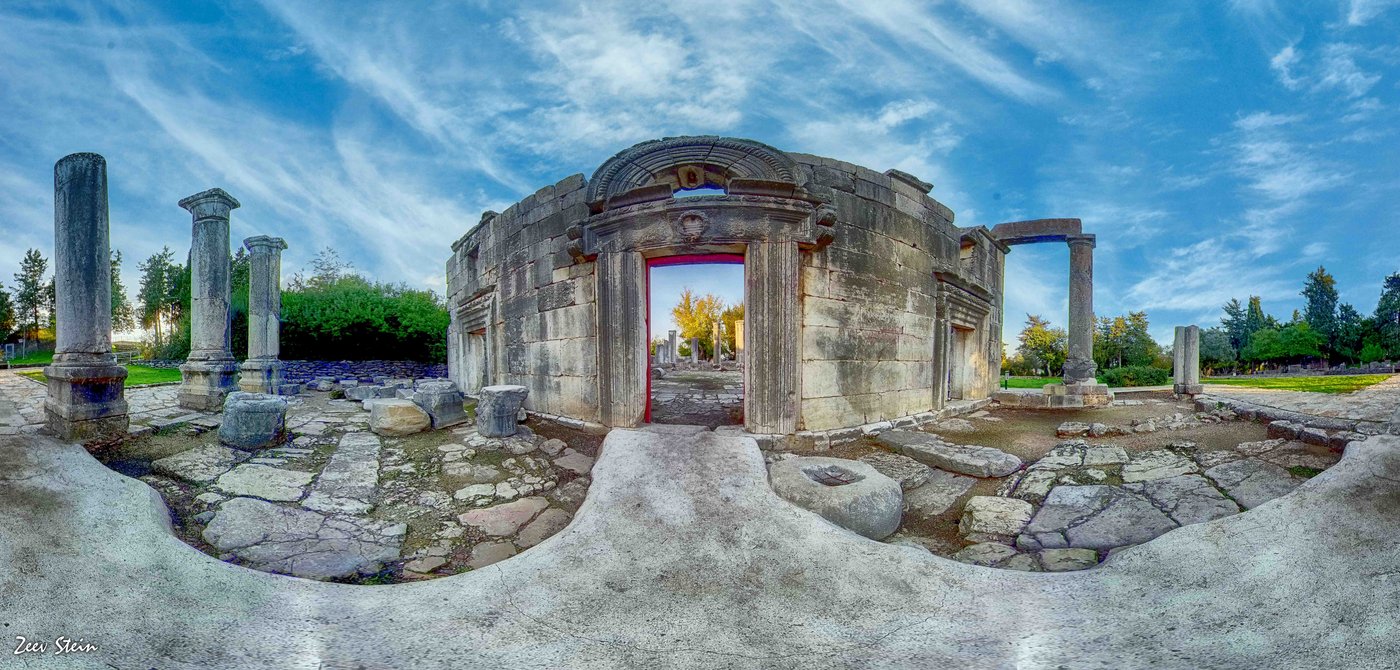
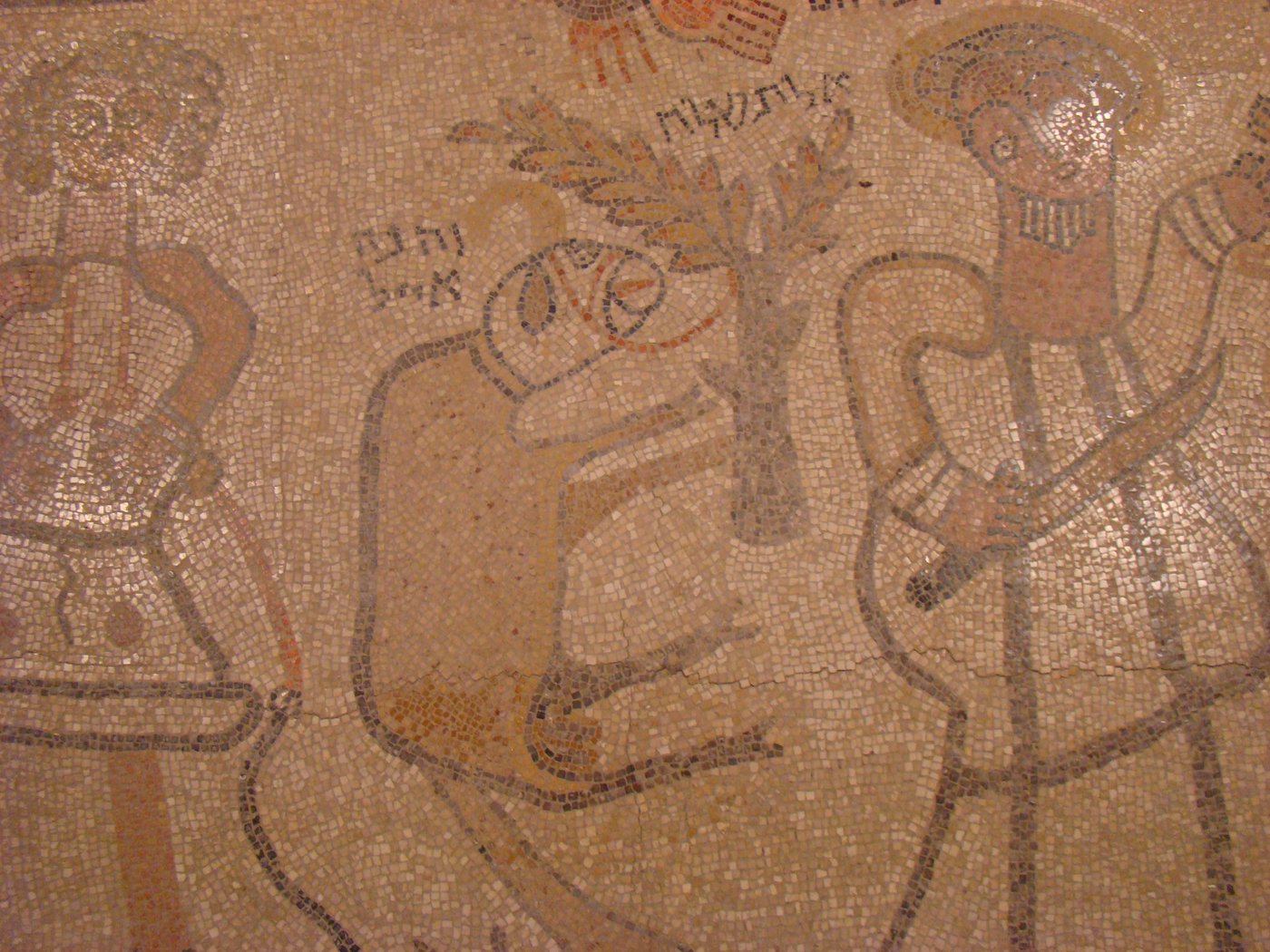
The name is a small deception. The Jerusalem Talmud was not compiled in Jerusalem - the city had been closed to Jewish habitation since Hadrian rebuilt it as Aelia Capitolina in 135 CE. It was compiled in the academies of the Galilee: at Tiberias on the shore of the Kinneret, at Caesarea Maritima on the coast, at Sepphoris where Rabbi Yehuda HaNasi had once established his court. Its proper name in Hebrew is the Talmud Yerushalmi - the Palestinian Talmud - and the attachment to Jerusalem is an act of longing, not of geography. The sages who built it were men who could see the hills of the Galilee from their study-house windows. Jerusalem was somewhere they faced when they prayed.
What they produced, over roughly two centuries of continuous argument following the completion of the Mishnah around 200 CE, is the earlier of the two great Talmuds - older, shorter, and in many places considerably harder to read than its Babylonian counterpart. The Yerushalmi is terse where the Bavli is expansive. It changes subject without ceremony. It preserves disputes in compressed, sometimes elliptical form, as if the editors trusted the reader to fill in what they already knew. It has been called the more authentic record of the land, the one that breathes in the dialect of the people who actually lived on the soil of Israel during the long centuries of Roman and Byzantine rule. Those people were under pressure. Their text shows it.
The record
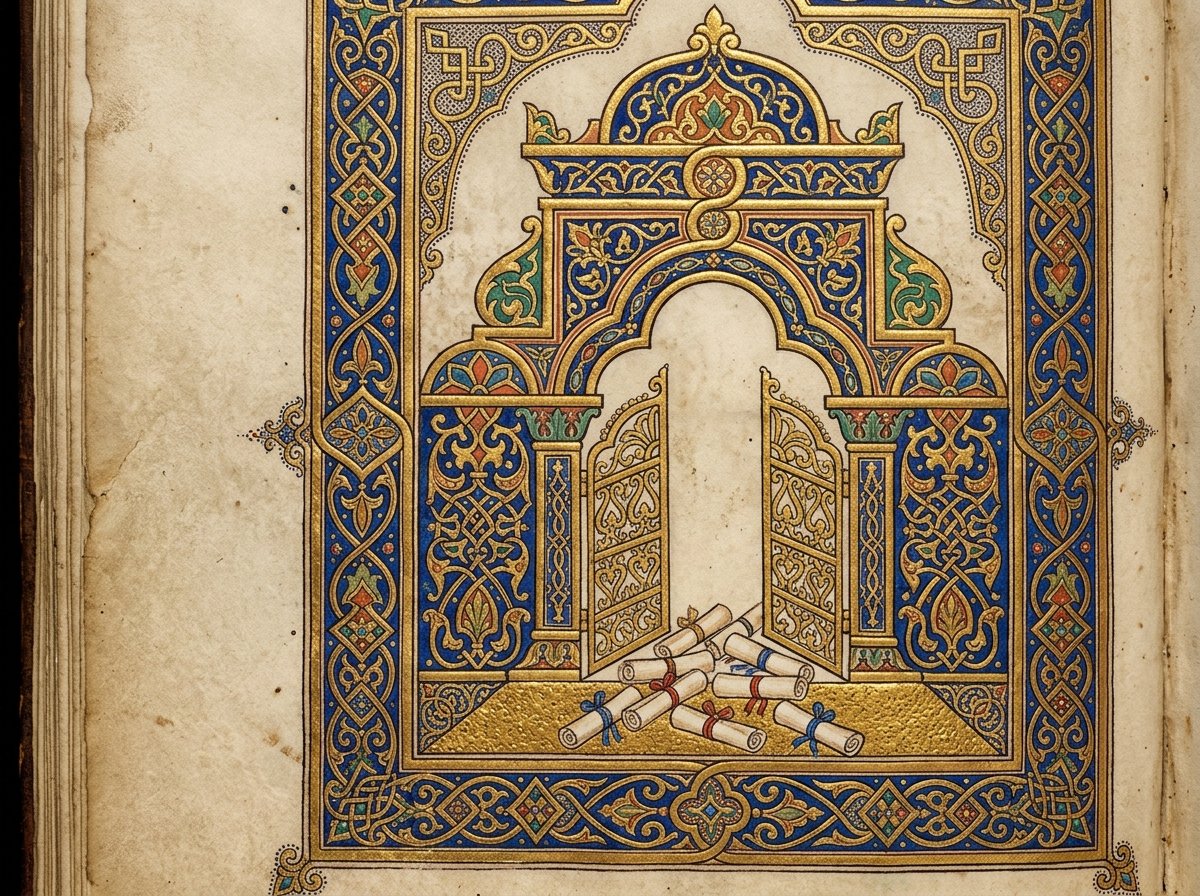
The Talmud Yerushalmi is a commentary on thirty-nine of the sixty-three tractates of the Mishnah, covering the orders of Zeraim (Agricultural Laws), Moed (Festivals), Nashim (Women), and Nezikin (Damages); it lacks a sustained Gemara on the orders of Kodashim and Tohorot, possibly because the Temple-dependent laws of those orders felt too remote from daily life in a world without a Temple. Scholars date the final editorial activity to around 400 CE, with the main centres of composition identified as Tiberias and Caesarea. The oldest complete manuscript of the Yerushalmi is the Leiden manuscript, copied in 1289 CE and now held at Leiden University Library (Scaliger 3), which served as the basis for the first printed edition, produced in Venice by Daniel Bomberg in 1523-24. The Venice edition established the standard pagination still in use today. See Sussman, Y., "The Scholarly Study of the Jerusalem Talmud" in Talmud Yerushalmi (Academy of the Hebrew Language / Israel Academy of Sciences, 2001).
The Yerushalmi is different in texture from the Babylonian Talmud - and the difference matters for understanding what it preserves. Where the Bavli was edited and re-edited across the fifth, sixth, and seventh centuries under the relative stability of the Sassanid Jewish academies at Sura and Pumbedita, the Yerushalmi was compiled under conditions that did not allow for the same smoothing and harmonising. The Roman Empire's conversion to Christianity in the fourth century brought new legal restrictions on Jewish life in the land of Israel; the academies of the Galilee were weakening, their scholarly leadership diminishing. The Yerushalmi does not feel like a work that was polished over generations until all the rough edges were filed away. It feels like a work that was gathered while there was still time to gather it. Rabbi Yochanan bar Nappacha, who taught at Tiberias and died around 279 CE, is the most frequently cited authority in the Yerushalmi; his disciples and their disciples carried the work forward, but the editorial hand that could have unified and extended it never fully arrived.
The record
The Talmud Yerushalmi is written primarily in Jewish Palestinian Aramaic, a dialect distinct from the Jewish Babylonian Aramaic of the Bavli, with significant admixture of Hebrew and occasional Greek loanwords - a linguistic signature of the Roman-Byzantine land of Israel. The tractate Nedarim (Vows) in the Yerushalmi preserves one of the most cited contrasts with the Bavli: the same legal topics are handled in strikingly different dialectal forms and argumentative structures, a difference analysed extensively by Saul Lieberman in Talmud of Caesarea (Jerusalem, 1931) and in his six-volume Tosefta Ki-Fshutah (Jewish Theological Seminary of America, 1955-1988). The Academy of the Hebrew Language published a new critical edition of the Yerushalmi beginning in 2001, the first to work systematically from the Leiden manuscript alongside the Cairo Geniza fragments and early quotations in medieval rabbinic literature. The Geniza fragments - held largely at Cambridge University Library (Taylor-Schechter Collection) and the Jewish Theological Seminary of America - have been essential to correcting the many errors introduced by the Bomberg press.
There is a tradition, repeated in later sources, that the Yerushalmi was never "completed" in the way the Babylonian Talmud was - that the deteriorating conditions of Jewish life in the Byzantine land of Israel cut the project short before the sages could finish what they had started. Whether or not that is precisely true, it has shaped how the document is read. Scholars and learners approach the Yerushalmi knowing it is harder, knowing it rewards patience and specialist knowledge, knowing it will sometimes break off a discussion mid-thought or resolve a problem with a terse formula where the Bavli would spend paragraphs. In the medieval period it was the Bavli that became the standard, the curriculum, the authority that governed halacha across the communities of Europe and the Middle East. The Yerushalmi receded - studied by specialists, quoted for its distinctive rulings, never quite the daily bread of the study-house in the way its Babylonian twin became.
But it was never abandoned. And its recovery - through the Leiden manuscript, through the Geniza fragments, through the patient textual work of scholars like Saul Lieberman and later Jacob Neusner - has restored to view a Talmud that speaks in the voice of the land itself. The Galilee in the third and fourth century: Roman roads and Byzantine churches going up around the Jewish towns, the old priestly families still keeping their traditions in Sepphoris, the fish markets of Tiberias, the rabbinic courts arbitrating in the dialect of the people who actually lived here. The arguments in the Yerushalmi happened in that world. They were not distant, theoretical, conducted in the comfort of a stable diaspora. They were conducted by sages who were subjects of an empire that was becoming, slowly and then faster, hostile to them. That context is in the text, even when the text does not say so.
The record
The Yerushalmi's tractate Sanhedrin preserves a legal discussion - absent in this form from the Bavli - concerning the status of the land of Israel and the obligations it generates. Tractate Sheviit (the Sabbatical Year) in the order Zeraim is one of the most extensively studied portions of the Yerushalmi precisely because it deals with agricultural laws that remained practically relevant to Jews farming in the land of Israel in a way they were not to the Babylonian diaspora; the Bavli has no Gemara on the entire order of Zeraim except tractate Berakhot. The distinction was noted already by Maimonides (Rambam) in his Mishneh Torah, Introduction, where he explains the differing scope of the two Talmuds. For the critical text of Yerushalmi Sanhedrin, see the Academy of the Hebrew Language edition, vol. 4 (Jerusalem, 2016); for Zeraim, see Lieberman's analysis in The Talmud of Caesarea. The Cairo Geniza fragments of the Yerushalmi are searchable through the Friedberg Genizah Project (genizah.org).
The Jerusalem Talmud is not the easier road into the rabbinic world. It repays effort with something the Bavli, for all its richness, cannot quite give: the sound of the land. The sea is nearby. The farms are nearby. The arguments about what you may do on the Sabbatical Year matter because the fields outside the window of the study-house in Tiberias are actually there, and the Roman tax-collector will be back before the harvest. The Yerushalmi was compiled by men who stayed. Whatever honour the Bavli accumulated over a thousand years of diaspora learning, the Yerushalmi holds a different kind of authority - the authority of people who did not leave, who argued in the Aramaic of the Galilee, who built their document in the long shadow of an empire that had destroyed their city and was in the process of remaking their world. That document survived. It is still being read.