There is a temptation to tell this as a story that ends badly - and it does end badly, in 627 CE, when the Banu Qurayza were besieged in their fortresses south of Medina and the outcome was massacre. But that ending has swallowed everything before it, which is nearly a millennium of Jewish life in Arabia that was, by any measure, vivid and self-assured. The Jewish tribes of the Hejaz did not arrive as refugees awaiting tolerance. They arrived - or perhaps grew there, the question of origins is genuinely open - as people who belonged, and for centuries they behaved accordingly.
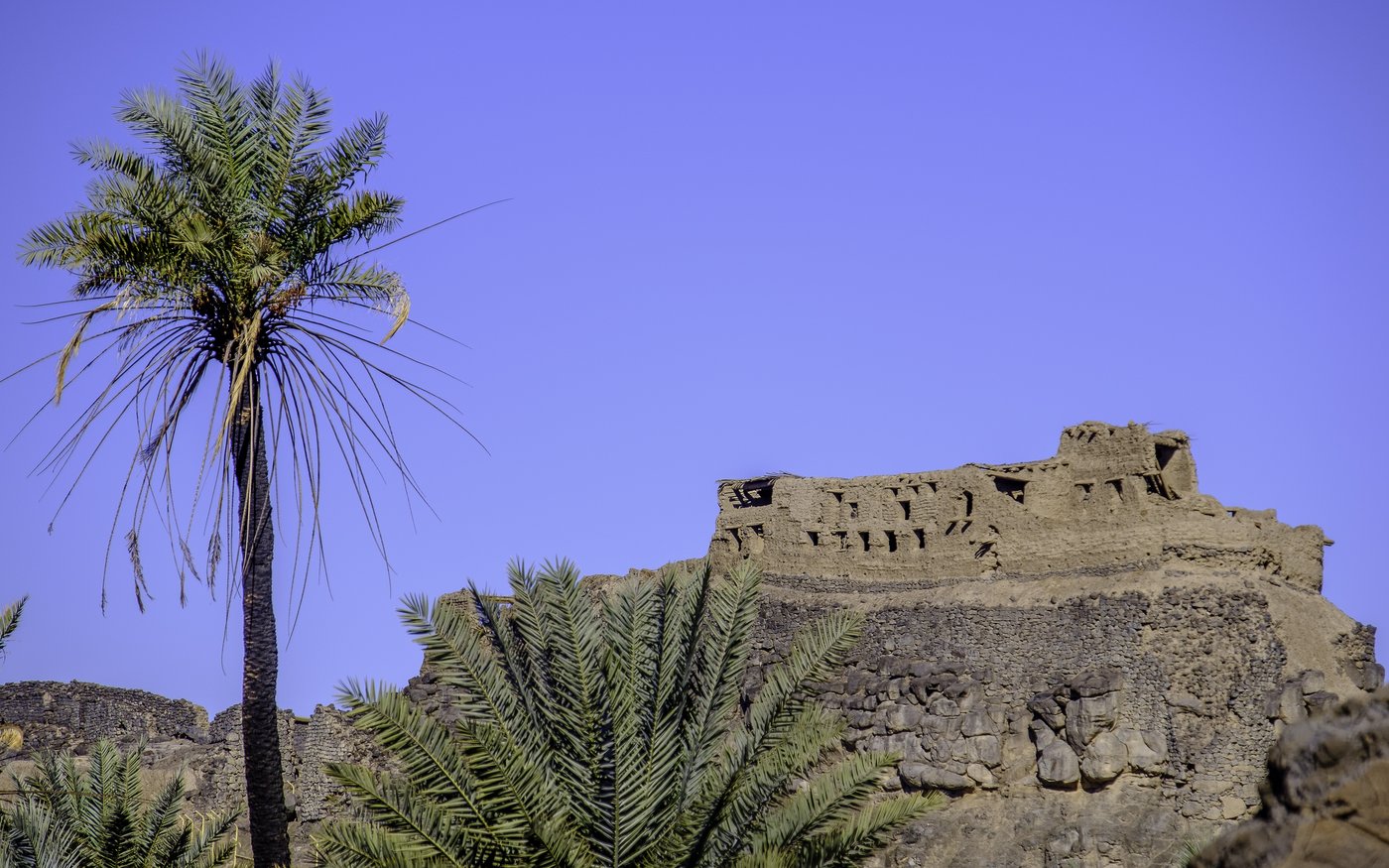
The great oasis towns of northwestern Arabia - Yathrib (later Medina), Khaybar, Tayma, Fadak - were anchored by Jewish agricultural communities. They cultivated the date orchards and grain fields that made the oases valuable in the first place. They maintained fortified strongholds, kept weapons, negotiated alliances with Arab neighbours, and composed verse in Arabic that won them the same honours as any Arabian poet. Samaw'al ibn Adiya, whose fortress of al-Ablaq stood near Tayma in the sixth century CE, was celebrated across the peninsula for his fidelity - a virtue so exemplary that his name became a proverb in Arabic for a man who keeps his word even at catastrophic personal cost. He was Jewish. Nobody in the telling thought this detail surprising.
The record
The ancient oasis of Tayma in northwestern Arabia has yielded inscriptions from the fifth and sixth centuries BCE, and later Arabic tradition places a Jewish population there in late antiquity. A Babylonian chronicle preserved in the British Museum records that Nabonidus, last king of Babylon, resided at Tayma for ten years from around 553 BCE, during which time the Babylonian New Year festival was suspended. The inscriptions from Tayma itself - including Aramaic texts held at the National Museum of Saudi Arabia in Riyadh - show Tayma as a multiethnic trading centre with close ties to the Babylonian diaspora. Jewish settlement in northern Arabia fits squarely into the broader movement of exiled and dispersed Israelites into the surrounding region after the Babylonian conquest of 586 BCE. (Werner Caskel, "Lihyan und Lihyanisch," 1954; Michael Macdonald, "Ancient North Arabian," in The Cambridge Encyclopedia of the World's Ancient Languages, 2004.)
The tribes had names that have rung through Islamic historiography ever since: Banu Nadir, Banu Qaynuqa, Banu Qurayza in Medina; the communities of Khaybar, whose date palms were productive enough that their conquest in 628 CE was a significant economic prize. What is striking, reading the Arabic sources that preserve this period - primarily Ibn Ishaq's Sira and the later compendia of al-Waqidi and Ibn Sa'd - is how integrated these tribes were. They spoke Arabic. They composed Arabic poetry. They entered into half the alliances and feuds that made up the political life of pre-Islamic Medina. The distinction between "Arab" and "Jew" in this setting was a religious and genealogical one, not a cultural or linguistic barrier. A Jew of Medina and his Arab neighbour shared a language, a landscape, and often a set of clients and patrons. What they disagreed about, with the arrival of Islam, was allegiance.
The record
The "Constitution of Medina" - a series of agreements attributed to the Prophet Muhammad in 622 CE and preserved in Ibn Ishaq's Sirat Rasul Allah (trans. A. Guillaume, Oxford University Press, 1955, pp. 231-235) - lists the Jewish tribes of Medina as parties to a compact alongside the Arab clans of the Aws and Khazraj. The text explicitly names the Banu Awf and other Jewish clans of Medina, and declares them "a community alongside the believers." It acknowledges that "the Jews of Banu Awf are a community alongside the believers. To the Jews their religion and to the Muslims their religion." This document, whatever its precise editorial history, reflects the degree to which the Jewish tribes were recognised as a constituent part of Medinan civic life at the moment Islam arrived in the city. Their subsequent expulsion and destruction came from political rupture, not from having been peripheral.
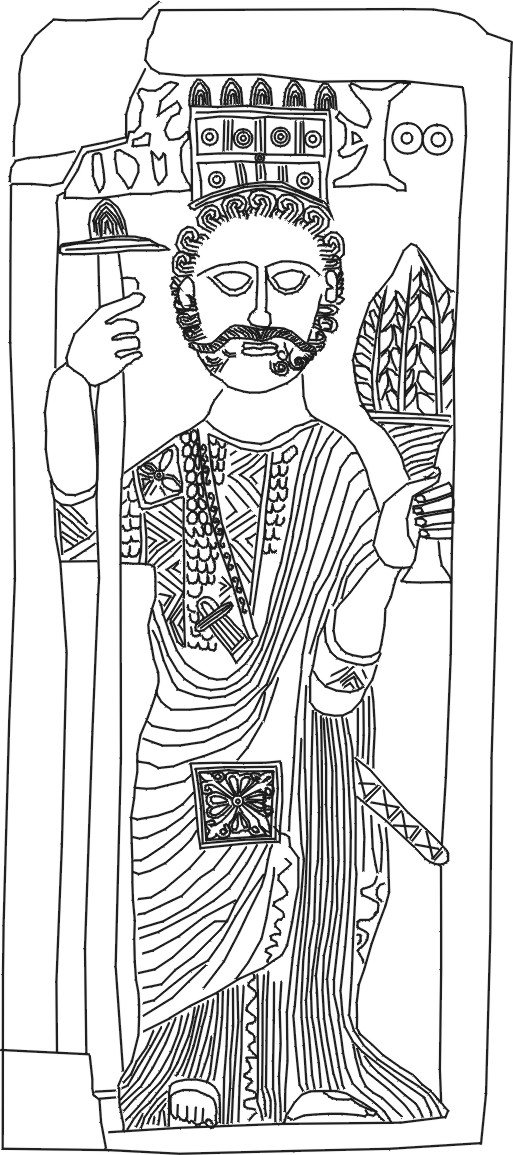
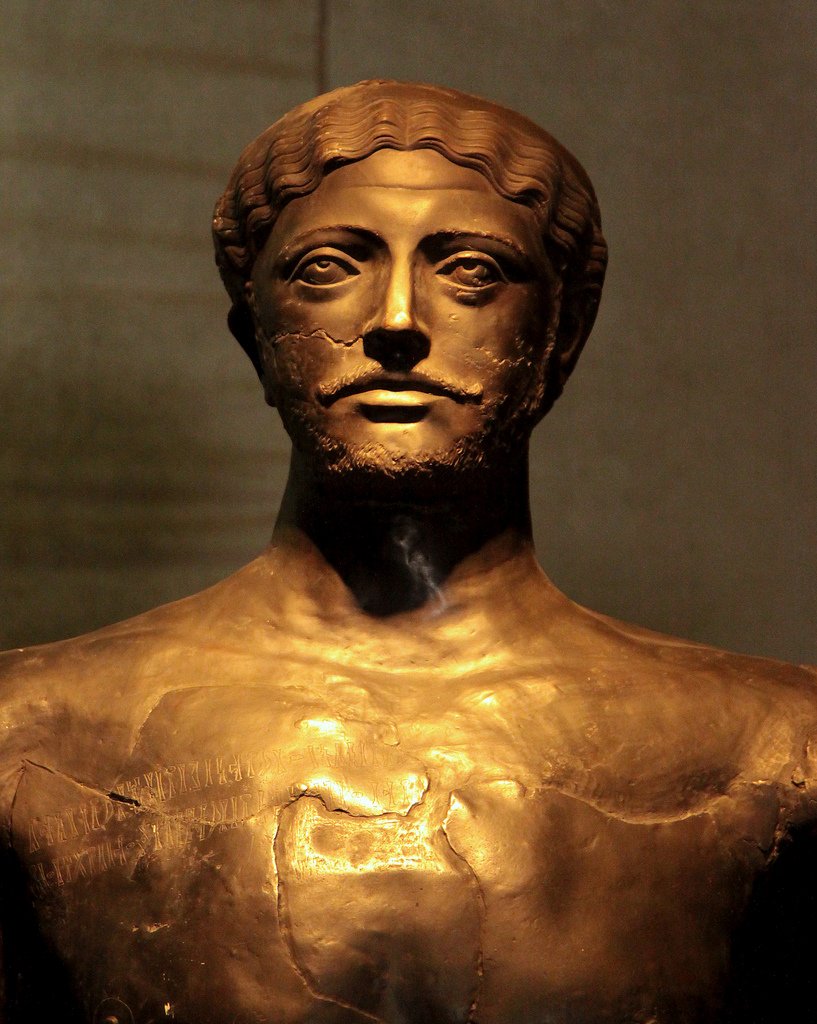
Yemen tells a different, longer story. The kingdom of Himyar in southern Arabia converted to Judaism - or at least to a form of Jewish-influenced monotheism - in the late fourth century CE, and the Himyarite kings maintained that affiliation for nearly a century and a half. The last Himyarite king, Yusuf Asar Yathar (known in Islamic sources as Dhu Nuwas), is described as Jewish in the sources. He died in 525 CE fighting an Aksumite Ethiopian invasion, and his kingdom died with him. What these Yemeni communities shared with the Hejaz tribes was the capacity to be Arabian on their own terms - to hold Jewish identity not as an import that needed explaining, but as a native feature of the landscape. Arabia had Jews the way it had frankincense routes: as part of what made it itself.
The record
The Himyarite Jewish kingdom is attested in Byzantine, Syriac, and Ethiopic sources, as well as in South Arabian inscriptions. A letter of Simeon of Beth Arsham, a Syriac bishop writing around 524 CE, describes the persecutions carried out by Dhu Nuwas against Christian communities in Najran and refers to the king's Jewish practice. The Martyrs of Najran account - preserved in Syriac and translated by Irfan Shahid in The Martyrs of Najran: New Documents (Subsidia Hagiographica 49, Société des Bollandistes, Brussels, 1971) - documents the conflict and its Aksumite aftermath. South Arabian monumental inscriptions from Marib and Zafar catalogued by Christian Robin (notably his survey "Himyar et Israël," Comptes rendus des séances de l'Académie des Inscriptions et Belles-Lettres, 2004) confirm the monotheising religious reforms of the Himyarite court from the late fourth century onward.
The Jews of Arabia were not a footnote waiting to be expelled. They were farmers and poets and fortress-holders who had made themselves at home in one of the most demanding landscapes on earth, and who left their names in the Arabic language, in the biography of the Prophet, and in the South Arabian stone. The ending was brutal. The life before it was full.