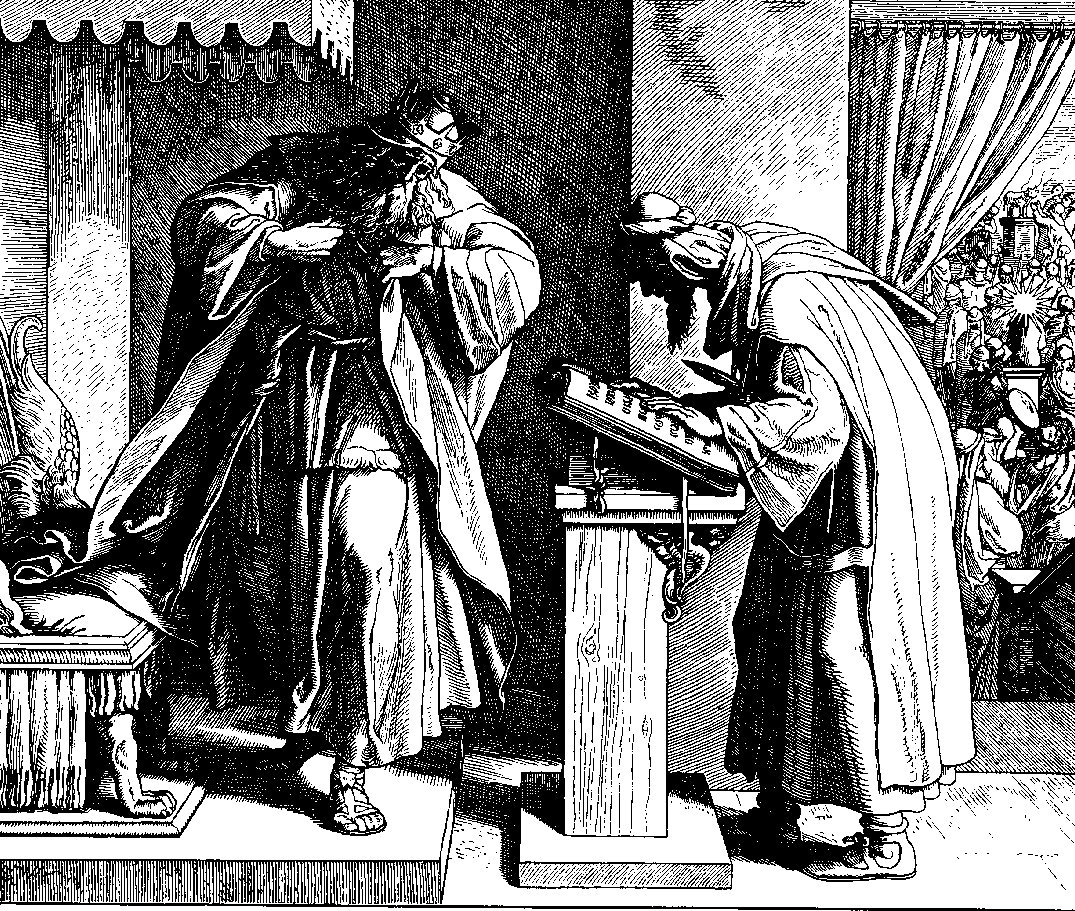
Somewhere in the walls or storage chambers of Solomon's Temple, a scroll had been waiting. No one alive knew it was there. The workmen brought in by King Josiah to repair the crumbling fabric of the building in 622 BCE were not looking for anything except sound stone and timber - but the High Priest Hilkiah found a book. He handed it to the royal scribe Shaphan. Shaphan read it to the king. And Josiah, hearing its words, tore his robes.
The text was almost certainly an early form of Deuteronomy - the great book of the covenant, with its blessings for faithfulness and its devastating curses for apostasy. Josiah knew at once that Israel had been living under the curses without knowing it. The shrines on the high places, the altars to Baal and Asherah, the rituals absorbed from neighbouring peoples over generations of Assyrian dominance - all of it was written condemnation. What the scroll demanded and what the kingdom practised were not the same thing. The king called a national assembly, read the entire scroll before the people, and bound the nation to the covenant in a public ceremony. Then he acted.
The record
The discovery of the scroll and Josiah's subsequent reform are described in detail in 2 Kings 22-23 and in a parallel account in 2 Chronicles 34-35. The biblical narrative names Hilkiah the High Priest as the finder, Shaphan the scribe as the reader, and the prophetess Huldah as the authority consulted to authenticate the text - a striking detail, since Jeremiah and Zephaniah were both active prophets at the same time. Josiah's reform actions listed in 2 Kings 23 constitute the most extensive catalogue of cultic dismantling in the Hebrew Bible: the destruction of Asherah poles, the removal of priests who burned incense to Baal, the demolition of shrines associated with the "hosts of heaven," and the defilement of the site at Topheth in the valley of Hinnom where children had been passed through fire. The Passover he then celebrated, the text records, had not been observed in the manner prescribed since the time of the judges.
What Josiah launched was not merely a religious housecleaning. It was a political and theological statement of radical clarity: Israel belonged to one sovereign, owed loyalty to one set of obligations, and the geography of that loyalty was to be concentrated in one place - Jerusalem. The high places scattered across Judah, where local priests had maintained local versions of Israelite religion for generations, were torn down. The priests who served them were summoned to Jerusalem and pensioned off from the central altar. This was centralisation of worship as a matter of law, not merely of preference. The scroll had given Josiah the mandate; he used it with thoroughness that had no precedent among the kings who came before or after him.
The record
The scholarly identification of the "book of the law" with an early form of Deuteronomy goes back at least to Wilhelm de Wette's 1805 dissertation, which argued that the Josianic scroll and the core of Deuteronomy (roughly chapters 12-26) were one and the same document, written or compiled in the period leading up to the reform. This hypothesis - known in scholarship as the Deuteronomic hypothesis - has been refined but not overturned in the two centuries since. The centralisation of worship mandated in Deuteronomy 12 maps precisely onto Josiah's actions in 2 Kings 23. An archaeological correlate appears in the excavations at Arad in the Negev, where Israeli archaeologist Yohanan Aharoni identified a Judahite temple at the site that was decommissioned - its altar buried, its standing stones laid face-down - in a stratum corresponding to the late seventh century BCE. Aharoni proposed this reflected the Josianic reform reaching into the frontier. (Tel Arad excavations, Israel Antiquities Authority; Aharoni, Y., "Arad: Its Inscriptions and Temple," 1968.)
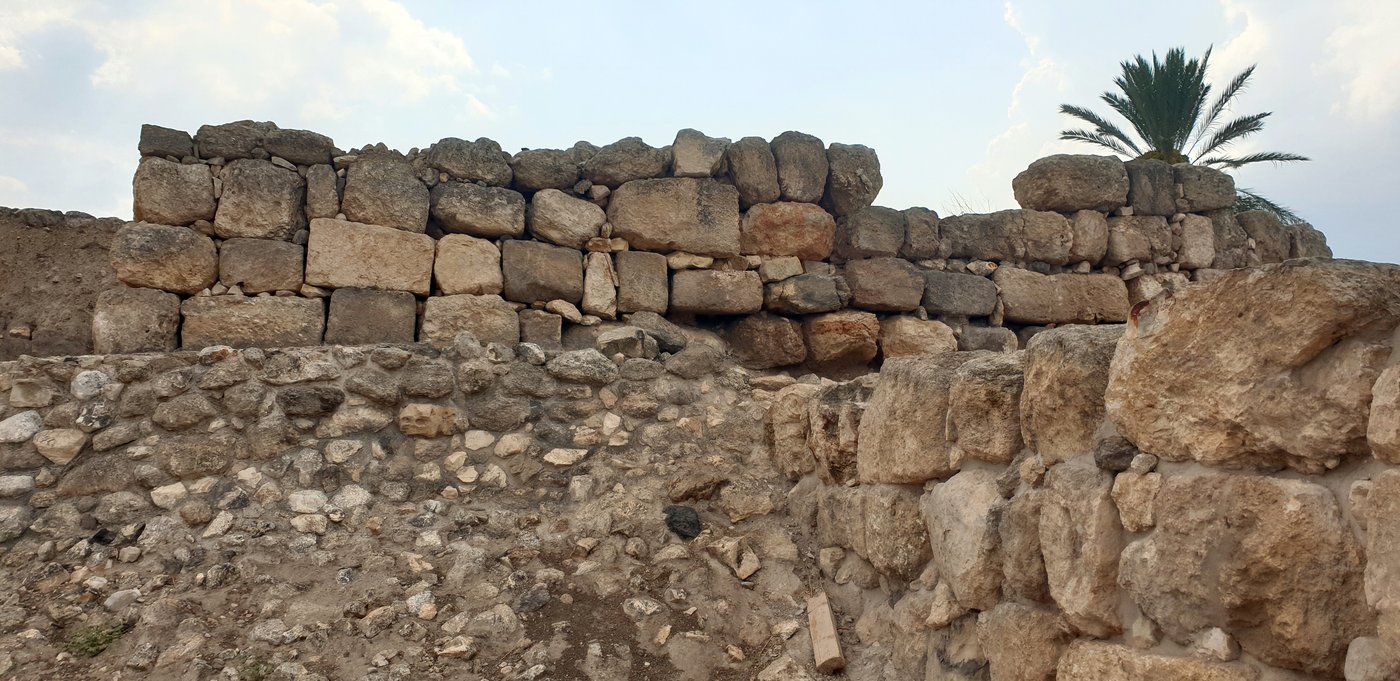
The prophetess Huldah deserves a moment of her own. When Josiah needed to know whether the scroll was genuine and its curses real, he did not send his envoy to Jeremiah or to Zephaniah. He sent to Huldah, who lived in the new quarter of Jerusalem, and she answered with the full authority of prophecy. Her oracle confirmed the scroll's authenticity and pronounced judgment - but it also told Josiah something personal: because he had humbled himself and wept before hearing it read, he would not live to see the disaster. He would be gathered to his fathers in peace. The promise was kept, more or less. Josiah died in battle at Megiddo in 609 BCE, fighting the Egyptian pharaoh Necho - before the Babylonian exile he had been spared the sight of. His reform did not outlast him; his successors dismantled much of what he had built. But the scroll survived. The words he had read aloud in the Temple court went on to shape the entire Deuteronomistic tradition that runs through Joshua, Judges, Samuel, and Kings - a literary and theological river that carries the covenant voice of that day forward into every generation that came after.
There is something almost too neat about the moment, and yet its power holds. A building being repaired; a text pulled from the wall; a king who reads it and understands at once that it condemns him and his people not for crimes they chose but for a covenant they forgot. Josiah's response was not denial or delay. He heard the curses and he moved. The reform he enacted was imperfect, incomplete, and ultimately reversed. But the book itself was never lost again. The tradition that crystallised around it - that Israel is a people bound by words, obligated by a text, answerable to something older than any dynasty - is the tradition that carried the Tribe through every exile and dispersal that followed. The scroll in the wall was, in that sense, not a discovery. It was a recovery.
Josiah stands in the record as the king whom 2 Kings 23:25 calls unmatched in return to the covenant - before him or after him. The verdict is not a political one. It is a measure of how seriously he took a text that most of his predecessors had quietly set aside. That text is still read. The covenant he renewed is still the covenant.