It had survived for centuries. A bronze serpent on a pole, kept somewhere in or near the Jerusalem Temple precincts, venerated as the very object Moses had raised in the wilderness to heal those bitten by snakes during the desert wandering. The story behind it was ancient and legitimate - it was there in the text, in the book of Numbers. But by the reign of Hezekiah, the veneration had curdled into something else. People were burning incense to it. They had given it a name: Nehushtan. And Hezekiah picked it up and smashed it.
That single act captures the spirit of the man. Hezekiah son of Ahaz became king of Judah around 715 BCE, inheriting a kingdom that had spent generations tolerating - and in his father's case actively encouraging - worship at local high places, household shrines, and sanctuaries across the land. The Assyrian empire under Tiglath-pileser III had already dismembered the northern Kingdom of Israel, and the flood of Israelite refugees pouring into Judah brought with them a mixture of traditions, loyalties, and practices that had no business in a Jerusalem Temple that was supposed to be the single focus of the nation's covenant relationship with ה׳. Hezekiah looked at all of this and decided it had to end.
The record
The biblical account of Hezekiah's reform is concentrated in 2 Kings 18:1-8, one of the most admiring portraits in the entire book of Kings. The text names Hezekiah's destruction of the Nehushtan explicitly: "He broke in pieces the bronze serpent that Moses had made, for until those days the children of Israel did burn incense to it; and he called it Nehushtan" (2 Kings 18:4). The name is a Hebrew wordplay - nehushtan combining nachash (serpent) and nechoshet (bronze) - and the author's tone makes clear that Hezekiah's contemptuous naming of the object was itself part of the demystification. The passage goes on to credit him with removing the high places, breaking the standing pillars, and cutting down the Asherah poles - a comprehensive dismantling of the popular cult sites that had accumulated across the landscape of Judah. The parallel account in 2 Chronicles 29-31 expands significantly on the reform, describing Hezekiah's purification and re-consecration of the Temple, the reinstitution of the Levitical service, and an extraordinary Passover celebration to which he invited not only Judah but the surviving remnants of the northern tribes. Whatever the precise historical relationship between these two accounts, both agree that Hezekiah's reform was real, centralising, and unprecedented in its scope.
Centralisation was the key word. Hezekiah was not simply a pious man troubled by idolatry - though the record suggests he was that too. He was a king who understood that a nation's ritual geography is also its political geography. As long as every town and village had its own altar, its own priest, its own local claim on the divine, the monarchy in Jerusalem was just one power centre among many. Pull worship into the capital, close the high places, break the objects that sustained local cult, and you also pulled taxation, authority, and loyalty toward the throne. The Nehushtan was a casualty not only of religious principle but of state-building. Hezekiah was constructing a kingdom capable of surviving Assyrian pressure, and that meant building one that held together.
The physical evidence for what that kingdom looked like is remarkably concrete. Storage jars stamped with the royal seal - the famous lmlk ("belonging to the king") impressions, bearing the symbol of a four-winged scarab or a two-winged sun disc and the name of one of four Judahite cities - have been found in large quantities at sites across Judah. They represent a royal administrative system for provisioning the realm, standardising measures, and preparing for siege conditions. Hezekiah knew Sennacherib was coming. The Nehushtan was smashed; the grain jars were being stamped. The reform and the military preparation were the same project.
The record
The lmlk storage-jar seals are among the best-attested archaeological markers of the late eighth century BCE in Judah. More than 2,000 stamped jar handles have been recovered from sites including Lachish, Gibeon, Ramat Rahel, and Jerusalem itself, concentrated in destruction layers datable to Sennacherib's 701 BCE campaign. The four city names that appear on the seals - Hebron, Ziph, Socoh, and Mmst - are usually taken as depot names or administrative labels in a royal provisioning network; the exact reading of Mmst remains debated. The seal programme is discussed in detail by Andrew Vaughn in Theology, History, and Archaeology in the Chronicler's Account of Hezekiah (Scholars Press, 1999) and by Oded Lipschits and others in the Tel Aviv journal. Sennacherib's own account of his 701 BCE campaign against Judah - preserved on the Taylor Prism, now in the British Museum (BM 91032) - records the siege of Jerusalem and claims to have shut Hezekiah "like a bird in a cage," while listing 46 Judahite towns taken and 200,150 people deported. Sennacherib does not claim to have taken Jerusalem. Neither does 2 Kings. The two accounts, hostile and sympathetic, converge on the same essential outcome: the city held.
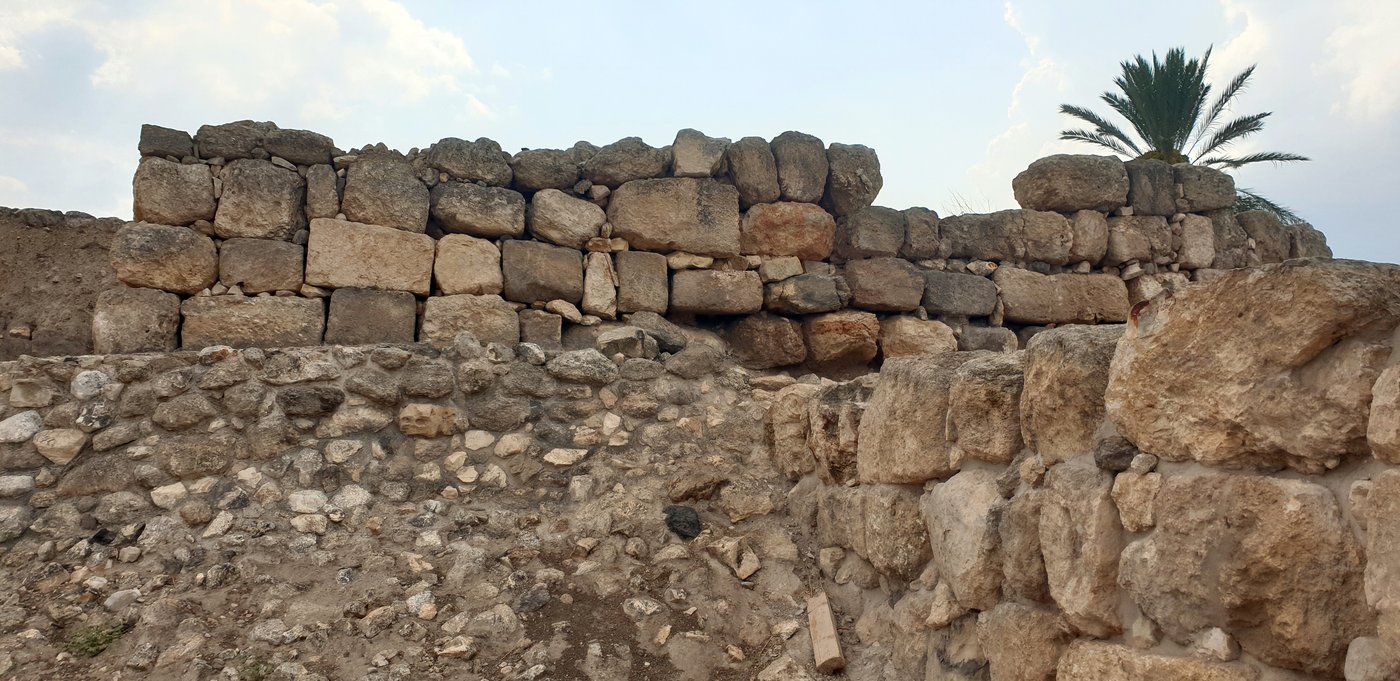
The reform also left its mark on the city's fabric. Hezekiah's builders are traditionally associated with what is now called the Broad Wall in the western quarter of Jerusalem - a massive defensive fortification, 7 metres thick in sections, visible today in the Jewish Quarter of the Old City, though recent dating has reopened the question of its exact builder. It enclosed the western hill within the city perimeter for the first time, almost certainly to shelter the Israelite refugees who had come south from the fallen north. The same period saw the cutting of the Siloam Tunnel, a 533-metre channel hewn through solid rock to bring the waters of the Gihon Spring inside the city walls, securing Jerusalem's water supply against siege. The tunnel's diggers left an inscription carved into the rock near the southern end - discovered in 1880 and now in the Istanbul Archaeological Museum - describing the moment the two teams, working from opposite ends, heard each other's picks and broke through. It is one of the earliest substantial Hebrew inscriptions ever found, and it speaks with the matter-of-fact pride of engineers who had done something remarkable.
The Nehushtan had been part of the story of the tribe since the wilderness. Hezekiah was not erasing that story - he was insisting it be read correctly. The serpent was a memory, not a god. ה׳ was not to be approached through bronze relics and incense smoke at a hundred local shrines; ה׳ was present in Jerusalem, in the Temple, in the covenant kept alive by a nation that still understood what it was. That act of clarification - violent, iconoclastic, politically shrewd, and spiritually serious all at once - is what the book of Kings means when it says there was no king like him before or after.
The record
The Siloam Tunnel inscription, known as the Siloam inscription, was discovered in 1880 carved into the tunnel wall approximately 6 metres from the southern outlet into the Pool of Siloam. Written in classical Biblical Hebrew in a Phoenician-derived script, it describes the breakthrough moment when two teams of tunnellers met underground. The inscription was removed from the tunnel in 1890 and is held at the Istanbul Archaeological Museum. It dates to the late eighth century BCE and is one of the longest monumental Hebrew inscriptions from the First Temple period. The Broad Wall in Jerusalem's Jewish Quarter, uncovered by Nahman Avigad in excavations between 1969 and 1983, is traditionally interpreted as Hezekiah's fortification of the expanded city, referenced in Isaiah 22:10 - "You counted the houses of Jerusalem and you tore down houses to strengthen the wall." Both structures are discussed in Avigad's Discovering Jerusalem (Blackwell, 1984) and in the Israel Exploration Journal across the relevant excavation seasons. The Broad Wall can be visited in situ in the Jewish Quarter today.
Standing at the Broad Wall today, or descending into the Siloam Tunnel, you are standing inside Hezekiah's project. The tunnel is still dark and the water still moves. The wall is still enormous. And the Nehushtan is long gone - which is exactly what Hezekiah intended. A tribe that can look at its own inherited objects and say "this one has become an obstacle, it has to go" is a tribe that knows the difference between the symbol and the thing it points to. That discernment, exercised with a hammer in a Jerusalem courtyard around 715 BCE, is as much a part of the inheritance as the bronze serpent ever was.