Slutsk does not advertise itself, which is rather the point. It was an ordinary Belarusian market town - timber, leather, the alcohol trade, a river - and it was also, for a long stretch, one of the oldest and most learned Jewish communities in Lithuania. Jews are first documented there in 1583. By the close of the nineteenth century they were not a minority living quietly at the edge of a Christian town. They were the town.
That fact is worth pausing on, because the usual mental picture of the shtetl is of a small, precarious island. Slutsk in 1897 had 10,264 Jews out of a total population of 14,349. More than three-quarters of the place was Jewish. The market was Jewish, the merchants were largely Jewish, and the rhythm of the week ran on a Jewish calendar. This was not survival on sufferance. It was a Jewish town with a few neighbours.
A town of consequence
Slutsk earned its standing early. In 1691 the Council of Lithuania - the self-governing parliament of Lithuanian Jewry - admitted Slutsk as one of its leading communities, alongside Brest, Grodno, Pinsk and Vilna, and from then it sent its own delegate to the Council. The phrase the Council used was that Slutsk had grown rich and large and full of "expert scribes and Talmudists". The town had a vote in the running of a nation within a nation, and it had earned the vote with books.
The rabbis who held the seat tell the same story. Yosef Dov Ber Soloveitchik, the Beis Halevi and patriarch of the Brisker dynasty, served as rabbi of Slutsk from 1865 to 1874 before moving on to Brisk. Later came Yaakov Dovid Wilovsky, the Ridbaz, famed for his commentary on the Jerusalem Talmud, who took the chief rabbinate around 1890. A town does not attract minds of that order by accident. It attracts them because the study hall is already serious.
From first mention to a Jewish majority
Jews are recorded in Slutsk from 1583. In 1691 the Council of Lithuania raised it to one of the chief communities of the region. By the Russian imperial census of 1897 the town held 10,264 Jews out of 14,349 inhabitants - roughly seventy-seven per cent of the population.
YIVO Encyclopedia · 1897 Russian censusThe yeshiva and the chain of teachers
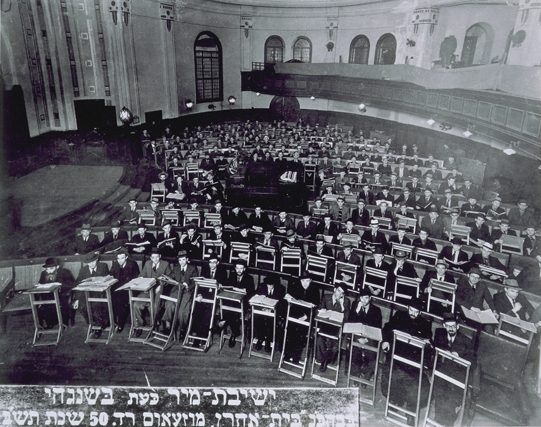
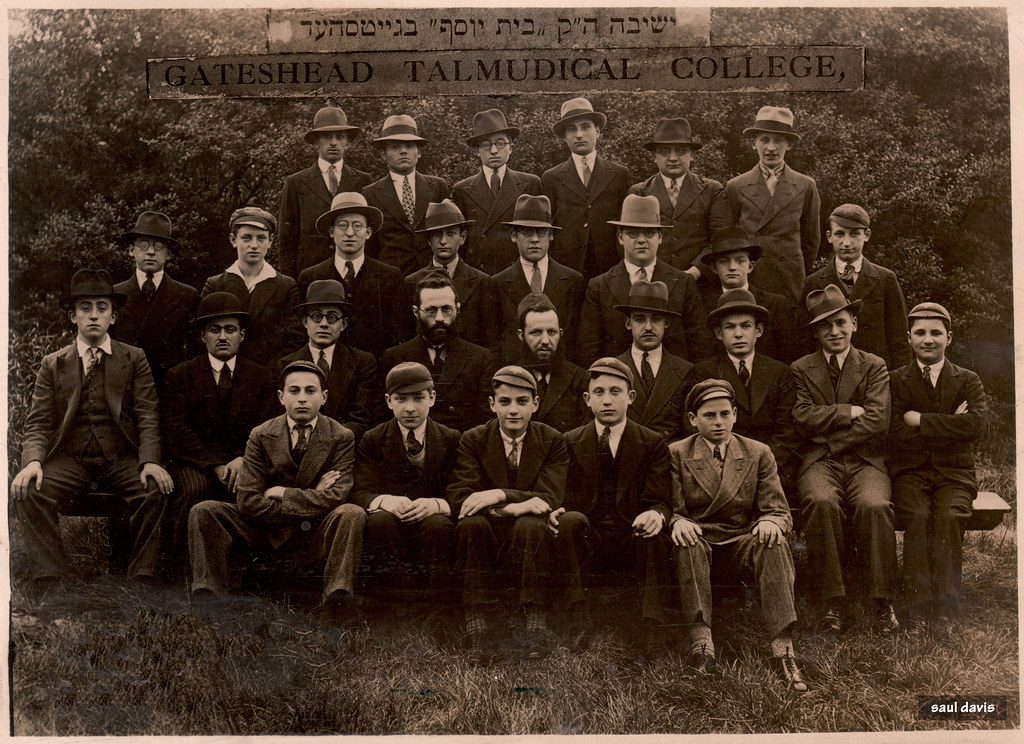
Slutsk's place in Jewish memory rests above all on its yeshiva. In the late 1890s the Ridbaz set out to found a school that could hold its own against the secularising pull of the age, and he went to the obvious source for talent. He asked the Alter of Slabodka to seed it, and the Alter sent fourteen of his best students. At their head was Isser Zalman Meltzer, who became rosh yeshiva and, from 1903, the town's rabbi. In 1914 Meltzer's daughter married a young scholar named Aharon Kotler, who joined the yeshiva and would one day carry its style across an ocean.
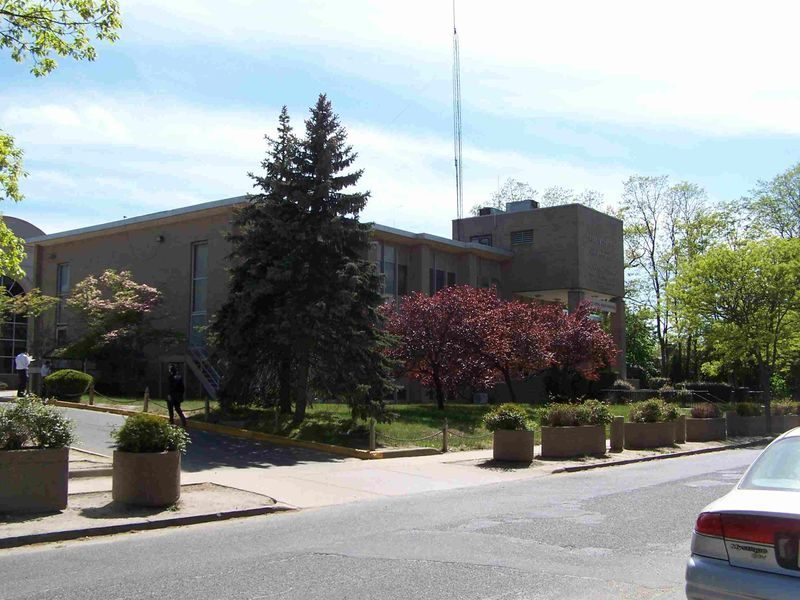
The line did not stay in Slutsk. After the Russian Revolution made religious schooling illegal, Kotler led some fifty students across the border to Kletsk in 1921, and the institution became the Slutsk-Kletsk yeshiva. Meltzer himself emigrated to the Land of Israel and went on to head a great yeshiva in Jerusalem. Kotler ended up in Lakewood, New Jersey, where in 1943 he founded the school that became the engine of American yeshiva Orthodoxy. The teachers of Slutsk were dispersed, but the method they taught was not lost. It was relocated.
The town was scattered to Kletsk, to Jerusalem, to New Jersey. The chain of teachers held the whole way.
The end of Jewish Slutsk
German forces occupied Slutsk in late June 1941. On 27 and 28 October 1941 a unit of Lithuanian auxiliary police, acting under SS direction, carried out a mass shooting at Gorovakha on the town's edge; the German commissar Wilhelm Kube protested the brutality of the operation in writing. Further killings through 1942 effectively ended the community that had stood for three and a half centuries.
Encyclopaedia Judaica · Nuremberg document 1104-PSWhat remains
What Slutsk leaves behind is not a skyline. The synagogues are gone, the market square has another life, and the Jewish majority of 1897 is a statistic in an old census. What it leaves is a way of thinking, carried in the heads of the men who learned it and passed it on. The surname Slutsky still walks the world. So does the kind of exacting, unshowy study that the town made ordinary. The reputation outlasted the street map, and the method outlasted the town.
Further reading