Sepphoris sits on a hill above the Beit Netofa valley like a statement. Herod Antipas rebuilt it and made it his ornament. Later Romans called it Diocaesarea. The rabbis knew it as Zippori, and in the second and third centuries it became something the Jewish world had not seen in its full form since before the Exile: a Jewish city, running at full volume, in the Roman world and not broken by it. When Rabbi Yehuda ha-Nasi moved his court here, he brought the intellectual sinew of the Tribe with him, and he used the city's air to do what no one had done before - write down the Oral Torah and fix it as the Mishnah.
The city that held that act was not modest. Sepphoris had a colonnaded street, a theatre, a cardo, public bathhouses, a water system fed by aqueduct, and, under one patrician villa, a Roman-style triclinium paved with a Dionysiac mosaic of extraordinary craft - ninety-four individual panels depicting Dionysus and his retinue, with the face at the centre so finely rendered that archaeologists in 1987 gave her the only name they could reach for: the Mona Lisa of the Galilee. The same city hosted Jewish schools. The same hill held both things, without apology.
The record
Formal excavations at Sepphoris have been ongoing since the 1930s, with major seasons conducted by the Hebrew University of Jerusalem and, from 1983, by the Joint Sepphoris Project (the University of South Florida and Duke University). The Dionysiac villa mosaic was excavated by Zeev Weiss and Ehud Netzer of the Hebrew University between 1987 and 1989 and published in their 1994 monograph Zippori. The mosaic, dated to the early third century CE, is among the finest Roman-period floor programmes excavated in Israel and is conserved in situ at the Zippori National Park, administered by the Israel Nature and Parks Authority.
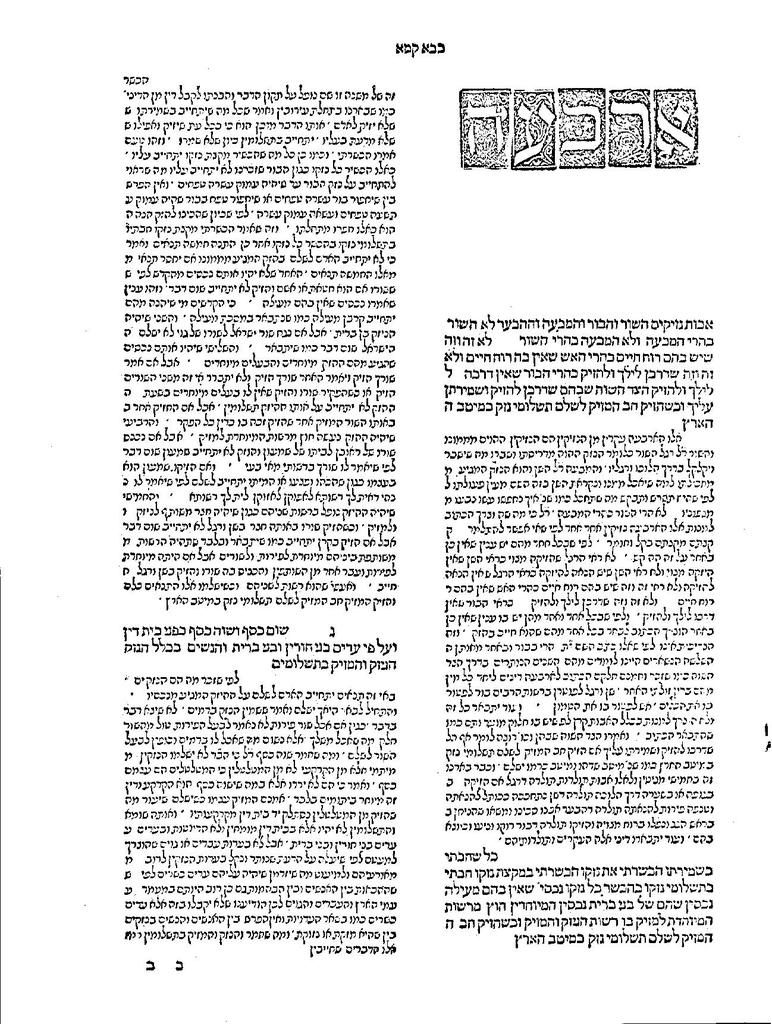
The Mishnah is the pivot of the story. Sometime around 200 CE, Rabbi Yehuda ha-Nasi - Judah the Prince, patriarch and political head of the Jewish community in Roman Palestine - compiled and edited the rulings, debates and legal memory that had circulated as Oral Torah since Sinai. He edited it at Sepphoris, or completed it here after moving from Beit She'arim; the tradition is consistent that the city was his seat. What he produced was not merely a legal code. It was the first time the transmitted conversation of the rabbis was written and structured, and it became the foundation on which both the Jerusalem and Babylonian Talmuds were built. Every page of Talmud is, in a sense, downstream of this hill. The Mishnah did not happen in ruins. It happened in a city so comfortable with Roman civic life that its elite could commission a Dionysiac banquet hall and its scholars could reorder Jewish thought in the rooms next door. That is the Sepphoris fact that most quietly astonishes.
The record
The redaction of the Mishnah under Rabbi Yehuda ha-Nasi at Sepphoris is attested in rabbinic literature, principally the Jerusalem Talmud (Tractate Kilayim 9:3 and parallels) and the Babylonian Talmud (Tractate Ketubbot 103b), which record his court, his period at Sepphoris, and his death. The date is conventionally set around 200-220 CE. Stuart S. Miller's Sages and Commoners in Late Antique ʻErez Israel (Mohr Siebeck, 2006) and Lee I. Levine's The Galilee in Late Antiquity (Jewish Theological Seminary, 1992) both examine the social and intellectual world of Roman-period Sepphoris and its rabbinic community in detail.
The girl in the mosaic - the portrait that earned her nickname across fourteen centuries - looks out from the dining room floor of someone wealthy enough to import the craft and confident enough to deploy it. She is not Jewish iconography. She is Roman luxury art, laid in a city whose Jewish community was at that same moment producing the most consequential legal document in postbiblical Judaism. Both things are evidence of the same situation: Jews living in the Roman world at full stretch, using its forms, building its buildings, eating off its floors, and - in the same generation - writing their own law down in their own language so it would not be lost. The Mishnah is the reply to the diaspora threat, and Sepphoris is the room in which the reply was written. The jewel of the Galilee was not an ornament. It was a workshop.
Sepphoris endures as a site because excavation there has never stopped producing surprises - a zodiac synagogue floor here, a water reservoir there, a colonnaded street stubborn under the hill. The city was the setting for a generation that chose to be plural without choosing to dissolve: Roman in architecture, Greek in some of its pleasures, and profoundly, irreducibly Jewish in its legal imagination. The Tribe's longest argument with the world is always going on somewhere. In the third century, it was going on in Sepphoris.