Omri was a general before he was a king, and he thought like one. When the northern kingdom tore itself apart in a succession crisis following the death of Elah - factions fighting, throne-claimants falling, the old capital at Tirzah soaked in blood - it was Omri the army commander who steadied what remained and took the crown. He could have ruled from where he stood. Instead he bought a hill.
The transaction is brief in the text: two talents of silver to a man named Shemer, and the hill is called Shomron - Samaria - after its former owner. It reads like a footnote, but it was an act of political genius. Tirzah carried the marks of the previous dynasty. Omri wanted ground that owed its meaning entirely to him. He did not inherit his capital. He purchased it, named it, and built it from nothing on a site that looked in every direction across the heart of the land.
The record
1 Kings 16:24 records the purchase directly: "He bought the hill of Samaria from Shemer for two talents of silver; he built on the hill and called the city he built Samaria, after the name of Shemer who had owned the hill." Two talents of silver is a substantial sum - comparable to prices attested in other ancient Near Eastern land transactions - and the name preserved in the text, Shemer, points to an earlier owner whose memory the king folded into the new city's identity. The Hebrew Bible's account places this in the reign of Omri king of Israel, approximately 885-874 BCE by standard chronologies (Kitchen, K. A., On the Reliability of the Old Testament, Eerdmans, 2003, pp. 34-36).
What Omri built on that hill was more than a palace. Samaria became the seat of a dynasty - the House of Omri - that the Assyrians would call Bit-Humri, the house of Omri, for generations after his line had been extinguished. In the world of ninth-century power politics, Omri moved fast. He made peace and a marriage alliance with Phoenicia to the north, linking his son Ahab to Jezebel of Sidon. He brought the northern kingdom into the broader Levantine world of trade and treaty at a moment when Assyria was beginning its long westward reach. Samaria sat at the intersection of the routes that connected the coast to the Jordan valley, the Jezreel plain to the hill country. The choice of site was itself a statement of intent: this king could see the whole board.
The city's archaeology confirms what the texts suggest. Harvard University excavations at the site in 1908-1910, led by George Andrew Reisner and Clarence Fisher, exposed the remains of a royal acropolis ringed by an inner wall of finely dressed ashlar masonry - a construction technique associated with Phoenician craftsmen and closely paralleling the ivory-inlaid palace tradition described in 1 Kings 22:39. The ashlar courses, tight-fitted without mortar in the manner of the best Levantine royal building, sit directly on bedrock: Omri's builders cleared the hilltop to bare stone and started fresh, exactly as the purchase narrative implies.
The record
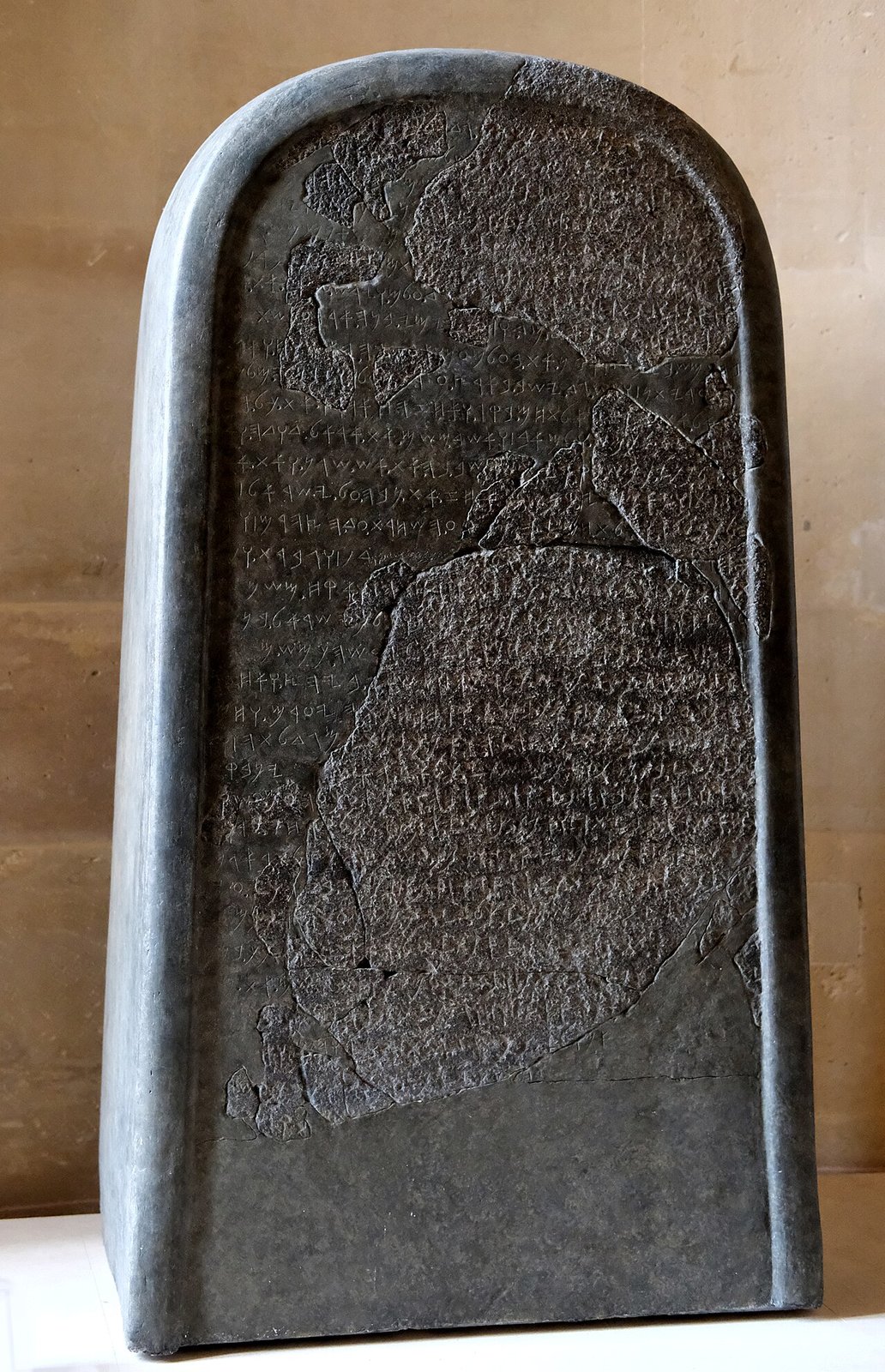
The Mesha Stele, a basalt inscription set up by King Mesha of Moab and dated to approximately 840 BCE (now in the Louvre, Paris; catalogue AO 5066), mentions Omri by name as king of Israel and records that Omri had occupied Moabite territory for his lifetime and that of his son. This is the earliest known extra-biblical text to name a king of Israel by name and provides independent, contemporary confirmation that Omri's dynasty was real, powerful, and visible to neighbouring rulers within a generation of his reign. The Louvre's catalogue entry describes the stele as the "Mesha Stele or Moabite Stone", basalt, ninth century BCE (Louvre, Departement des Antiquites Orientales, AO 5066).
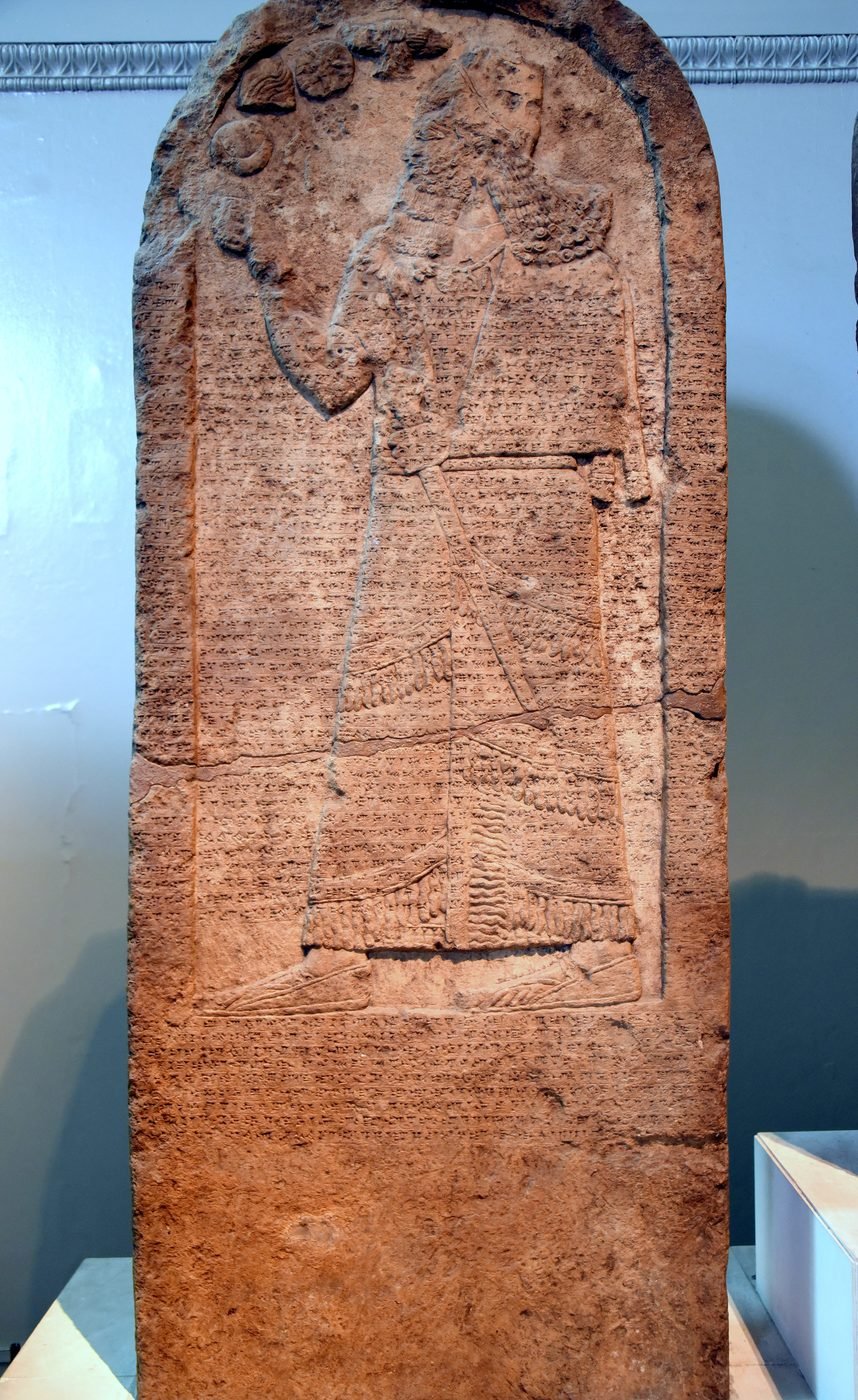
Empires name things after the people they fear. When Assyrian annals refer to Israel as Bit-Humri long after Omri's dynasty had ended - when Jehu, who killed Omri's descendants, still appears on the Black Obelisk of Shalmaneser III as "son of Omri" in Assyrian eyes - it tells you what Omri's purchase on a bare hill actually built. A name that lasted. A capital strong enough that the strongest power in the world used it as shorthand for a whole kingdom, a whole people, for a century after the man himself was dust. Two talents of silver, paid to a man named Shemer for a hilltop. That was the bargain.