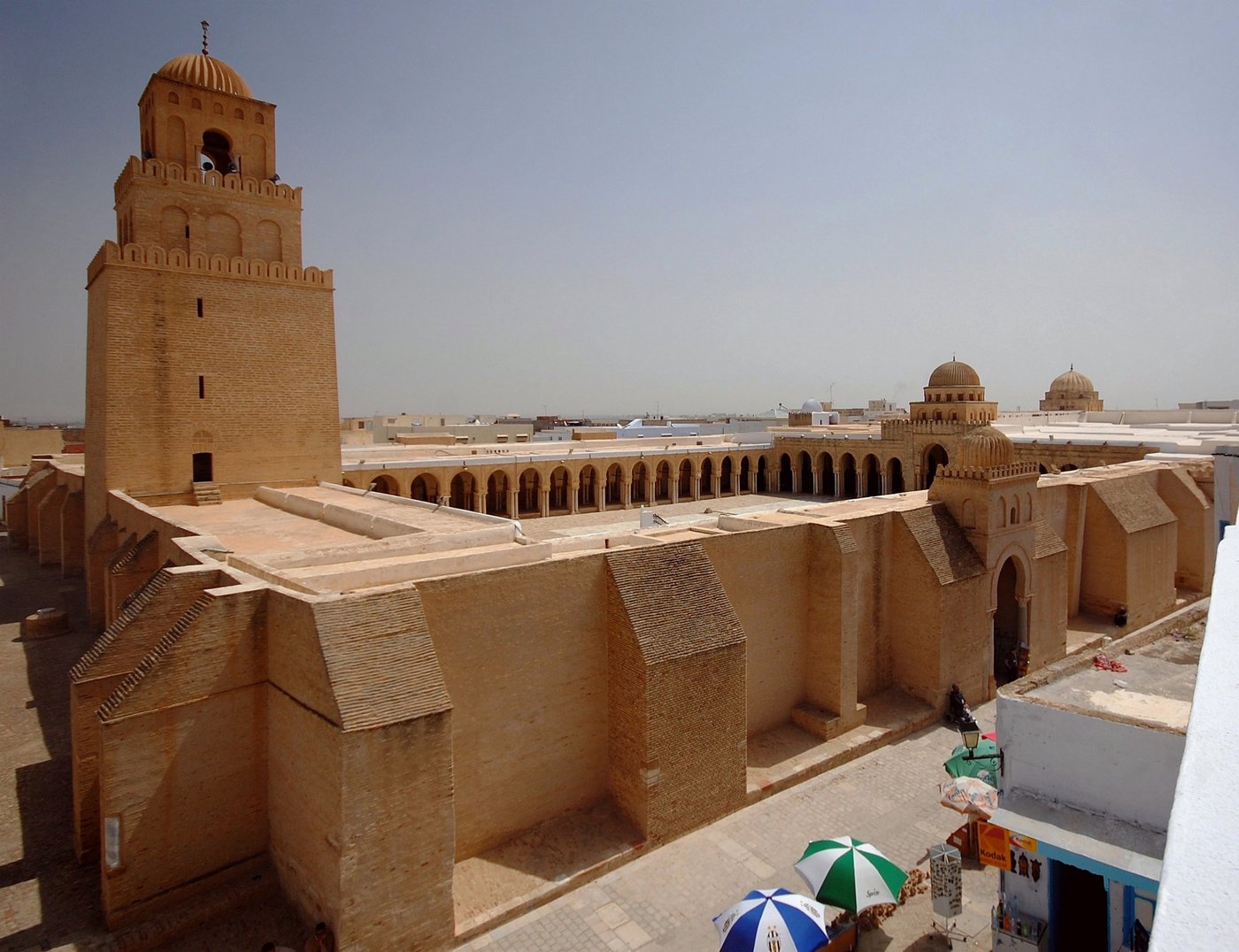
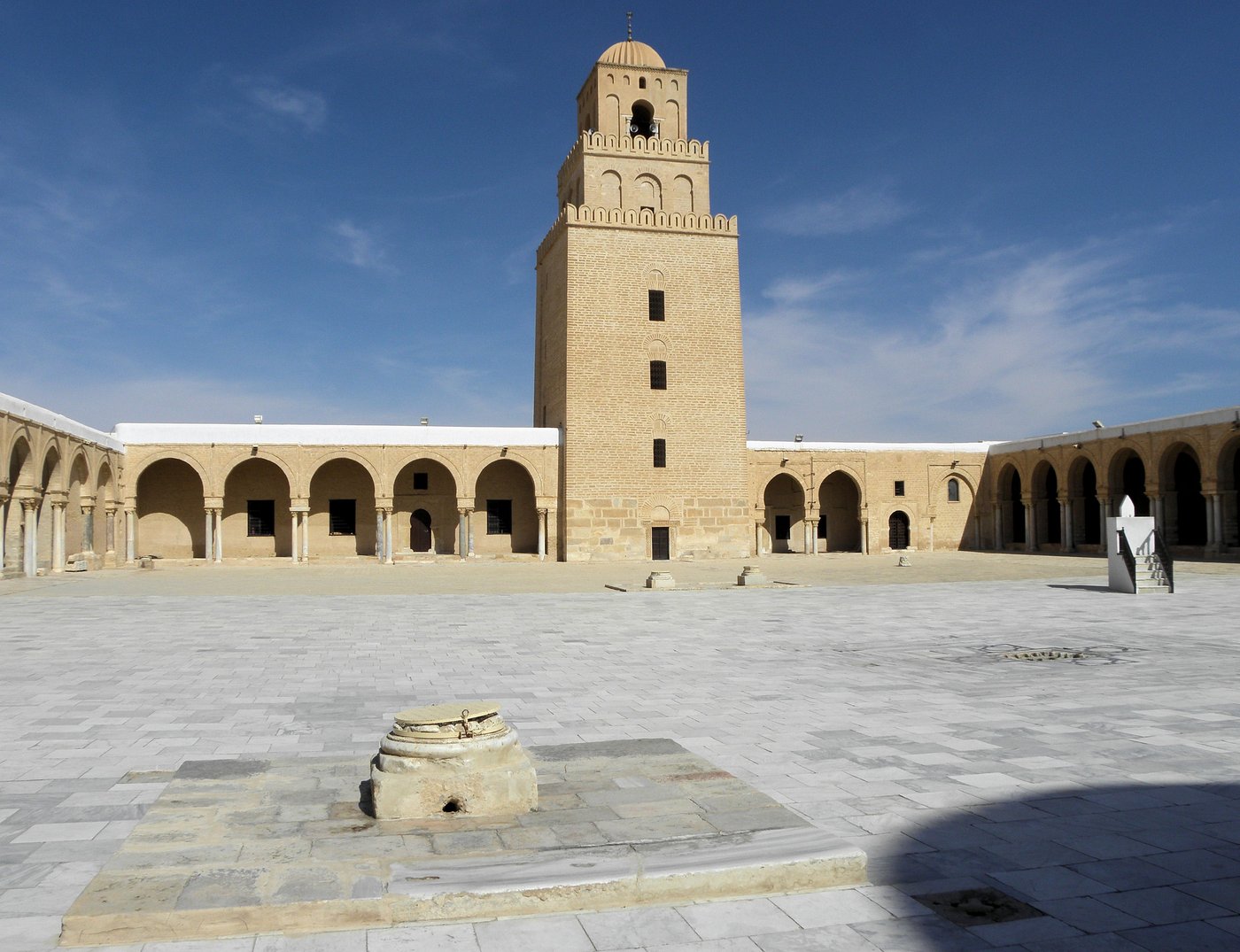
The Arab general Uqba ibn Nafi founded Kairouan in 670 CE as a military base, a launchpad for the westward push across North Africa. He did not found it as a city of books. History had other ideas. Within two centuries, Kairouan had become something nobody planned: the intellectual capital of the Jewish west, a place where the long thread of Torah study that ran from Jerusalem to Babylon reached out a new spur and set down roots in the Maghreb. The city smells of dust and jasmine. What grew there in the minds of scholars lasted longer than any garrison.
Jews had lived in North Africa since antiquity - certainly since the Second Temple period, possibly much longer. The Muslim conquest brought not persecution but, for most Jewish communities, a working arrangement. Trade revived. The Arabic language spread. A new merchant and scholarly class took shape, literate in Hebrew for prayer and law, literate in Judeo-Arabic for commerce and philosophy. Kairouan sat at the hinge of these worlds. It was close enough to the Maghrebi interior to catch the caravan traffic, close enough to the sea to hear what was happening in Egypt and in the east. A community that wanted to be in correspondence with the Geonim of Babylon, and also with the growing communities of al-Andalus, could not have chosen a better address.
The record
In 987 CE, Sherira Gaon - head of the academy of Pumbedita in Babylonia - composed his famous epistle (the Iggeret Rav Sherira Gaon) in direct response to a query sent by Rabbi Jacob ben Nissim of Kairouan. The community had asked about the history of the Oral Torah: how the Mishnah was arranged, and how traditions were transmitted after the destruction of the Temple. Sherira's reply became one of the foundational sources for the history of rabbinic literature. That a Babylonian gaon would write his most important historical work in response to a Kairouan question tells you everything about the city's standing. Source: Iggeret Rav Sherira Gaon, Hebrew text edited by B. M. Lewin (Haifa, 1921); cited and discussed in Robert Brody, The Geonim of Babylonia and the Shaping of Medieval Jewish Culture (Yale University Press, 1998).
The name most inseparable from Kairouan's golden era is Rabbenu Hananel ben Hushiel. His father Hushiel had come - according to tradition - as one of the four captives ransomed from a pirate ship in the late tenth century, each of whom went on to found a new centre of Jewish learning far from Babylonia. Whether the legend is literally true matters less than the truth it encodes: by around the year 1000, Kairouan had scholars capable of sustaining an academy worthy of the name, one that could receive the Babylonian tradition and go beyond it. Hananel's commentary on the Talmud, the first extant systematic commentary in the western diaspora, survives in parts and drew on both the Babylonian and the Jerusalem Talmud. It was read and cited across the medieval Jewish world. His contemporary Nissim ben Jacob - whose father had written to Sherira - produced the Hibbur Yafeh me-haYeshu'ah, a book of parables in Judeo-Arabic that later influenced Hebrew storytelling for centuries. These were not provincials imitating Babylon. They were a new centre in the making.
What made Kairouan possible was not only its scholars but its merchants. The Geniza documents from Cairo - the great trove of paper rescued from the Ben Ezra Synagogue in Fustat in the 1890s - show Kairouan traders operating across the Mediterranean and beyond. A thriving community could fund an academy. A community in correspondence with Cairo, Alexandria, and the Andalusian ports was a community that also exchanged books, questions, and ideas. Scholarship and commerce in medieval Jewish life are rarely separate departments. In Kairouan they were the same conversation.
The record
Hananel ben Hushiel's Talmud commentary survives in manuscript and in printed editions incorporated into the standard Vilna Talmud apparatus. The Princeton Geniza Project's corpus includes documents referencing Kairouan merchants and correspondents active in the tenth and eleventh centuries, giving flesh to the community that supported the academy. The city's Jewish quarter - and the memory of its scholars - is documented in Norman Golb's Jewish Provenances of Medieval Hebrew Manuscripts and in S. D. Goitein's A Mediterranean Society (University of California Press, 1967-1993), the landmark study of Geniza-era Jewish life across the Islamic world. Goitein's volumes remain the essential reference for the social world of Kairouan Jewry.
Kairouan's moment at the centre did not last for ever. The Banu Hilal invasions of the 1050s devastated the city and scattered its communities. But the work done there had already travelled. Hananel's commentary was copied and carried west to Spain and east back to the academies. The questions Kairouan asked, and the answers it generated, became part of the living fabric of rabbinic learning. A garrison city became a school; a school became a city; the city fell, and the learning moved on. That is not a sad story. It is the story of how a tribe keeps moving without losing the thread.