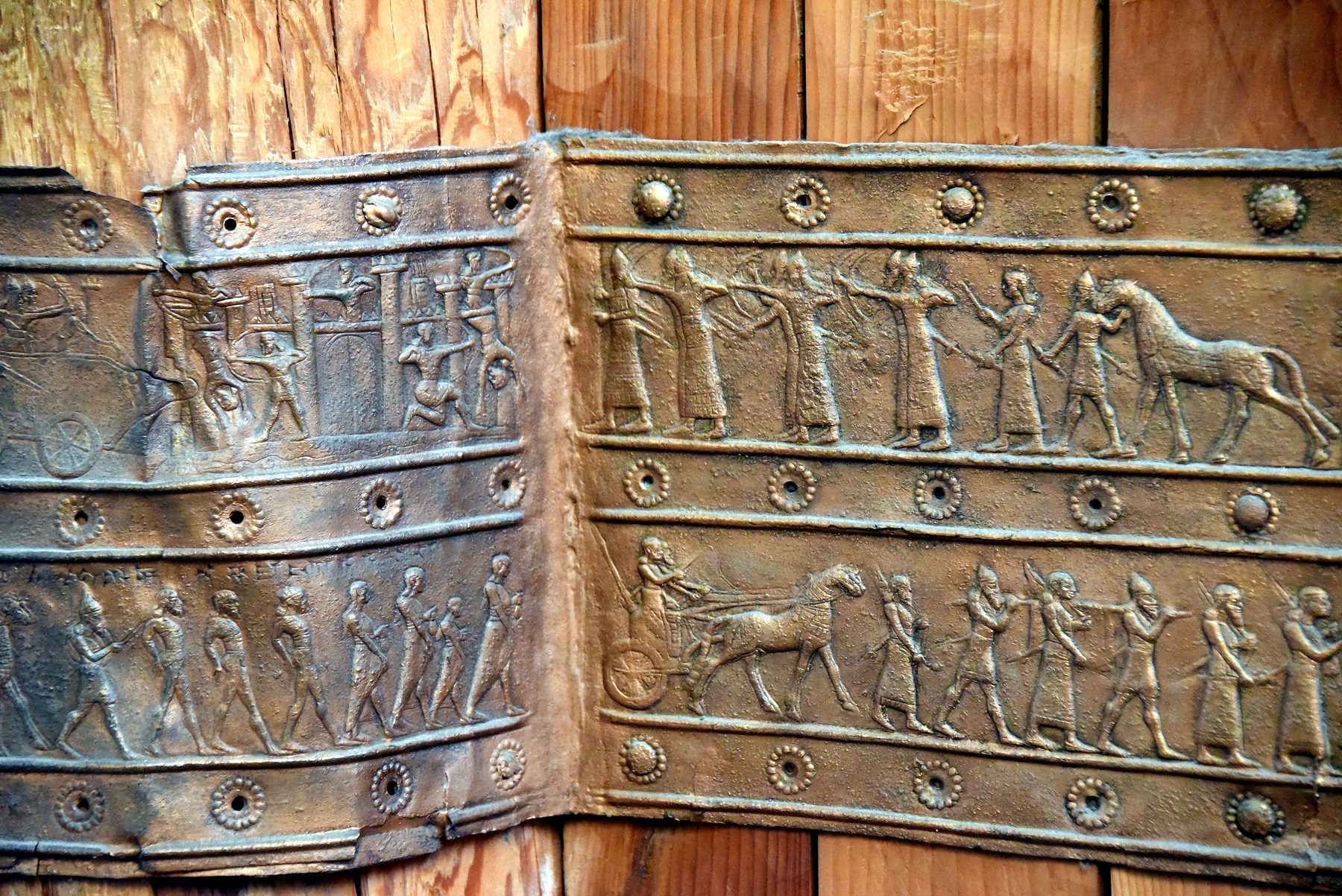
They did not vanish. That is the first thing to understand about what happened to the northern tribes after 722 BCE. When the Assyrian king Sargon II brought the kingdom of Israel to an end, he did what Assyrian imperial policy had long refined into a system: he moved people. He took populations from their homelands and deposited them in distant corners of the empire where they could be useful, where they had no local roots to anchor rebellion, and where they would become, over a generation or two, Assyrian subjects. The Israelites who were deported in that campaign were not cast into wilderness. They were planted - in Halah, on the Habor river in Gozan, and in the cities of Media. The Bible records the destinations with administrative precision, and the Assyrian records confirm the method.
Media at this time was not yet the kingdom it would become under the Medes. It was Assyrian-controlled territory on the empire's northeastern frontier, a highland region that is now northwestern Iran. The "cities of the Medes" to which Israelites were sent sat along trade and military routes of enormous strategic value. The deportees were not sent to nothing. They were sent to a frontier that Assyria was actively developing, where skilled people - craftsmen, administrators, farmers who knew irrigation - were an asset. Whatever anguish the exiles carried east, the empire had a practical use for them in precisely those places.
The record
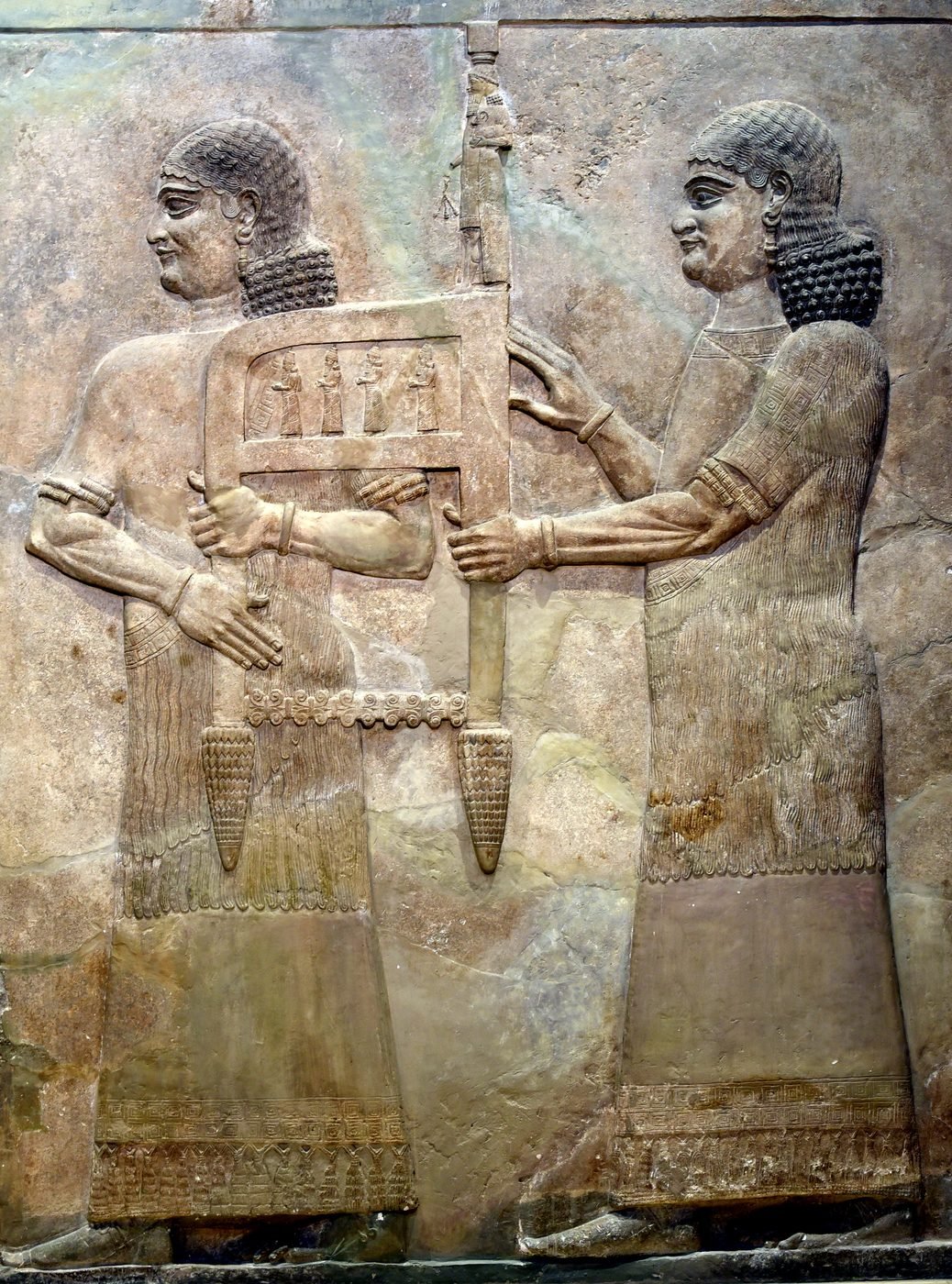
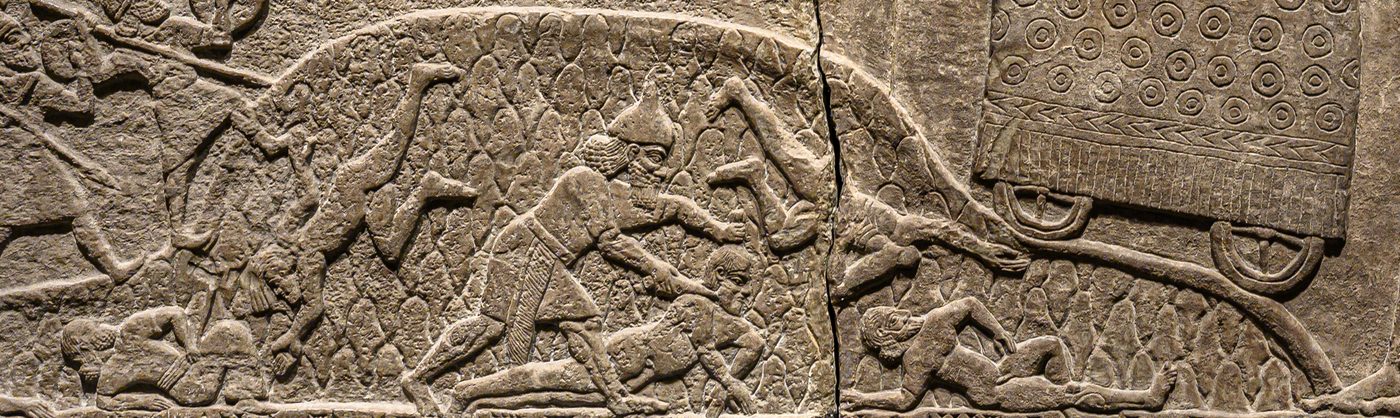
2 Kings 17:6 names the Israelite deportation destinations with unusual specificity: "Halah, and in Habor by the river of Gozan, and in the cities of the Medes." The same verse is echoed at 2 Kings 18:11. Halah is identified with Assyrian Halahhu, attested in cuneiform texts as a region in the upper Tigris area. Gozan (Assyrian Guzana) is the site of modern Tell Halaf in northeastern Syria, excavated in the early twentieth century by Max von Oppenheim and shown to have been an active Assyrian administrative centre. The Assyrian Annals of Sargon II, preserved in multiple copies including the Display Inscription from Khorsabad (ancient Dur-Sharrukin), record that Sargon deported 27,290 inhabitants of Samaria following the city's fall in 722 BCE. (British Museum and Oriental Institute, Chicago; ANET pp. 284-285.)
Twenty-seven thousand people is not a total deportation of a kingdom. It is a targeted removal of its leadership class - its military officers, its skilled craftsmen, its administrators, the people whose networks and expertise made a polity function. Scholars including Bustenay Oded, in his study of Assyrian deportation policy, have shown that Assyrian practice was to take the governing and productive strata, not to empty the land entirely. Those who remained in the territory of former Israel were joined by peoples brought in from elsewhere in the empire - a deliberate mixing designed to dissolve the coherence of the conquered population. But the people taken east were, in a real sense, the tribe's most capable: the ones Assyria considered worth transporting hundreds of miles. They arrived in Media as deportees, but they arrived as people who knew how to build things, to keep records, to organise communities.
The record
The book of Tobit, preserved in the Septuagint and in Hebrew and Aramaic fragments found at Qumran (4Q196-4Q199), is set explicitly among Israelite deportees in Nineveh and in the region of Media. Whatever its literary character, it reflects a tradition of Israelite communal memory that knew the Median deportation as a lived reality for the tribe. Tobit's son Tobias travels to "Rages in Media" (Tobit 5:6) to recover a debt - a journey plausible only because there was already an Israelite presence there to transact with. A more concrete eastern witness comes from the Dunhuang cave library: among the manuscripts was a bill of sale for sheep dated 718, written in New Persian using the Hebrew alphabet, together with a fragment of a Seliḥoth probably composed in the eighth or ninth century. The Dunhuang manuscripts are now divided between the British Library, the Bibliothèque nationale de France and the National Library of China. (Dead Sea Scrolls Digital Library; Joseph Fitzmyer, Tobit, Commentaries on Early Jewish Literature, de Gruyter, 2003.)
There is something worth holding in this. The tradition that knows these people as "lost" did not think of them that way at first. Tobit knows where they went. The prophet Amos, writing before the fall, knew that exile east was a real possibility and spoke of it. Later literature - Ezra, Nehemiah, the prophetic visions of ingathering - consistently imagines a return from the north and the east as well as from Babylon. The Israelites planted in Media did not vanish from Jewish consciousness. They became part of the map that the tradition carries: a people scattered across the ancient Near East, present in named places, awaiting a story not yet finished. The eastward scattering of 722 BCE is the first chapter of that geography. It belongs to us.
The cities of Media received Israel's northern exiles more than a century before Babylon would receive Judah. That order matters. When the Babylonian exile came, the tribe already had a generation of experience living as a community in a foreign empire, maintaining identity in the absence of a temple or a homeland. The east was not the end of the story. It was the beginning of the tribe's long education in how to survive everywhere.