Isfahan holds Jewish memory in layers, and the oldest layer is in the name. Before there was a single great city called Isfahan, there were two towns sitting a mile or two apart on the plain: Jayy, the fortified Persian centre, and al-Yahudiyya, "the town of the Jews". The medieval Arab geographers wrote them down side by side. One of the two towns that fused into Isfahan was, quite literally, the Jewish one.
That is a remarkable thing to be able to say about any city. Most diaspora communities are guests in someone else's metropolis. The Jews of Isfahan have a documented claim on the foundations. The old quarter that descended from al-Yahudiyya - the Jubareh, sometimes spelled Joubareh - was still standing and still Jewish a thousand years later, having outlasted Sasanian, Arab, Seljuk, Mongol, Timurid and Safavid masters of the city above it.
The town of the Jews
The firmest early record is a queen. In the late fourth or early fifth century, Shushandukht, the Jewish wife of the Sasanian king Yazdegerd I and mother of his successor, is said to have settled a colony of Jews at Yahudiyya, near the older town of Jayy. From there the documentation thickens. By the tenth century the Buyid ruler Rukn al-Dawla had united the two towns under the single revived name of Isfahan, and the geographers report al-Yahudiyya as the larger of the pair - roughly twice the size of its Persian twin.
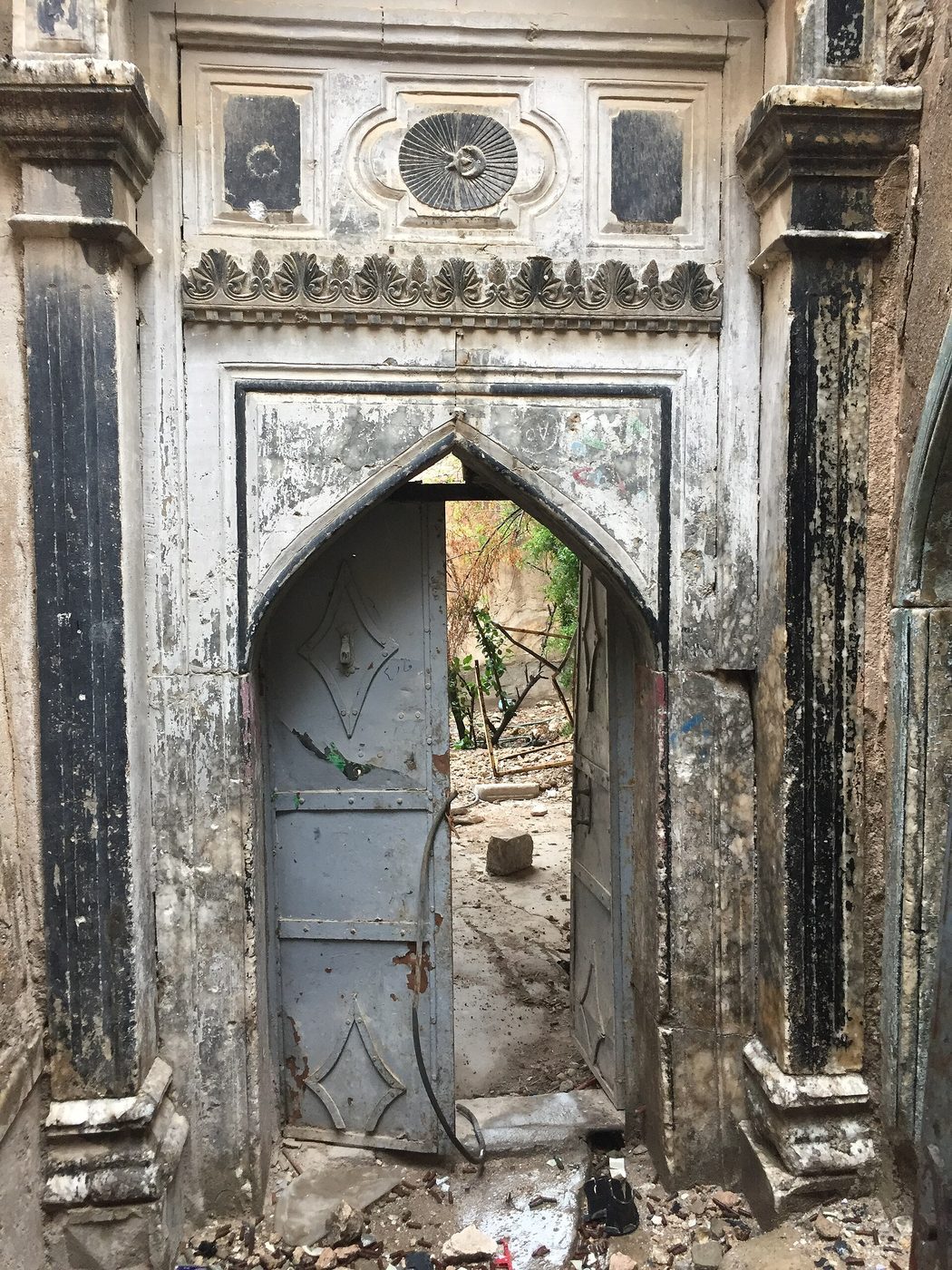
What grew up in the Jubareh was an ordinary, durable Jewish town: artisans and dyers, silk-workers and goldsmiths, peddlers and physicians and, by long Persian custom, the trades polite Muslim society preferred to leave to others. Its synagogues were built low and unobtrusive, never to rise above a neighbouring mosque, which is why the casual visitor walks past them. They are doors in a wall. Behind the doors, a community kept its rite for more than a millennium and a half.
Al-Yahudiyya and the founding of the city
Medieval Arab geographers - among them Ibn al-Faqih, al-Istakhri, Ibn Hawqal and al-Muqaddasi - describe Isfahan as formed from two adjacent towns, Jayy and al-Yahudiyya, "the Jews' town". Tradition links the Jewish settlement to the Sasanian queen Shushandukht in the fifth century. Around the mid-tenth century the Buyid ruler Rukn al-Dawla merged the two under the name Isfahan, with the Jewish town reported as the larger of the two.
Encyclopaedia Iranica; Jewish Encyclopedia, "Ispahan"The twelfth-century traveller Benjamin of Tudela passed through and reckoned the Jews of Isfahan at a substantial figure, under a chief rabbi appointed from Baghdad. Whatever the exact number, the impression is consistent across the centuries: this was not a fringe settlement but one of the principal Jewish communities of the Persian world, second only to a handful of others, with a literature of its own in Judeo-Persian.
The Safavid vice
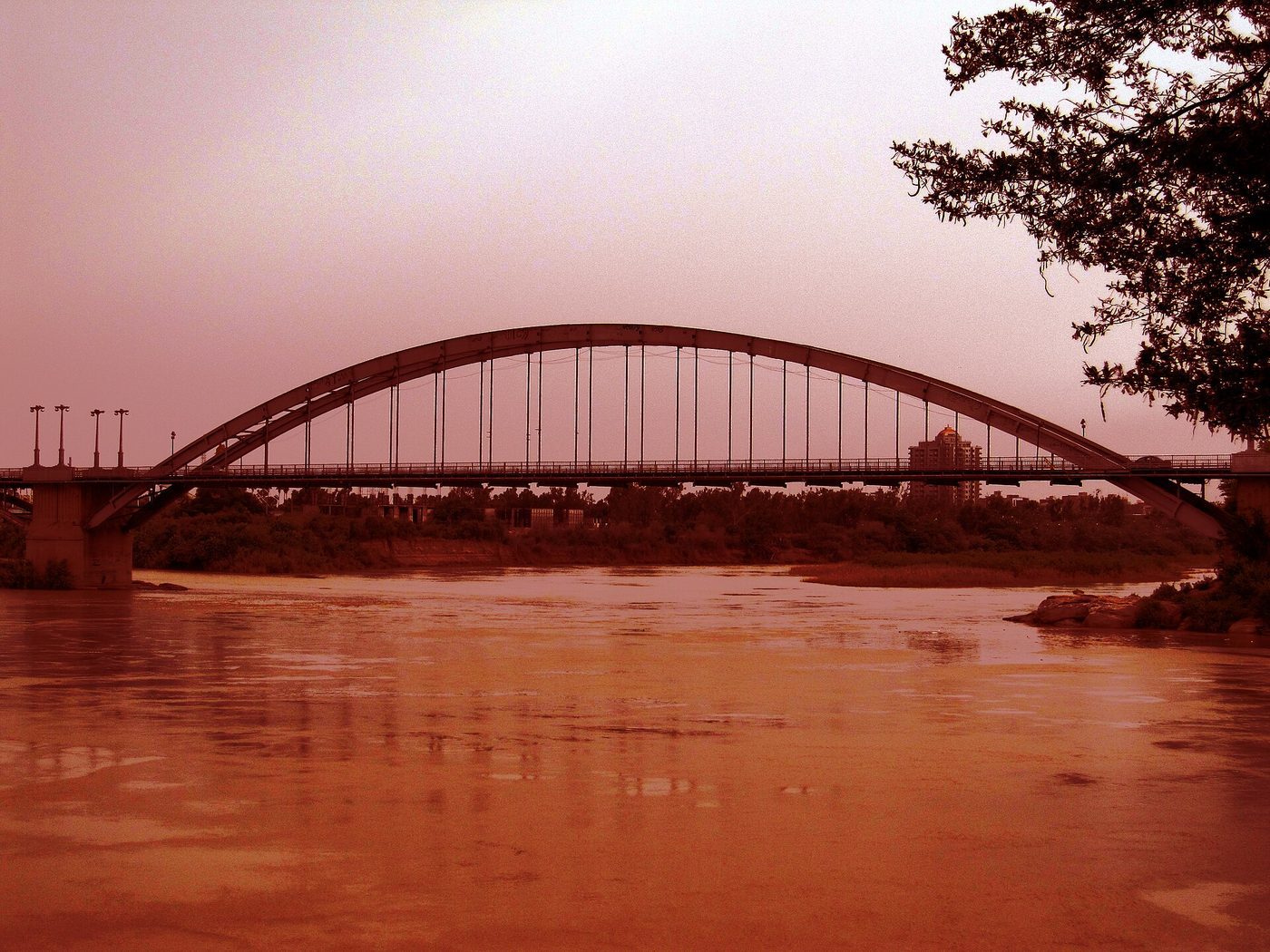
Shah Abbas I made Isfahan his capital around 1598 and turned it into one of the wonders of the age - the great square, the bridges, the blue domes that still draw the world. For the Jews of the Jubareh, the new capital brought first prosperity and then a long ordeal. The seventeenth century under Abbas I and his successors saw waves of pressure and forced conversion. In 1656 Shah Abbas II ordered the Jews of Isfahan expelled and converted to Islam; in 1661 the state relented and let them return to Judaism, on condition they wear a distinguishing patch.
We know this in such detail because a Jew wrote it down. The Judeo-Persian chronicle Kitab-i Anusi, "the Book of a Forced Convert", by Babai ben Lutf, records the persecutions in some five thousand verses - the earliest historical chronicle to come out of an Iranian Jewish community, written by a man who had himself been coerced. His grandson, Babai ben Farhad, continued the account into the next century. The community did not merely endure the Safavid vice. It kept the minutes.
Expulsion, conversion and return
Under Shah Abbas II the Jews of Isfahan were ordered expelled and forced to convert to Islam in 1656; in 1661 they were permitted to return to Judaism but required to wear a distinctive patch. The episode is recorded in the Judeo-Persian chronicle Kitab-i Anusi by Babai ben Lutf, the first known historical chronicle from Iranian Jewry, written by a forced convert who lived through it.
Kitab-i Anusi; Encyclopaedia IranicaThe long ebb
By the middle of the twentieth century, Isfahan was home to something on the order of ten to twelve thousand Jews - by the 1956 census the third-largest Jewish community in Iran. Then came the long ebb. Emigration to Tehran and abroad had already thinned the community to a few thousand before the Islamic Revolution; the revolution of 1979 accelerated a departure that was well under way. Today perhaps a thousand or so remain, still the third community of Iranian Jewry, still concentrated around the old Jubareh, still keeping a working network of synagogues.
One of the two towns that became Isfahan was the Jews' town, and its name said so. That is not a footnote. It is a deed of title.
Further reading
Story & Stone · Atlas Places Nº 3
Next on the shelf: Toronto: The City Across the Metro →