There is something almost accidental about the way the reform began. The year is 622 BCE. Josiah is twenty-six years old and eight years into repairing the Temple - a practical project, a matter of stonework and timber and settled accounts with the craftsmen. Then the High Priest Hilkiah tells the royal secretary Shaphan that something has turned up in the rubble: a scroll. Shaphan reads it, carries it to the king, and reads it again aloud in the palace. And Josiah tears his robes. Whatever the scroll contained - and scholars have debated for two centuries whether it was some version of Deuteronomy - the king understood it as a verdict on everything Judah had been doing, and the verdict was terrible.
The high places - the bamot - had been there for as long as anyone could remember. They were hilltop shrines, local altars, the kind of worship that felt natural: a prominent ridge, a stone, a fire, an offering. The patriarchs had worshipped at high places. So had Saul, and Solomon, and most kings before Josiah. The prophets had complained about them for generations, but complaining and acting are different things. Josiah acted. He sent his officers across Judah and into what had been the northern kingdom of Israel, and they smashed the altars, burned the asherah poles, and defiled the sites so thoroughly that no one could use them again. Then he brought the priests who had served those shrines to Jerusalem - not to execute them, but to absorb them, pensioning them off in the capital, away from their altars. Centralisation as policy. One place, one altar, one worship.
The record
The primary account of Josiah's reform is in 2 Kings 22-23, one of the most detailed administrative narratives in the Hebrew Bible. It names the High Priest Hilkiah, the royal secretary Shaphan, and the prophetess Huldah, who authenticated the scroll. The reform actions listed include the removal of vessels for Baal and Asherah from the Temple, the defilement of Topheth in the Valley of Hinnom, the dismantling of the horses and chariots of the sun that stood at the Temple entrance, and a systematic purge of shrines across the former northern kingdom as far as Bethel. The account in 2 Chronicles 34-35 provides additional detail, placing the beginning of the reform in Josiah's twelfth regnal year, before the scroll's discovery in his eighteenth year. Scholarly discussion of whether the scroll corresponds to some form of Deuteronomy goes back to Jerome in the fourth century CE and remains productive: see Moshe Weinfeld, Deuteronomy and the Deuteronomic School (Oxford University Press, 1972).
The Bethel episode deserves a moment. Bethel had been the southern sanctuary of the breakaway northern kingdom, set up by Jeroboam I when the kingdom divided in 930 BCE - a deliberate rival to Jerusalem, complete with a golden calf and a non-Levitical priesthood. Nearly three hundred years later, with the northern kingdom long gone and Bethel sitting in a kind of political no-man's-land under Assyrian then Egyptian suzerainty, Josiah's officers reached it. The 2 Kings account says he burned the high-place altar there and ground it to dust, and then - as if to underscore the permanence of the act - he defiled the site with human bones from the tombs nearby. The passage records something else: that a tomb was spared, because it was the tomb of the man of God who had prophesied this very destruction more than two centuries earlier (1 Kings 13). Whether or not that detail is historical, the literary point is unmissable. The reform was the fulfilment of an old promise, and Josiah was the king the whole story had been waiting for.
The record
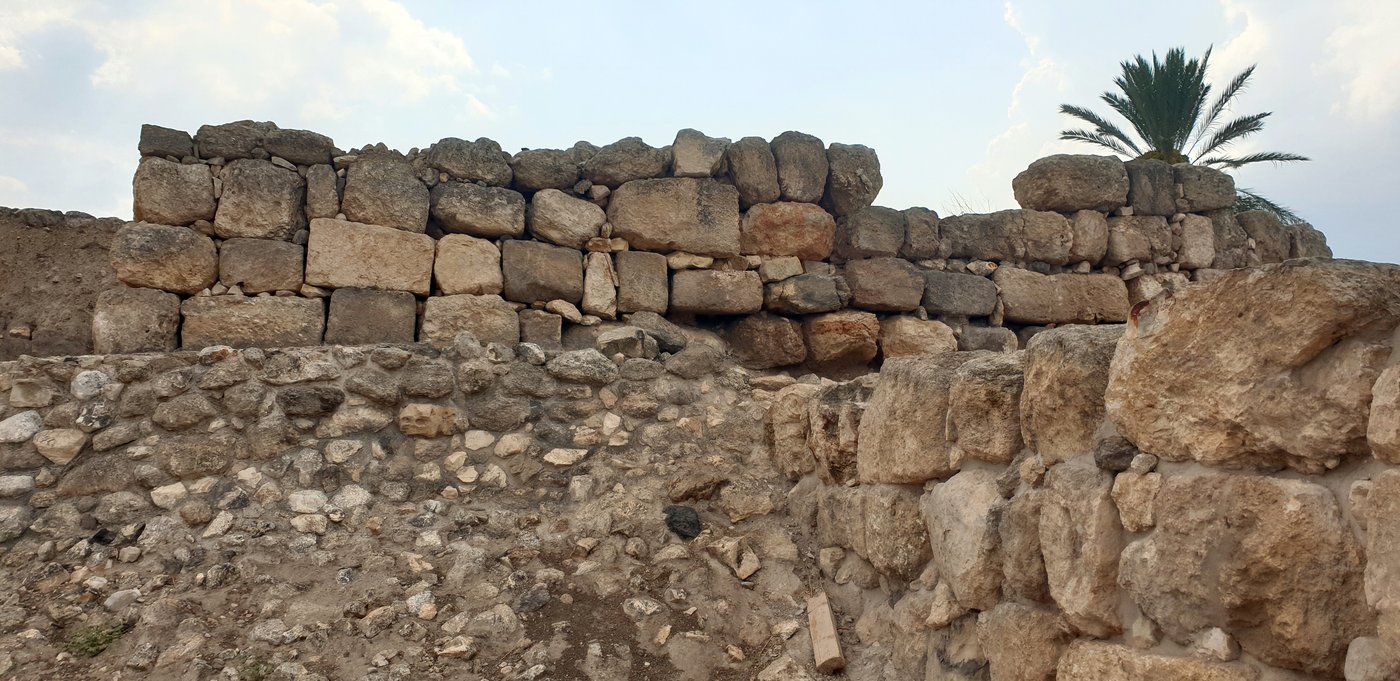
Archaeological evidence for late seventh-century cult centralisation has accumulated steadily since the 1960s. Excavations at Arad in the Negev, directed by Yohanan Aharoni and subsequently by Ze'ev Herzog for Tel Aviv University, revealed a Judaean fortress sanctuary with a standing altar and two standing stones (masseboth). The stratigraphy shows the inner sanctuary going out of use in the late Iron Age IIB-IIC transition - broadly consistent with the late seventh century and the reign of Josiah. The altar appears to have been deliberately dismantled and buried rather than destroyed, perhaps to preserve its sanctity even while removing it from active use. The Arad sanctuary is on display at the Israel Museum, Jerusalem (IAA accession numbers from the Arad excavations). A comparable pattern has been noted at Lachish. For the archaeological case, see Ze'ev Herzog, "The Date of the Temple at Arad: Reassessment of the Stratigraphy and the Implications for the History of Religion in Judah" in Studies in the Archaeology of the Iron Age in Israel and Jordan, ed. A. Mazar (Sheffield Academic Press, 2001).
Josiah did not live to see whether the reform held. He died at Megiddo in 609 BCE, killed in a confrontation with Pharaoh Necho II - the Books of Kings give him almost no explanation beyond the flat fact of his death, which must have felt like a theological scandal to those who had read 2 Kings 23:25 ("there was no king like him, who turned to the Lord with all his heart"). Within a generation his successors had reinstated much of what he had removed. Jeremiah, who had grown up under the reform, spent the next forty years watching it unravel. The high places came back. They usually do. What persisted was the idea: that there is one place, one altar, one standard of worship - and that everything else is compromise. The Deuteronomistic historians embedded that idea so deeply into the telling of Israel's story that it became impossible to read any king without measuring him against it. Josiah is the measure.
The reform of 622 BCE is the pivot around which the entire Deuteronomistic History turns. Every king before Josiah is graded partly by whether he removed the high places; almost none did. Josiah removed them all, and was still betrayed by history. The tradition does not resolve this; it holds the tension. A king who did everything right, killed by a pharaoh on his way somewhere else, while the world rearranged itself around him. The stone record gives us the archaeology of what was dismantled. The scroll gives us the theology of why. Both are worth carrying.