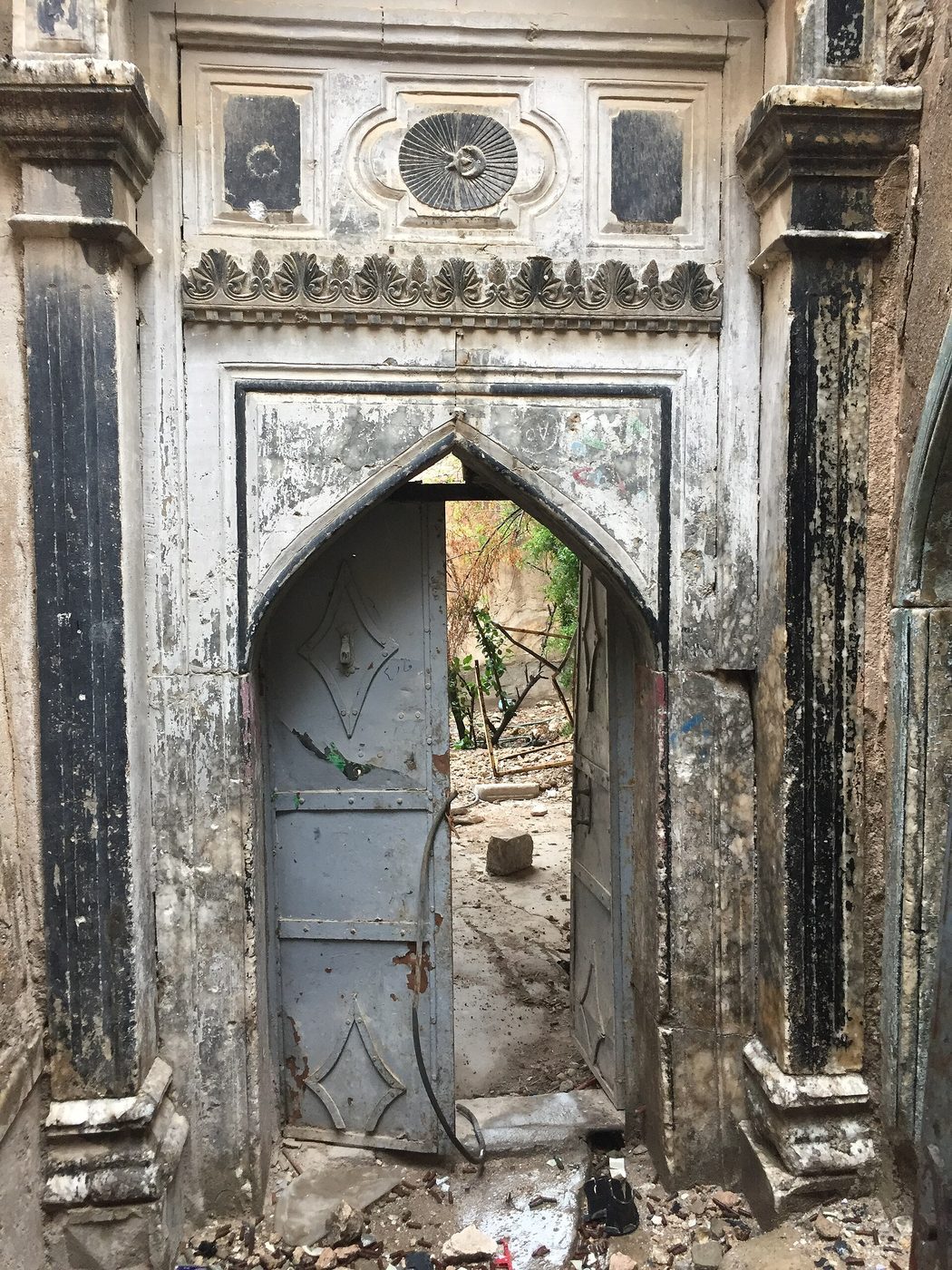
Hamadan is one of the Jewish cities where the story walks beside the stone and refuses to leave. Tradition places the tomb of Esther and Mordechai here, and the mausoleum is real enough to make visitors bow at the low door.
The city matters because it keeps Persian Jewish memory both intimate and public.
A city of bowing
The mausoleum in Hamadan has long been a pilgrimage point for Persian Jews. Whether one reads the Esther story as history, memory or inherited legend, the place itself is part of the communal world.
Hamadan also sits on the old Silk Road routes, which helped make it one of the larger and more durable Jewish centres of Iran.
A medieval Jewish traveller sees a great city
Benjamin of Tudela visited Hamadan in the 12th century and reported a very large Jewish population. The exact number in his account is rounded, as medieval numbers often are, but the direction is clear: Hamadan was a major Persian Jewish centre. Traveller testimony and local memory agree on that much.
Benjamin of Tudela / National Library of IsraelThe mausoleum and the memory
The tomb of Esther and Mordechai has been first attested in the 11th century and is usually linked to a 17th-century mausoleum form. The site became a standard stop in Persian Jewish memory, and the low entrance says more about reverence than architecture.
Hamadan is one of the places where story is not the enemy of evidence. It is the frame.
A mausoleum with a long afterlife
The tomb of Esther and Mordechai at Hamadan is first attested in the 11th century, and the present mausoleum is generally associated with a 1600s reconstruction. That long continuity helps explain why the city is still central in Persian Jewish memory. It is a shrine with a very long receipt.
Tomb of Esther and Mordechai / National Library of IsraelA city that makes room for bowing
Hamadan's genius is that it keeps the door low. It forces the body into the memory.
That is how a city teaches reverence without a lecture.