Most cities grow. Essaouira was drawn. In the 1760s the Moroccan sultan Mohammed III decided he wanted a port he could control, on the Atlantic coast, close enough to Marrakesh to feed his treasury, and he had it laid out from scratch - straight streets, sea walls, a grid - by a captured French engineer. Then he did the thing that makes the story ours. He invited in a corps of Jewish merchants to run its trade with Europe, and gave them standing to match the job. Essaouira was not a place where Jews happened to settle. It was a place built, in part, around them.
They were called the tujjar al-sultan, the merchants of the sultan: an elite cadre of Jewish traders granted privileged, near-monopoly rights over the kingdom's long-distance commerce. Through their hands passed the wealth of the Moroccan south - gum arabic, ostrich feathers, almonds, goatskins, sugar - shipped out to Europe and the Atlantic world. Several of them doubled as consular agents for foreign powers, so that a Jewish merchant in Mogador might handle a cargo of feathers in the morning and a diplomatic dispatch from London in the afternoon. The harbour was small. The reach was not.
A city that was nearly half Jewish
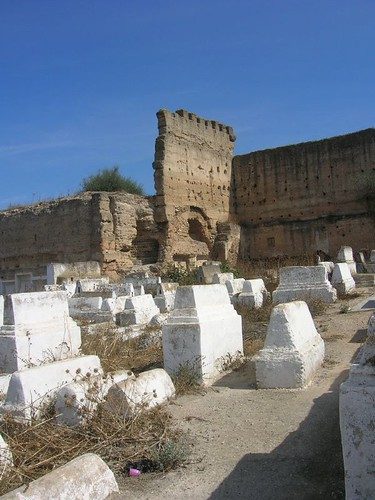
The numbers are the part that surprises people. Essaouira was one of the very few Moroccan cities where Jews formed something close to half the population. Across the nineteenth century the Jewish share of the town ran at roughly forty to fifty per cent - several thousand people in a city of twelve to eighteen thousand. They lived in a mellah established by sharifian decree in 1807, which grew so crowded that it had to be extended into an old and a new quarter; the wealthiest merchant families, meanwhile, kept houses in the kasbah, outside the mellah walls, as their standing allowed. The Corcos, Afriat, Coriat and other houses were not a minority tolerated at the edge of things. They were near the centre of how the city worked.
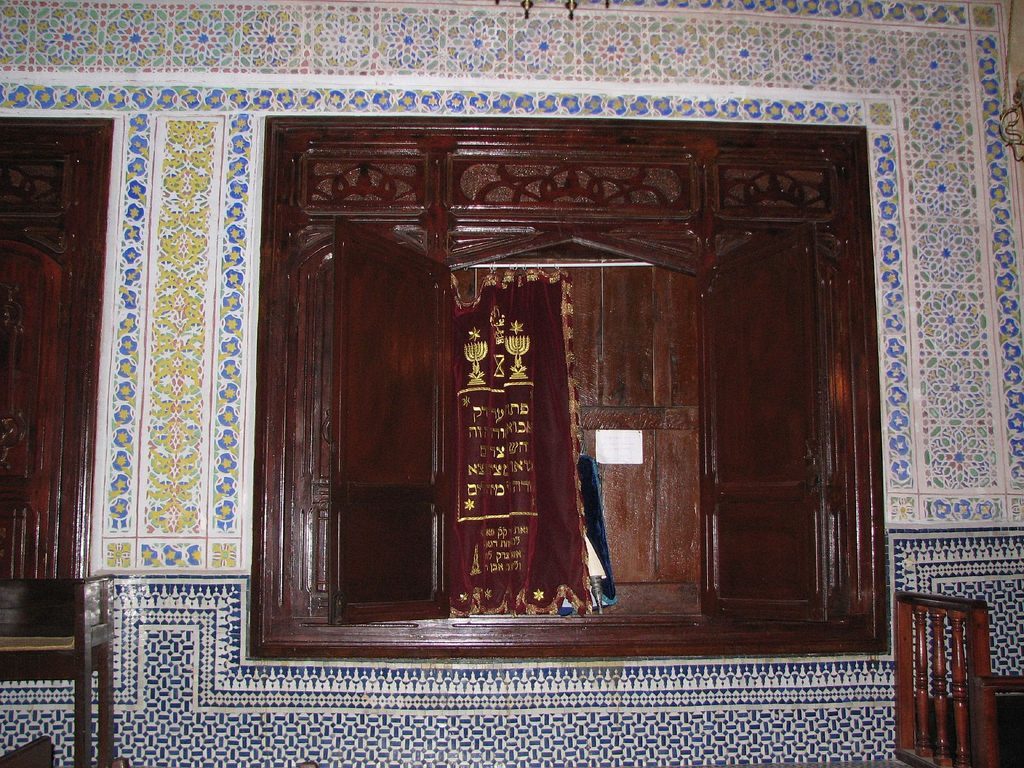
And it was a religious city as much as a commercial one. Essaouira filled with synagogues, and its rabbinate carried real weight. The towering figure was Rabbi Haim Pinto, who led the city's rabbinical court for decades in the eighteenth and nineteenth centuries; his tomb in the old Jewish cemetery still draws an annual pilgrimage. A planned port, it turns out, could grow a soul. The grid the engineer drew filled up with prayer, argument, commerce and song.
The sultan builds a port
Essaouira, then Mogador, was built from the mid-1760s by the Alawite sultan Mohammed III as a controlled royal export port, drawing trade away from Agadir. Its grid plan and fortifications were principally designed by the French engineer Théodore Cornut. Jewish merchants were settled in the new city from the start to run its European trade.
Daniel Schroeter, Merchants of EssaouiraThe tujjar al-sultan
The sultan settled an elite of Jewish merchants in Essaouira and granted them privileged rights over Morocco's long-distance trade with Europe. They exported gum arabic, ostrich feathers, almonds, goatskins and sugar, and several acted as consular agents for European powers, making the small port one of the most commercially important Jewish centres in Morocco.
Daniel Schroeter, The Sultan's JewA small harbour can handle a large world. Essaouira did, with a Jewish merchant elite running the sultan's trade from a city that was nearly half theirs.
The tide goes out
Nothing built to channel one century's trade survives the next unchanged. As steamships began carrying European goods straight to sub-Saharan Africa, the old caravan routes that fed Mogador withered, and Casablanca and Tangier rose to eclipse it. The port that had been designed for control slowly lost the trade it was designed to control. Then the twentieth century did the rest. The founding of Israel in 1948 and Moroccan independence in 1956 set the community in motion, and through the 1950s and 1960s Essaouira's Jews left for Israel and France, until a city that had been nearly half Jewish had almost no Jews at all.
But Essaouira has done something many emptied communities never manage: it has kept the memory in good repair, and out loud. The mellah and its synagogues stand as heritage; the Slat Lkahal synagogue has been restored; and in 2020 the Bayt Dakira, the House of Memory, opened in the old quarter as a museum and research centre devoted to the city's Jewish-Muslim past. Behind much of this is André Azoulay, a Jew born in Essaouira and a senior counsellor to the king, who founded the festival that now fills the city's streets with Jewish and Muslim musicians side by side. The merchants are gone. The drawn city still keeps their books open.
Further reading
Story & Stone · Atlas Places Nº 20
Next on the shelf: Quba: The Mountain Jewish Town →