A language does not revive because somebody writes a slogan. It revives when a child asks for bread in it, when two shopkeepers fall out in it, when a newspaper makes it carry yesterday's news without stumbling. Hebrew had never died, exactly. It had prayed, ruled on questions of law, signed contracts, written poetry of the first rank. What it had not done for a very long time was complain about the weather, scold a toddler or haggle over the price of olives. Eliezer Ben-Yehuda decided that this gap was the whole problem, and that Jerusalem was the place to close it.
He arrived in 1881, a young man from Lithuania with a chest already weakened by the tuberculosis that would shadow his whole life, and an idea that struck most sensible people as eccentric. The sacred tongue was for the synagogue and the study house. To use it for the kitchen and the street seemed, to some, faintly improper, and to others simply impossible. Ben-Yehuda thought otherwise, and being a man of strong convictions and limited patience, he tested the theory on the nearest available subject: his own household.
The experiment was uncompromising and, by any modern standard of parenting, alarming. His son was to hear no language but Hebrew. No Yiddish, no Russian, no Arabic, nothing of the babel of tongues that filled the Old City. The boy was kept from other children in case they infected him with a more convenient vocabulary. Out of that strange, hothouse childhood walked the first native speaker of modern Hebrew the world had produced in many centuries, and the proof of concept that a whole nation could one day follow.

A city of many tongues
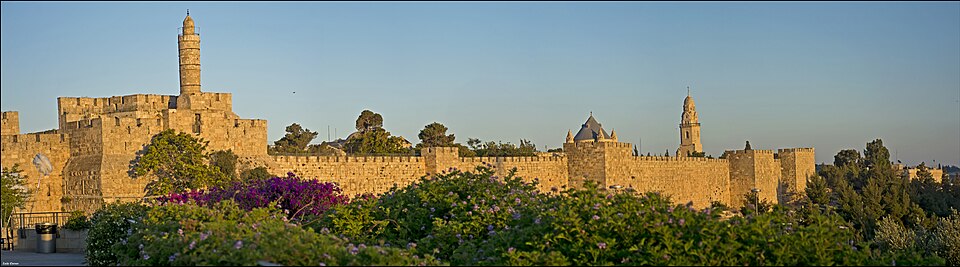
Jerusalem supplied the pressure the experiment needed. It was a city of fragments: Ashkenazim with their Yiddish, Sephardim with their Ladino, Arabic-speaking Jews from Aleppo and Baghdad and Yemen, pilgrims and scholars and beggars from everywhere. No two communities prayed quite alike, ate quite alike, or talked quite alike. The one thing they shared was the holy tongue on the page. Ben-Yehuda's wager was that the page could become a voice, and that the only language with any claim on all of them at once might bind them together in the market as it already did in the prayer book.
It was not a polite project. He quarrelled with the Old City's rabbis, who thought he was dragging the sacred into the gutter. He quarrelled with Ottoman authorities, who at one point jailed him on a charge of sedition. He buried a wife, married her sister, and kept writing. Through all of it ran a single, relentless act of manufacture: the building of words. A living language needs a word for bicycle and for ice cream and for newspaper, and the old sources did not always oblige. So Ben-Yehuda mined the Bible, the Mishnah, the medieval poets and cognate Arabic roots, and coined where he had to. Many of his inventions stuck. A good number of the most ordinary Hebrew words an Israeli child uses today were, not so long ago, one obstinate man's proposals.
The move and the household
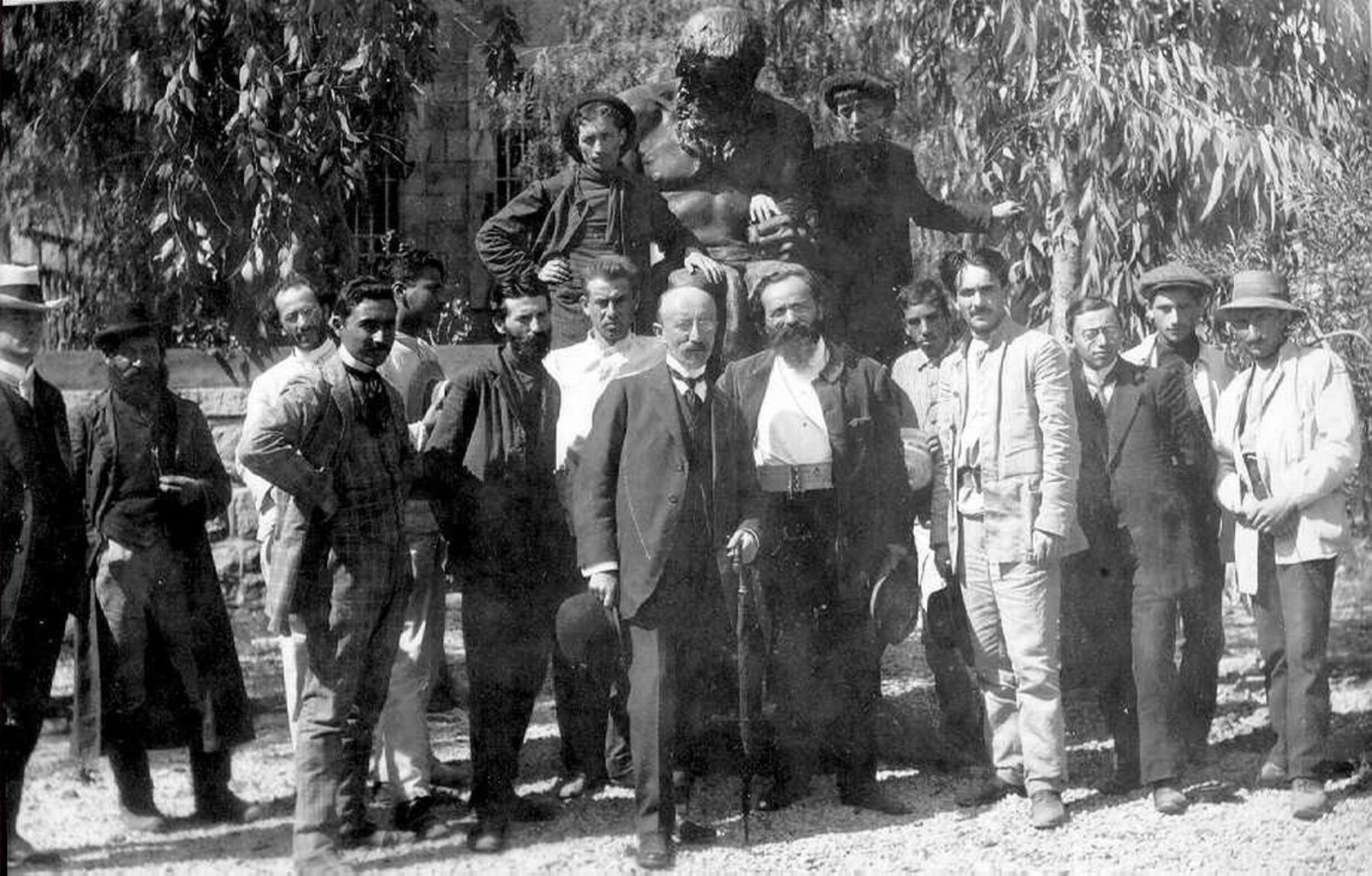
Eliezer Ben-Yehuda emigrated to Ottoman Jerusalem in 1881 and resolved that his home would be conducted in Hebrew alone. His son, born in Jerusalem in 1882 and later known as Itamar Ben-Avi, was raised to hear no other language, and is remembered as the first native speaker of modern Hebrew. The household became the working model for everything that followed: not a theory about Hebrew, but a family living inside it.
Itamar Ben-Avi · Jewish Virtual LibraryThe dictionary and the press
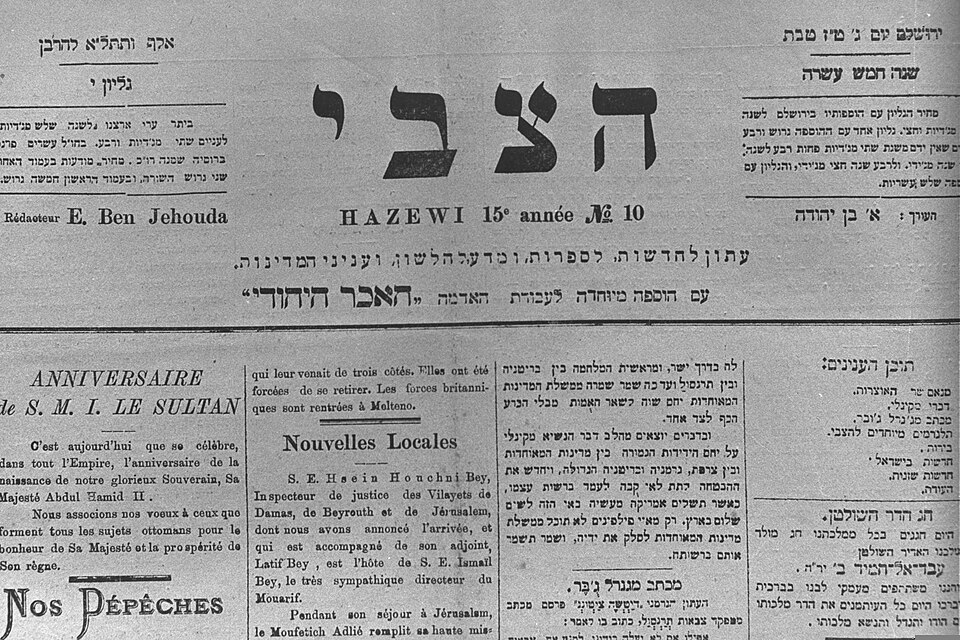
Ben-Yehuda edited Hebrew newspapers in Jerusalem and devoted decades to compiling a historical dictionary of the language. A Complete Dictionary of Ancient and Modern Hebrew began appearing in 1908 and was finished by others after his death, its final volume published in 1959. The newspaper forced Hebrew to report the modern day; the dictionary gave the revival its scholarly spine and a stock of words for things the ancients never named.
Eliezer Ben-Yehuda · WikipediaThe newspaper and the nation
If the dictionary was the deep work, the newspaper was the daily one. Ben-Yehuda edited Hebrew papers in Jerusalem, and a newspaper is a merciless teacher of a language, because it has to find words for whatever happened that week, whether or not the prophets foresaw it. Politics, science, sport, scandal, the price of things: all of it had to be said in Hebrew, in print, on time. Every issue was a small proof that the language could keep up with the modern world rather than merely remember the ancient one.
The astonishing part is how fast the private experiment became a public fact. Within two generations the strange household in Jerusalem had multiplied into schools, then towns, then a country full of people for whom Hebrew was simply the air they argued in. There is no other case quite like it. Languages die all the time. They are not generally talked back to life. The one that was happens to be the tribe's own, and it happened because a stubborn, consumptive, quarrelsome man decided that holiness was no excuse for silence in the street.
He took the language out of the prayer book and handed it to a child. The child grew up, and so did the language.
Further reading