Imagine the kind of teacher every city has exactly one of: the man whose door is always open, whose classroom smells of old ink and argument, who has strong opinions on table manners and cosmic justice in roughly equal measure. In Jerusalem, around 200 BCE, that man was Yeshua ben Eleazar ben Sira. He ran a house of study - a bet midrash - and he had things to say. A great many things. He said them in verse, in Hebrew, and he said them so well that his grandson translated the whole collection into Greek and sent it west, where it became Ecclesiasticus in the Christian canon, one of the most read books of late antiquity. In the Jewish world the book eventually sat outside the Tanakh; but it was never ignored, and its sayings found their way into Talmud and midrash by the hundred. Ben Sira had written himself into the tradition whether the canon-makers liked it or not.
What he wrote was wisdom literature in the great Hebrew line: the line that runs through Proverbs and Job and Qohelet. The form is the proverb, the couplet, the extended reflection. The subjects are life as it is actually lived - the duties of a son, the hazards of a banquet, the right way to treat a servant, what to look for in a friend, how to behave when you are a guest at a rich man's table. Ben Sira is never merely practical. Threading through every piece of domestic advice is a grander argument: that wisdom is not a Greek philosophical abstraction but the Torah itself - the law given to Israel on Sinai, dwelling in Jerusalem, waiting to be learned. He was writing against the Hellenising current that was pulling educated Judaeans toward Athens. His answer was not to shout. It was to demonstrate, couplet by patient couplet, that everything the Greeks thought they had discovered, Israel had always known.
The record
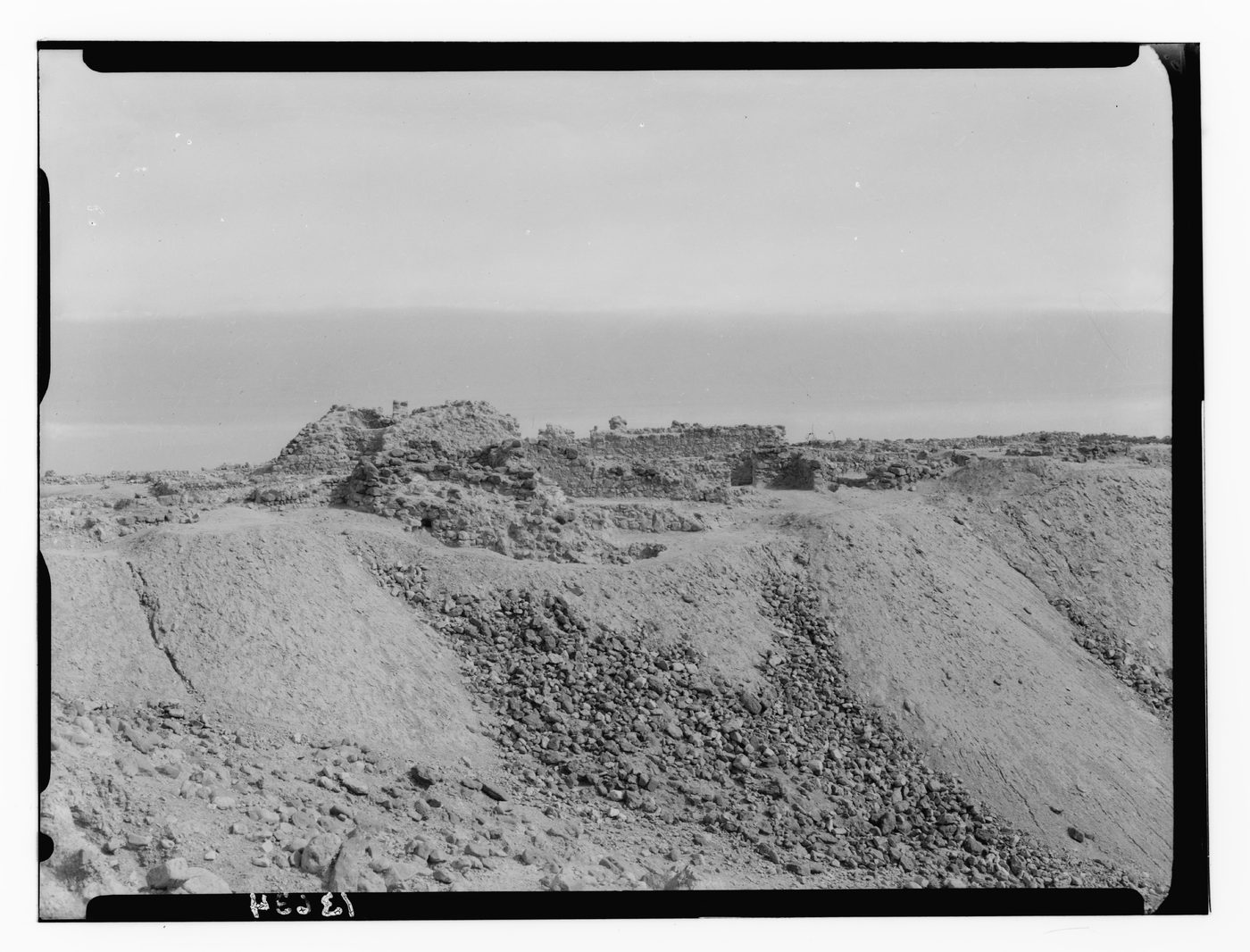
The Book of Ben Sira (Sefer Ben Sira) was composed in Hebrew in Jerusalem around 180-175 BCE, before the Maccabean revolt. Ben Sira's grandson translated it into Greek in Egypt no earlier than 132 BCE - a date established by his own preface, which mentions he arrived in Egypt in the thirty-eighth year of Ptolemy Euergetes (i.e. Ptolemy VIII). For centuries the Hebrew original was known only through quotations in rabbinic literature, its text assumed lost. Then, between 1896 and 1900, Solomon Schechter of Cambridge University - working in the Cairo Geniza, the document storeroom of the Ben Ezra Synagogue - retrieved multiple manuscript leaves of Hebrew Ben Sira, some dating to the eleventh century CE but preserving a text tradition going back to late antiquity. Additional Hebrew fragments were subsequently found at Masada and in the Qumran caves of the Judean Desert. Together they confirm that the medieval Geniza manuscripts are faithful witnesses to the original Hebrew. (Cambridge University Library, Taylor-Schechter Geniza Collection; Israel Antiquities Authority, Masada finds.)
The Geniza find is one of those moments that make a scholar weep - though Schechter, who reportedly pulled sacks of documents out of the room with his bare hands, was not a man who went in for weeping. He was after something real, and he found it. The Hebrew pages that came back to Cambridge turned out to be Ben Sira in the very language the author had written in, copied by Jewish scribes in Egypt who presumably did not know or care that the book was not quite canonical. They copied it because they loved it. That is a different kind of authority, and arguably a more durable one. The Talmudic rabbis who cited Ben Sira without attribution - weaving his lines into the fabric of halachic discussion as though they had always been there - understood the same thing. The man had earned his place in the tradition by being useful to it. No council of sages needed to issue the verdict; the readers had already decided.
The record
Chapter 44 of Ben Sira opens the famous "Praise of the Fathers" (Hebrew: Shirat ha-Avot) - a sustained poetic roll-call of biblical heroes from Enoch to Simon son of Onias, the high priest who served the Jerusalem Temple in Ben Sira's own lifetime. This passage is significant as an early example of canonical thinking: Ben Sira assembles a literary tradition and treats it as a unified heritage. The high priest Simon's appearance in chapter 50 - described in vivid liturgical terms, wearing his vestments at the Temple service - makes Ben Sira a near-contemporary eyewitness account of Second Temple worship, datable to the high priesthood of Simon II (c. 219-196 BCE). No other text from the period describes Temple ceremony from inside the city with such detail. Scholars including John J. Collins (Yale Divinity School, Jewish Wisdom in the Hellenistic Age, 1997) treat this passage as among the most important liturgical descriptions to survive from the Second Temple period.
Ben Sira himself appears at the end of his book, which is unusual - wisdom authors do not usually sign their work. He writes in the first person, speaks of his own searching, and invites the unlearned to come to his school. It reads, across twenty-two centuries, rather like a good teacher's end-of-year address: measured, warm, quietly confident in what the subject can do for a person. He had seen Jerusalem under the Ptolemies and was watching it begin to shift toward the Seleucids. The Maccabean revolt, the redrawing of everything, was perhaps a decade away. He could not have known that. He wrote as a man who believed the tradition was stable, sufficient, and worth every hour of effort required to learn it. He was right about the sufficiency, if not quite about the stability. The tradition survived; the world around it changed utterly. Ben Sira's book rode out the storm in Cairo, in Masada, in the libraries of Greece and Rome, and came back to us whole.
The sages debated whether Ben Sira defiled the hands - the technical phrase for canonical status. They decided it did not. They kept quoting it anyway. There is something characteristically Jewish about that arrangement: the formal boundary held, and the book went right on doing its work inside the boundary, cited, loved, and memorised. Ben Sira would have approved. He had always been more interested in what wisdom does than in where it is officially filed.