Scroll & StoneThe Story of the Tribe of Israel - עם ישראל

Language · A visual timeline

The Resurrection of Hebrew

No language in recorded history has died as a mother tongue and come back as one. Except Hebrew. Follow the gold thread - it never breaks. That is the argument.

Scroll to begin

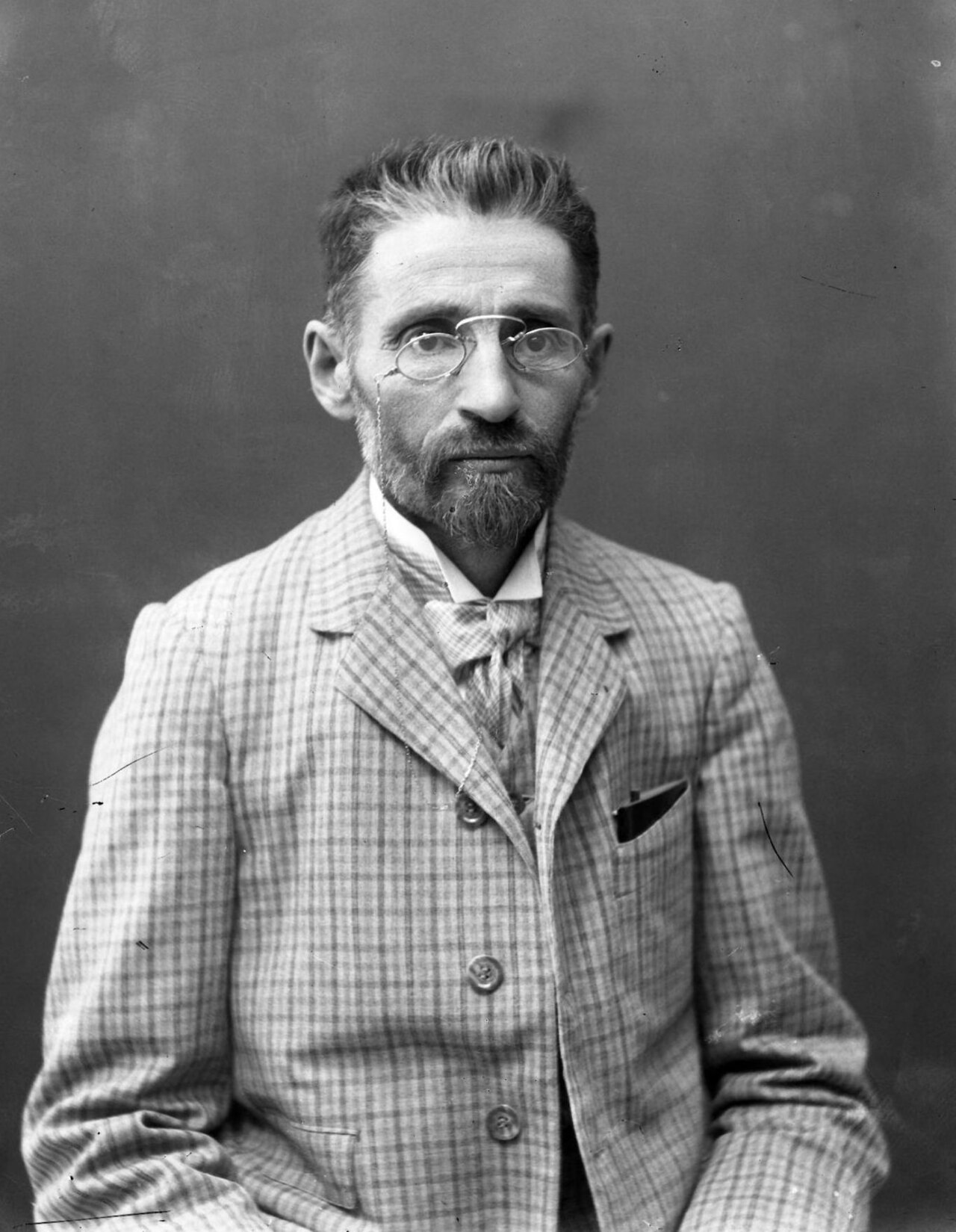
Portrait of Eliezer Ben-Yehuda, c.1918
Eliezer Ben-Yehuda (1858–1922) — the Lithuanian-born polymath who moved to Palestine in 1881 with a mission to make Hebrew a spoken language again. He compiled the first modern Hebrew dictionary, coined thousands of new words, and raised the first child in modern history whose mother tongue was Hebrew. Public domain · Photo by Ya'ackov Ben-Dov, c.1918–23, Central Zionist Archives, via Wikimedia Commons

I The earliest inscriptions

The Gezer Calendar

יֶרַח קְצִיר שְׂעֹרִים yeraḥ qetzir se'orim "A month of barley harvest"

A palm-sized limestone tablet scratched by someone - possibly a schoolboy, possibly a tax collector - who needed to write down when things grew. Two months of harvest, two of planting, a month of flax. No theology, no king, no monument. The language begins its written life doing chores.

What survives is ordinary. That is the point. Ordinary writing means ordinary literacy, and ordinary literacy means a language planted wide enough to last.

Istanbul Archaeology Museums, Artefact 2089T · discovered Gezer, 1908 · c. 10th century BCE

II The Siloam engineers

We Met in the Middle

וּבְעוֹד שָׁלֹשׁ אַמּוֹת לְהִנָּקֵב — נִשְׁמַע קוֹל אִישׁ קֹרֵא u-ve'od shalosh ammot le-hinaqev - nishma qol ish qore "While three cubits remained to pierce through, a man's voice was heard calling"

Two gangs of tunnel diggers, boring through solid rock from opposite ends to bring Gihon spring water inside Jerusalem's walls before the Assyrians arrived. When they were close enough to hear each other through the stone, one team called out. They met. The inscription they cut on the tunnel wall to mark the moment is the only known building commemoration from ancient Israel - and it sounds like an engineer in a site diary.

Hezekiah's tunnel still carries water today. The inscription - chiselled out by an 1890 thief and confiscated by the Ottoman government - sits in Istanbul, waiting to come home.

Istanbul Archaeology Museums, Artefact 2195T · Siloam tunnel, City of David, Jerusalem · c. 701 BCE

III Vernacular death

The Last Child

כָּל הַשּׁוֹכֵחַ עִקַּר שַׁבָּת וְעָשָׂה מְלָאכוֹת הַרְבֵּה בְּשַׁבָּתוֹת הַרְבֵּה — אֵינוֹ חַיָּב אֶלָּא חַטָּאת אַחַת kol ha-shokheakh iqqar Shabbat ve'asah melakhot harbeh — eino ḥayyav ella ḥattat akhat Mishnah, Shabbat 7:1 — rabbinic Hebrew at work, c. 200 CE

Around 200 CE, the last child grew up speaking Hebrew at home. Nobody marked the occasion, because nobody marks that kind of occasion. A language doesn't die at a funeral. It dies at a kitchen table, when a mother answers her child in Aramaic because it's simpler, and the child answers back in Aramaic, and that's that.

But the Mishnah - the oral law compiled into writing around exactly this time - was set down in Hebrew. The language left the kitchen and moved permanently into the study house. It had other arrangements to keep.

Mishnah, tractate Shabbat 7:1 · compiled c. 200 CE, attributed to Rabbi Judah the Prince

IV Seventeen centuries

Dormant, Never Idle

לִבִּי בְמִזְרָח וְאָנֹכִי בְּסוֹף מַעֲרָב libbi ve-mizraḥ ve-anoḵi be-sof ma'arav "My heart is in the east, and I am at the far edge of the west" — Yehuda Halevi, c. 1130 CE

For seventeen hundred years - prayed in three times a day, contracted in, versified in, philosophised in, corresponded in across the Cairo Geniza trade routes from Egypt to Aden. Hebrew went into the equivalent of a very long, very active retirement. A merchant in eleventh-century Fustat and a scholar in eleventh-century Worms had no spoken language in common. They could write to each other perfectly well, and did.

Yehuda Halevi wrote his homesickness for a land he had not yet seen - he would travel toward it in his final years, dying somewhere in the East around 1141 - in Hebrew that still stops you cold nine centuries later. Every Jewish boy who learned his letters learned these letters. Nobody knew what they were saving for. It turned out they were saving for 1882.

Yehuda Halevi, "Libbi BaMizrach" · Sepharad, c. 1130 · Cairo Geniza collection: Cambridge University Library and Bodleian Libraries

V The pivot

Ben-Yehuda Raises Ben-Zion

בֶּן-צִיּוֹן Ben-Tzion "Son of Zion" — the name Ben-Yehuda gave his son, born 1882: the first native speaker of Hebrew in seventeen centuries

Eliezer Ben-Yehuda arrived in Jerusalem in 1881 with a fixed idea: that the only way to make a dead language live was to hand it to a child as a mother tongue. Since no such child existed, he decided to manufacture one. His son, born 1882, was raised in total Hebrew immersion - no other language in the house, guests turned away if they could not comply.

The boy reportedly didn't speak at all until he was four. When he did, the first native modern Hebrew anyone had heard in seventeen centuries came out. One child. Then kindergartens. Then the whole playground. Then everything else.

Read the full story of the revival →

Ben-Zion Ben-Yehuda (later Itamar Ben-Avi), b. Jerusalem 1882 · Eliezer Ben-Yehuda, lexicographer, d. 1922

VI The language war

The Technion Vote

מִלְחֶמֶת הַשָּׂפוֹת milḥemet ha-safot "The War of the Languages" — 1913

The new Technion in Haifa was to be taught in German - the language of science, the language of the sponsoring aid agency. The teachers and students went on strike. The question was not merely ideological: Hebrew, until that moment, had no words for the subjects they needed to teach. It didn't matter. They would coin the words as they went.

Hebrew won the vote. A people that strikes over grammar is a people that will be fine.

War of the Languages, Haifa, 1913 · Technion - Israel Institute of Technology, founded 1912, first classes 1924

VII Nine million speakers

A Language for Everything

גְּלִידָה glida ice cream
עִתּוֹן iton newspaper
אׁוֹפַנַּיִם ofanayim bicycle
בּוּבָּה buba doll
מִלּוֹן milon dictionary
מַחְשֵׁב maḥshev computer

The language that needed words for a child's whole world - ice cream, newspaper, bicycle, doll - now needs words for everything anyone invents. The Academy of the Hebrew Language still coins them: maḥshev (computer, from ḥashav, "to calculate"), sak-sheni (backpack), doneg (wax). The project Ben-Yehuda started at a desk with tuberculosis and a deadline never stopped.

Nine million speakers argue in this language today - in traffic, in the Knesset, at Friday-night tables. Somewhere among them, a mother is answering her child in Hebrew because it's simply easier. That sentence, at that kitchen table, is the whole story.

Coinages: Ben-Yehuda's dictionary (completed 1959) and Academy of the Hebrew Language · Speaker count: c. 9 million native speakers (Israel Central Bureau of Statistics)

Story & Stone · The Resurrection of Hebrew