Slabodka was a poor, muddy suburb of Kovno, on the wrong side of the river, and for a while it was the most ambitious place in the Jewish world. The yeshiva that grew there did not just teach Talmud. It taught a doctrine about what a human being is, and it sent that doctrine out into the century in the persons of the men it formed. The address was humble. The claim was enormous.
The claim was this: that a person should behave nobly because a person is noble. Slabodka called it gadlus ha-adam, the greatness of man, and it set the school apart from every other branch of the Musar movement. Where the rival school at Novardok drilled humility by sending students into shops to ask for nails at the bakery and bread at the ironmonger, deliberately courting ridicule to crush the ego, Slabodka did the opposite. It told a young man he was made in the divine image and asked him to live up to it. The students dressed well, carried themselves straight, and were taught that self-respect was a religious obligation. Refining the soul, here, meant raising it rather than breaking it.
The Alter and his method
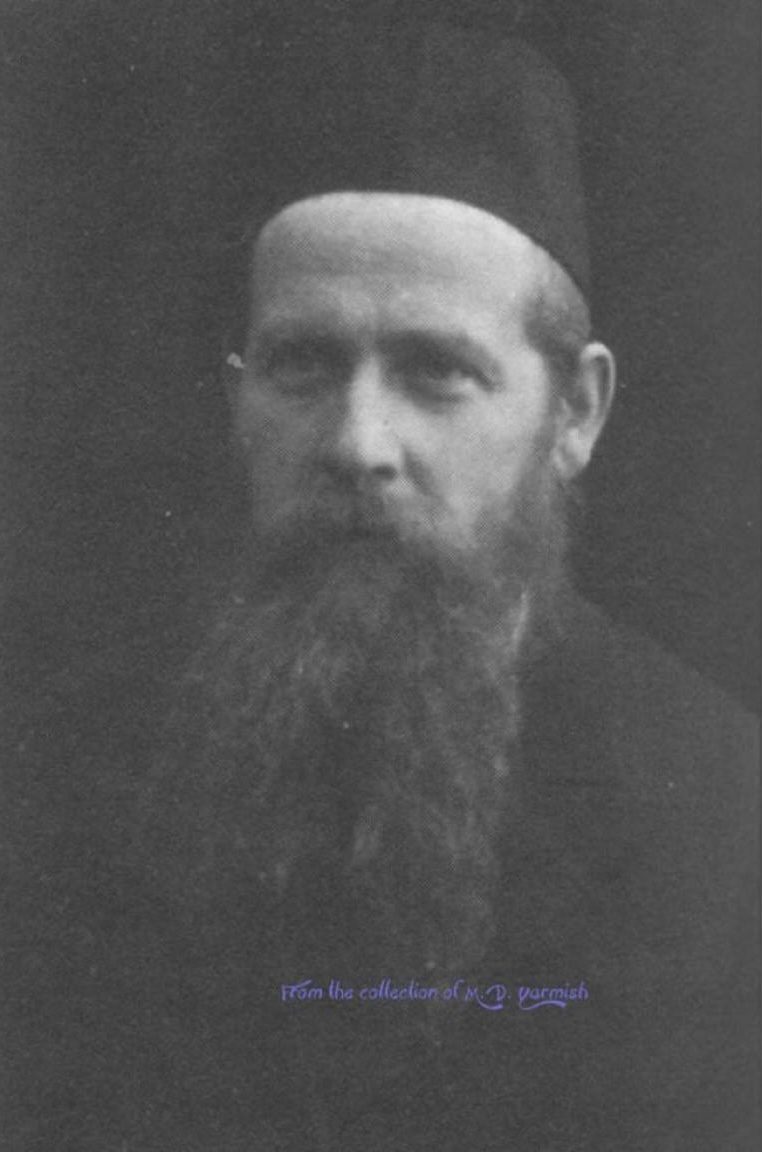
The man behind it was Rabbi Nosson Tzvi Finkel, known to everyone simply as the Alter, the Elder of Slabodka. He shunned a formal title and rarely lectured in public, working instead through private conversation and a watchful, almost invisible presence. He built the yeshiva around the personality of the student rather than the syllabus, and named it Knesses Yisrael in honour of Yisrael Salanter, the founder of Musar. Finkel's gift was for people. The school's most lasting product was not a book but a roster of men.
Not everyone wanted the Musar. In 1897 the ethical method itself tore the yeshiva in two. The opponents broke away to form a rival house, Knesses Beis Yitzchak, named for Rabbi Yitzchak Elchanan Spektor, the great rabbi of Kovno across the river. Finkel kept the smaller, Musar-committed remnant and rebuilt from it. It is a very Jewish kind of founding story: an institution defined as much by the argument that split it as by the agreement that began it.
Knesses Yisrael, Slabodka
Nosson Tzvi Finkel established the yeshiva at Slabodka in the early 1880s, consolidating earlier study circles into a single institution and naming it Knesses Yisrael after Yisrael Salanter. It became the flagship of the Musar movement in the Lithuanian yeshiva world. Sources differ on whether to date the founding to 1881 or to the 1882 merger that gave it its settled form.
YIVO Encyclopedia · Encyclopaedia JudaicaThe men it sent out
You can measure Slabodka by its alumni, and the measurement is startling. From its benches came Isser Zalman Meltzer, who carried the method to Slutsk; Moshe Mordechai Epstein, who would lead the school to Hebron; and a generation of younger men - Aharon Kotler, Yaakov Kamenetsky, Yaakov Yitzchok Ruderman - who crossed the Atlantic and built the American yeshiva world almost from nothing. Lakewood, Baltimore, the great study halls of Brooklyn: a surprising number of them trace a line back to a muddy suburb on the Neris. The Alter's wager that you build a civilisation by building people turned out to be correct.
In 1924 the Lithuanian government required yeshiva students either to enlist in the army or to take up secular studies, and Slabodka decided to move rather than comply. The Alter sent emissaries to find a site in the Land of Israel and chose Hebron. In 1925 a large part of the yeshiva - the roshei yeshiva and around 150 students - relocated there, the first Lithuanian yeshiva to plant itself in the country. For four years it flourished as the largest yeshiva in the Land.
A poor suburb produced a theory of human greatness, and then produced the people who proved it. That is a return on muddy ground.
From Slabodka to Hebron to Jerusalem
The transplanted yeshiva grew to close to 200 students by 1929. In the Arab riots of August 1929, the Hebron massacre killed sixty-seven Jews, among them twenty-four students of the yeshiva. The survivors re-established the school in the Geula neighbourhood of Jerusalem, where it continues today as the Hebron (Chevron) Yeshiva, now numbering some 1,500 students.
Jewish Virtual Library, The Hebron Massacre of 1929What survived
The portion of Slabodka that stayed in Lithuania did not survive the war. After the German invasion of June 1941 the Nazis and local collaborators turned Slabodka itself into the Kovno ghetto, penning tens of thousands of Jews into the suburb that had been the address of the mother of the yeshivas. Rabbi Avraham Grodzinski, the last head of the yeshiva in Lithuania, stayed with his students and kept teaching inside the ghetto until its liquidation. He died in 1944 when the hospital he was confined to was set ablaze.
And yet the method outran the murder. In 1947 Rabbi Yitzchok Isaac Sher, the Alter's son-in-law, refounded Slabodka in Bnei Brak, where it stands today. The Hebron Yeshiva in Jerusalem carries the same line. Two living schools on two continents trace themselves to a riverbank suburb that no longer holds a Jewish community at all. Slabodka the place is gone. Slabodka the argument about human dignity is very much not.
Further reading
Story & Stone · Atlas Places Nº 11
Next on the shelf: Bialystok: Industry and Yiddish →