The tribe has built great buildings - a Temple in Jerusalem twice over, synagogues from Toledo to Cochin, study halls and academies that shaped the mind of the world. But the building it has relied on most, the one it could never have taken away, has no walls at all. It is a table, set in an ordinary room, on a Friday evening, for the start of Shabbat. Two candles, a cup of wine, a covered loaf of bread, and the people who happen to be home. From those few objects a civilisation has rebuilt its holiest day, every seventh day, for longer than most nations have existed.
What makes it remarkable is not the grandeur but the repeatability. A people cannot summon a Temple every week. It can lay a table. The Shabbat table is sanctity scaled down to something a household can manage and then keep managing - holiness at dining-room size, designed to be performed by tired parents and impatient children rather than by priests. The genius is in the smallness. Anything bigger could be lost. A table can be set anywhere, by anyone, in any century, and so it never has been lost.
It works because it is ordered. The evening has a shape that does not change: light, then blessing, then bread, then the meal, then song. A child raised at this table learns the sequence before learning what it means, the way you learn a language by hearing it long before you can parse it. By adulthood the order lives in the muscles. You could be woken in the dark, set down at a strange table in a strange country, and still know exactly what comes next. That is what a tradition is, when it has been engineered to survive.

Two lights, a cup, a loaf
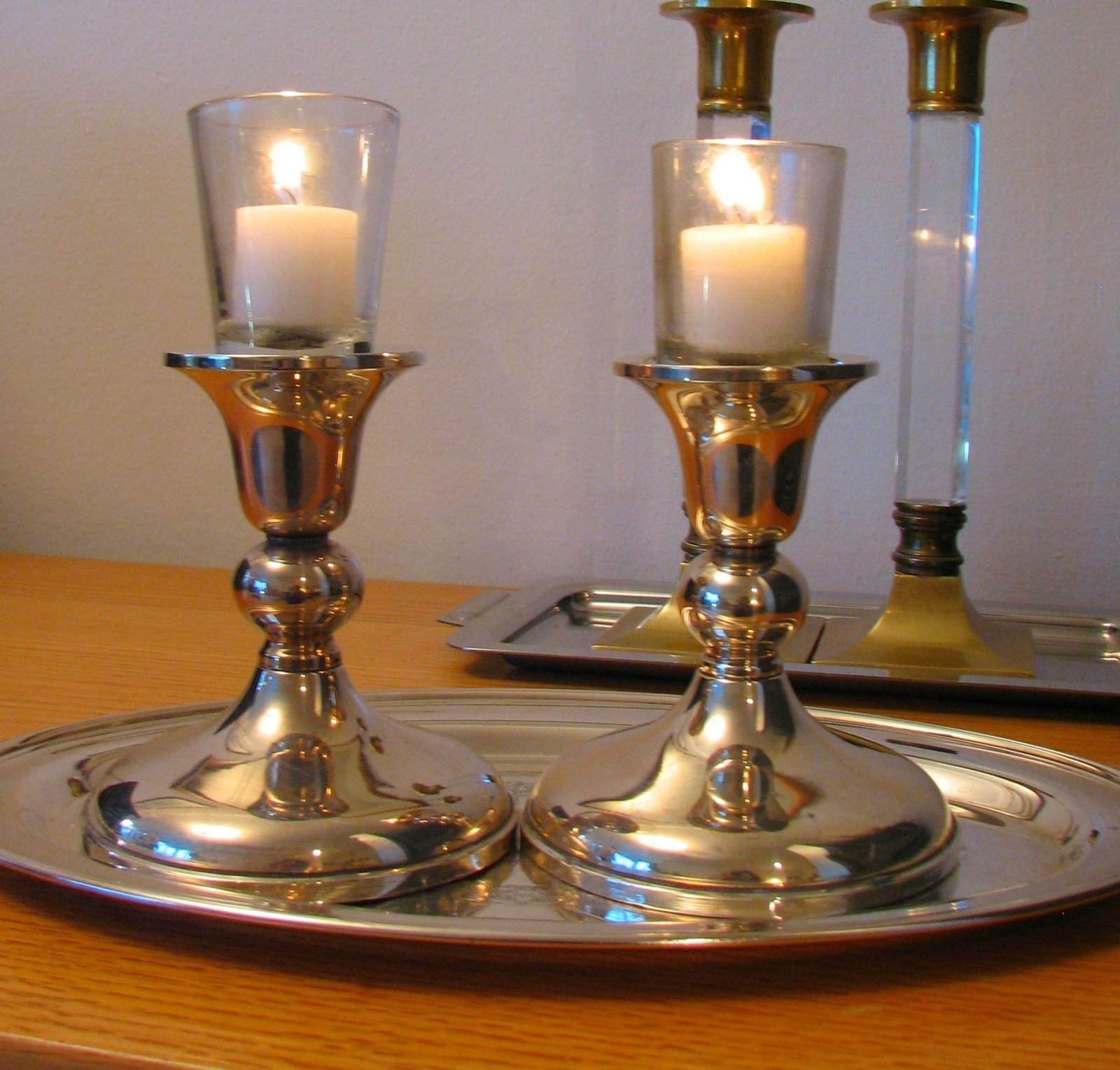
The evening opens with light. Before the Sabbath begins, candles are kindled - customarily at least two, often described as standing for the twin commands to "remember" and to "keep" the Sabbath day. The one who lights them traditionally covers the eyes for the blessing, so that the flames are first seen already burning, already part of the holy day. It is a small piece of theatre with a large meaning: the week ends and a different kind of time begins, and the household marks the threshold with its own hands.
Then the wine. Kiddush is recited over a full cup, sanctifying the day in words drawn from the account of creation - the day God rested. Wine is the drink of gladness in the Jewish tradition, and the Sabbath is meant to be a joy, not a burden, so the day is welcomed not with austerity but with a raised cup. After the wine comes the bread: two loaves of challah, kept covered until their moment, recalling the double portion of manna that fell in the wilderness so that none had to be gathered on the Sabbath. The cloth over the bread is said to spare it "embarrassment" at being blessed after the wine - a tender, almost domestic courtesy extended to a loaf, which tells you something about the temperature of this table.
Around that core the meal unfolds, and through it runs zemirot, the table songs sung between courses. The singing is not decoration. It is what turns a set of blessings into an evening, and a room of relatives into something larger and warmer than the sum of them. A table where people sing for an hour after the food is finished is a table nobody is in a hurry to leave - which is rather the point of a day built for rest.
The blessings, written down
The Jewish Sabbath evening is structured by a fixed sequence of blessings: over kindled lights, over a cup of wine (kiddush), and over two loaves of bread. These obligations are codified in the Shulchan Aruch, the legal code published by Rabbi Joseph Karo in 1565, in the section on the laws of Shabbat (Orach Chayim). Local customs vary, but the core order is shared across communities.
Shulchan Aruch, Orach Chayim (Joseph Karo, 1565)The table that replaced the Temple
This domestic holiness was not always the centre of gravity. While the Temple stood in Jerusalem, the great public rites of the Jewish year were enacted there, in stone, by a priesthood, with smoke and song and crowds. When the Second Temple was destroyed in the year 70 of the common era, that whole apparatus of public worship was gone in a single catastrophe. The sages who rebuilt Judaism out of the ruins made a momentous move: they relocated much of the sacred from the Temple to the home and the synagogue, from the altar to the table. The household became a small sanctuary, and the family meal a kind of service.
This is why the Shabbat table carries so much weight. It is not merely a nice custom; it is the load-bearing replacement for a destroyed Temple, the place where the holiness that once lived on a mountain in Jerusalem was rehoused so that it could survive exile. A people scattered to every corner of the earth could not carry a Temple with them. It could carry a table - or rather, the knowledge of how to make any table, anywhere, into one for an evening. That portability is the whole secret of Jewish continuity, compressed into candles and bread.
And so the objects themselves became heirlooms and signposts of belonging. Candlesticks carried out of one country and into the next, kiddush cups passed from grandparent to grandchild, the same melodies sung at tables thousands of miles apart - these are the recognisable furniture of Jewish life precisely because the table is where the tradition lives. You can read a family's whole history in its Sabbath silver: where it came from, what it survived, what it refused to put down.
From altar to table
The Second Temple in Jerusalem was destroyed by Roman forces in 70 CE, ending the sacrificial cult. In its aftermath, the rabbinic movement reorganised Jewish worship around the synagogue and the home, with prayer and domestic ritual taking on functions formerly served by the Temple. The Sabbath table is a central instance of this shift, carrying sanctity into the household.
Destruction of the Second Temple, 70 CEThe smallest sanctuary
There is a particular pride in all this that has nothing to do with size. The tribe built two Temples and lost both, and learned the deepest lesson available: that the holiest thing it owns is not a building at all but a practice, repeatable by anyone with a table, a candle and the will to stop the clock for a day. No empire could confiscate it, because it was never stored anywhere a soldier could reach. It was stored in habits, in melodies, in the muscle memory of children who grew up to set the table themselves.
A people scattered to every corner of the earth could not carry a Temple with it. It could carry the knowledge of how to make any table, anywhere, into one for an evening.
Further reading