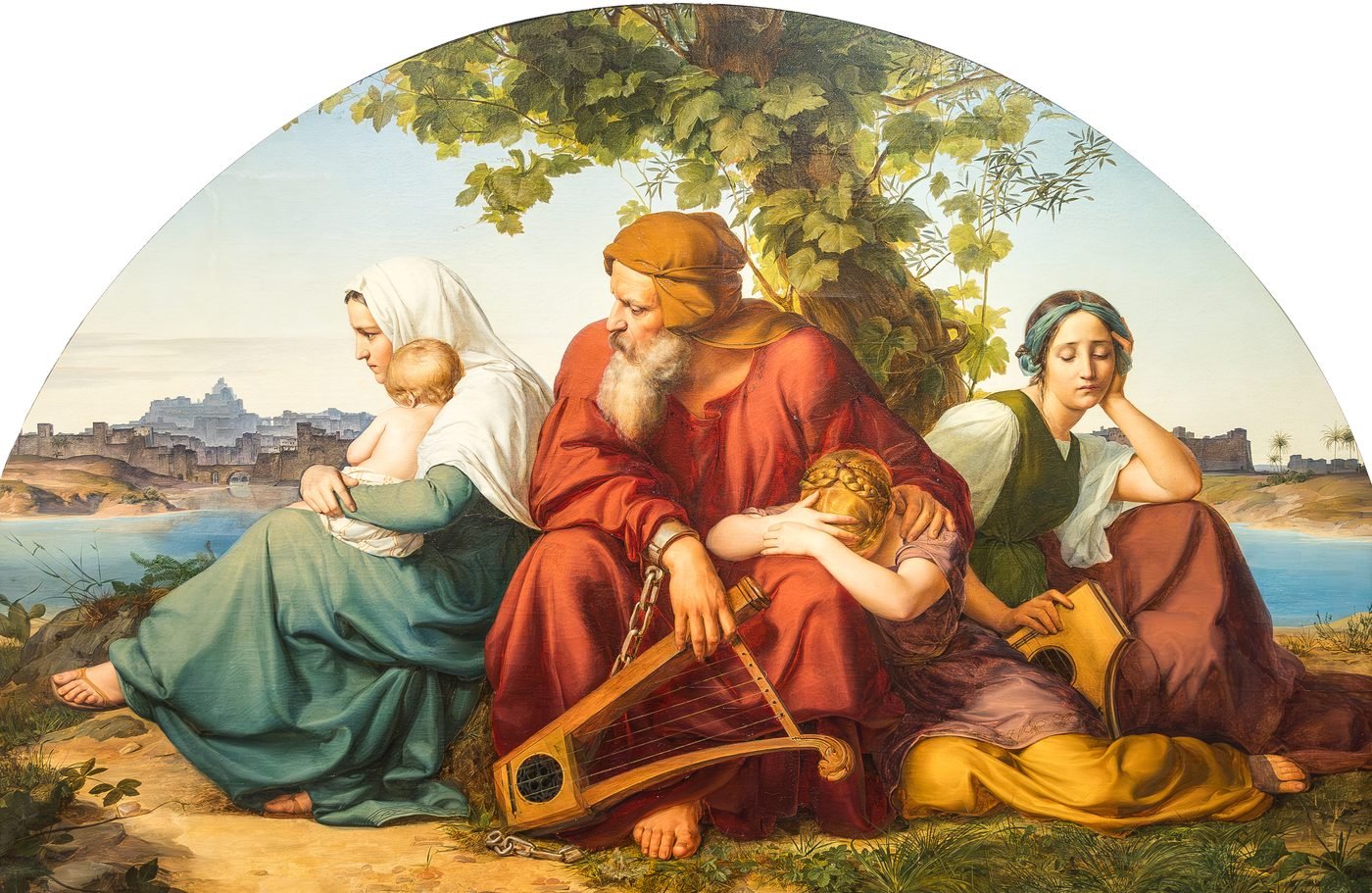
The town of Sura stood on the western bank of the Euphrates, in the flat, canal-laced country of Babylonia. Nothing about it announced particular destiny. It was a market town in a Jewish agricultural landscape - one settlement among hundreds where the descendants of the Babylonian exiles had built farms, synagogues and a durable, locally rooted life. And then, around 220 CE, a scholar who had studied in the land of Israel came home to it, opened a house of learning, and changed everything.
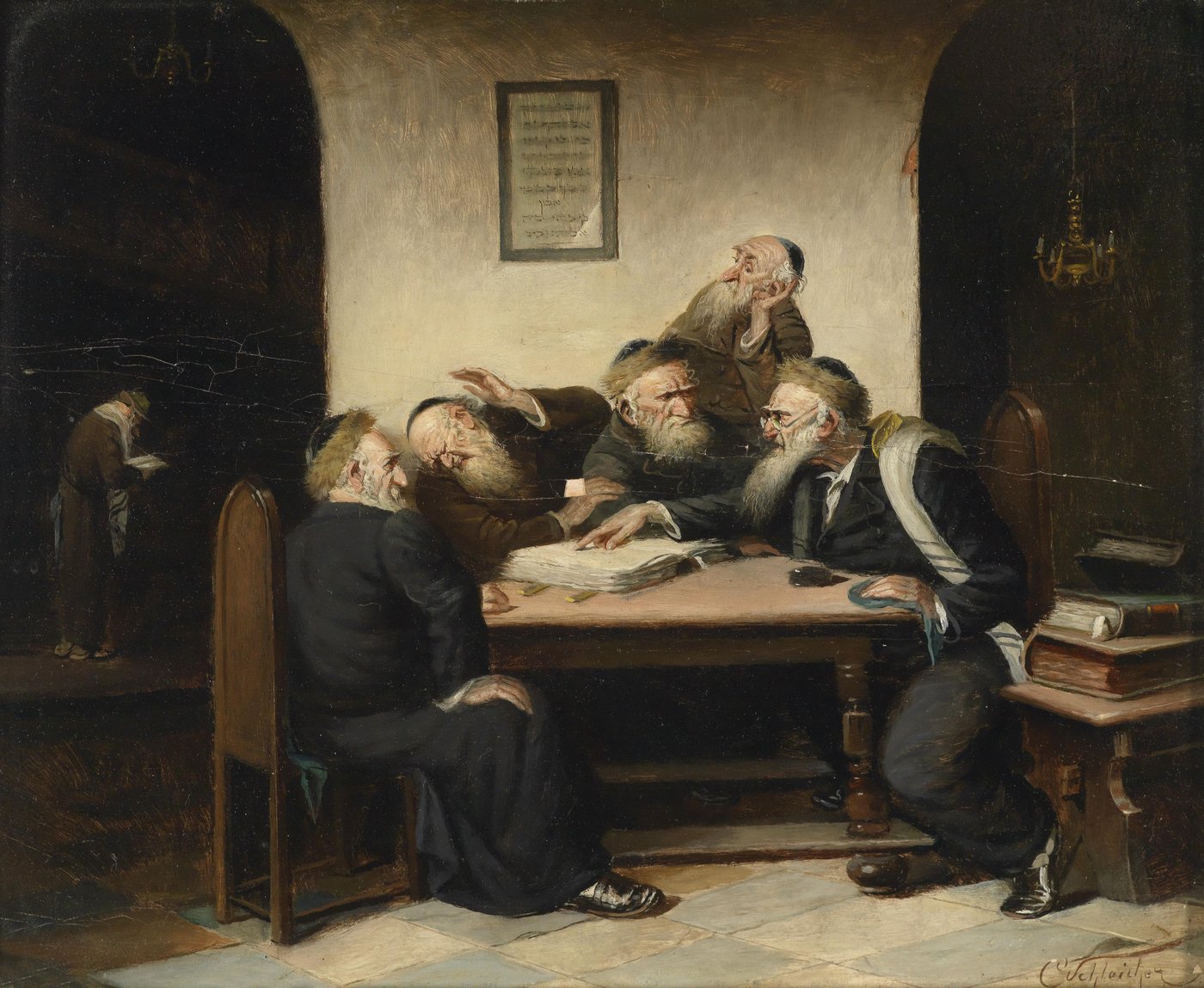
His name was Abba Arikha. The Talmud calls him Rav - simply "the master" - a title of such settled reverence that no surname was needed. He had sat at the feet of the great Rabbi Yehudah ha-Nasi in the Galilee, imbibing the traditions that would soon be sealed in the Mishnah, and he returned to Babylonia carrying everything he had learned. The academy he founded at Sura was not a physical monument. It was a method: rigorous, disputatious, tireless. Generation followed generation of students. The arguments accumulated. Eventually they became the Babylonian Talmud.
The record
The Babylonian Talmud records that Rav studied under Rabbi Yehudah ha-Nasi, compiler of the Mishnah, before returning to Babylonia (Tractate Eruvin 8b, Sanhedrin 5a). The academy at Sura is placed by rabbinic chronology at c. 219-220 CE. The geonic literature - particularly the Iggeret Rav Sherira Gaon, written in 987 CE by the head of the Pumbedita academy - is the earliest systematic account of the Babylonian academies' history and credits Rav with founding Sura's tradition of study. The letter is preserved and published by Nosson Dovid Rabinowich (Jerusalem, 1988).
What Rav built at Sura was, in effect, a second centre of gravity for the Jewish world. There had long been Jewish life in Babylonia - the exile community of 586 BCE had put down roots the returnees never fully displaced - but the founding of Sura gave that life an intellectual spine. The academy held what later came to be called the kallah months, great seasonal gatherings in which thousands of scholars and laymen assembled to study a tractate of Mishnah together. The town that had been a market became a university town, a place you came to not for goods but for argument and mastery. Sura and its sister academy at Pumbedita, founded around the same period, would hold that position for eight centuries. In that span they outlasted every empire that ruled above them.
The record
Sura continued as a functioning academy into the eleventh century. Its sister academy at Pumbedita closed with Hai Gaon in 1038 CE. At its height under the early geonim the academy attracted pilgrims and correspondents from across the Jewish diaspora, and its responsa - legal decisions mailed to Jewish communities from Spain to Persia - set binding precedents for centuries. The responsa of the Sura geonim are collected and analysed in Robert Brody, The Geonim of Babylonia and the Shaping of Medieval Jewish Culture (Yale University Press, 1998), the standard modern study of the Geonic period.
Rav himself is a vivid presence in the Talmud - not a remote legislator but an opinionated, sometimes argumentative, deeply human voice. He debated his colleague Shmuel, who led the rival academy at Nehardea, with the productive ferocity of two people who agree on nearly everything except today's question. Those debates - "Rav says ... Shmuel says ..." - became a literary form that drives hundreds of Talmudic discussions. In founding Sura he did not merely open a school. He helped invent the intellectual character of rabbinic Judaism: the idea that argument itself is a form of worship, that pressing a teacher is not disrespect but duty, and that a tradition stays alive by being perpetually disputed from within.
The record
Rav is cited by name more than any other single sage in the Babylonian Talmud, with thousands of attributed statements across halakhic and aggadic material. His legal rulings are foundational: the principle that "the law follows Rav in ritual matters" (hilkheta ke-Rav be-issura) is a standard codified rule cited in the major codes, including Maimonides' Mishneh Torah and Joseph Karo's Shulchan Arukh. His aggadic sayings - including the celebrated prayer Aleinu le-Shabeach, traditionally attributed to Rav - remain part of every daily Jewish prayer service to this day.
A single scholar coming home to a market town by the Euphrates is not, on the face of it, a world-historical event. But Rav brought with him something that would prove more durable than any empire: a method for keeping a people's conversation going, generation after generation, in exile and in argument. The page he opened at Sura in 220 CE is still being turned.