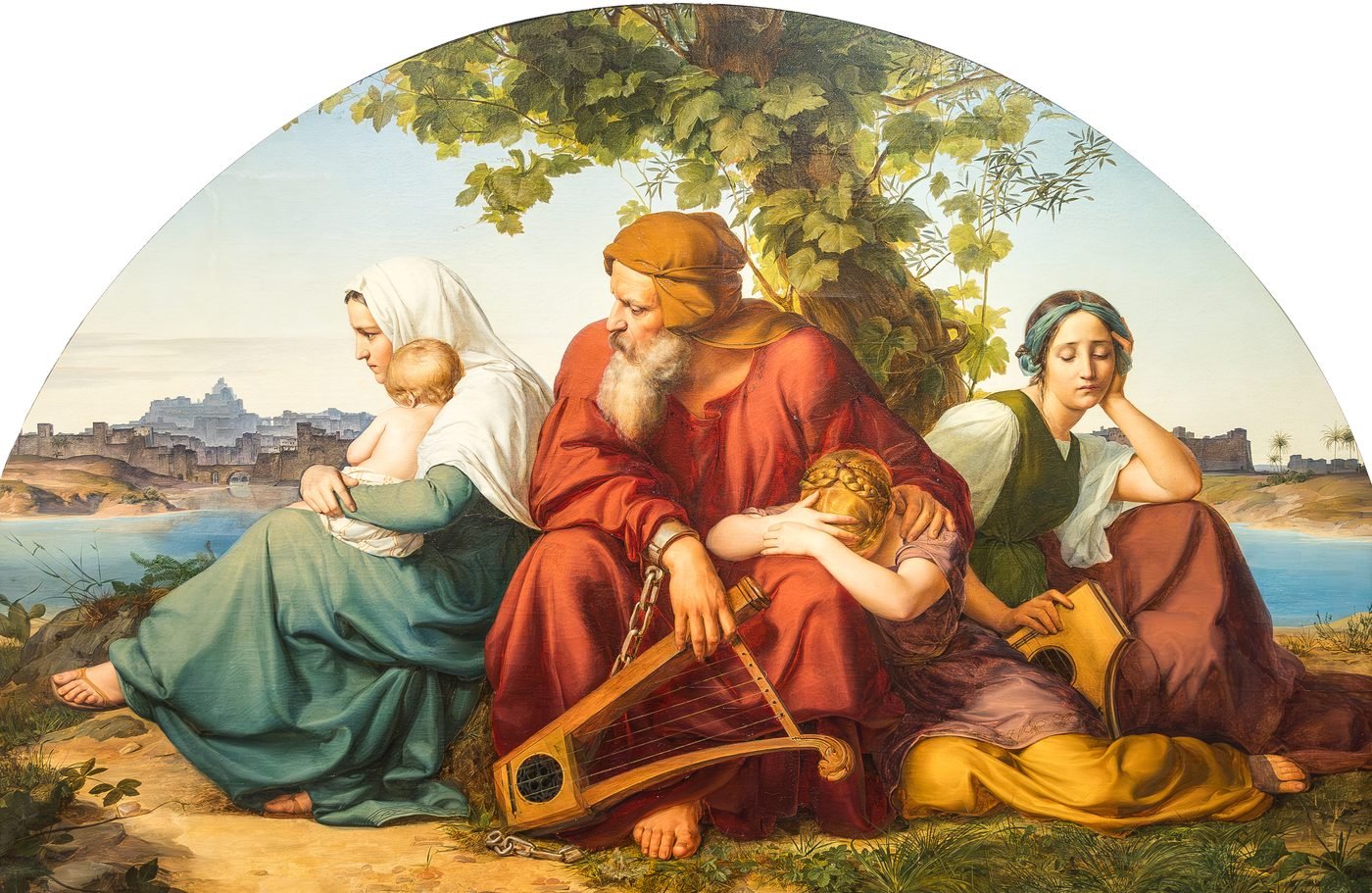
They arrived in Babylonia as captives. Nebuchadnezzar II had done his work in Jerusalem - the Temple emptied, the elite deported, the city's leading families set on the long road east along the Fertile Crescent to the banks of the Euphrates. What happened next is one of the tribe's most quietly astonishing acts. They sat down by the rivers of Babylon - and they built something permanent. Not a memorial to what they had lost, but a city, a community, an academy. Nehardea, on the Euphrates at its junction with the Royal Canal, became the first great centre of Jewish life in the diaspora - and it lasted, in one form or another, for the better part of a thousand years.
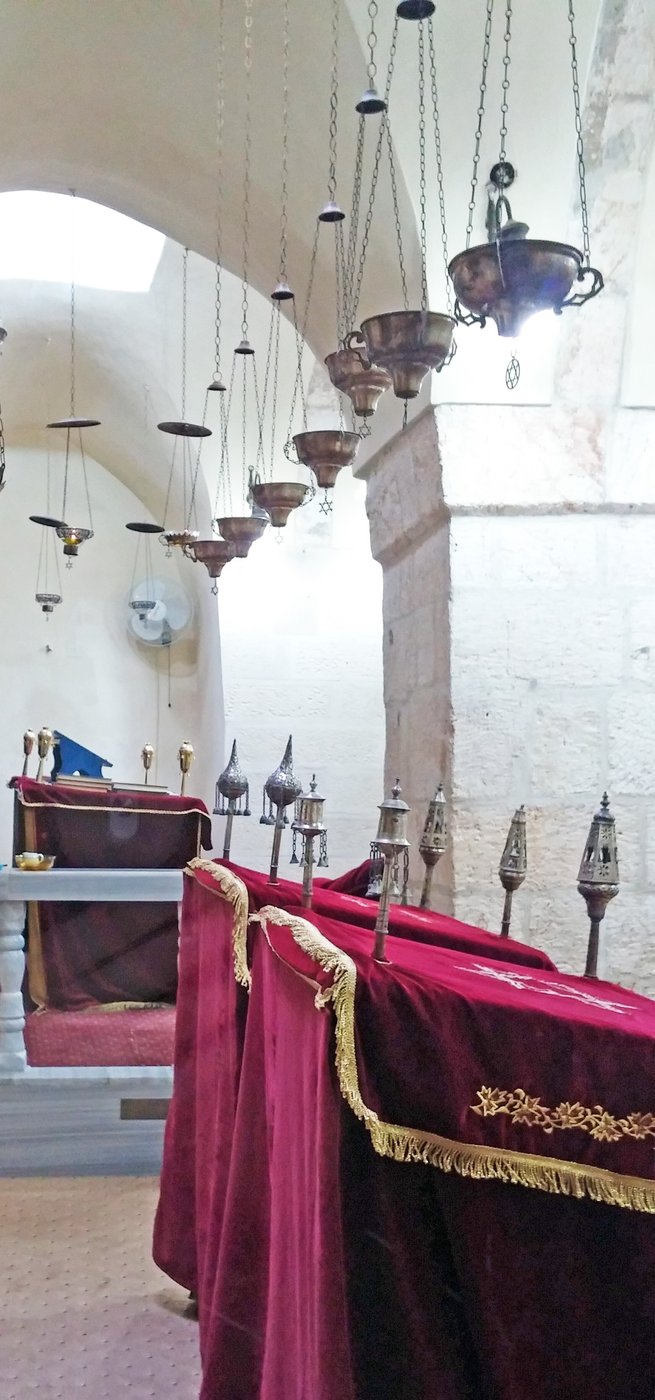
This is not the story of survival by endurance alone. It is the story of people who understood, earlier than most, that a community without a building can outlast empires. The Persians conquered Babylon and let the Jews stay. The Parthians rose and let them stay. The Sassanids came and let them stay. Through every imperial handover, the Jews of Nehardea were still there, still arguing, still sending the half-shekel Temple tax to Jerusalem long after Jerusalem could receive it. The Talmud records that Nehardea possessed a synagogue said to have been built by King Jehoiachin himself with earth and stones carried from the Temple - a tradition that speaks not to archaeology but to something more important: the insistence that the connection had never, in fact, been severed.
The record
The Babylonian Talmud (Megillah 29a) records that the Shekhinah - the divine presence - accompanied Israel into exile at Nehardea, citing two specific locations: the synagogue of Shaf ve-Yativ in Nehardea, which tradition held was built using stones and soil transported from the destroyed Temple in Jerusalem. The tractate names the community explicitly and preserves Nehardea's status as one of the early centres of Babylonian Jewish life. The passage is a primary Talmudic source (Tractate Megillah, Babylonian Talmud, c. 3rd-6th century CE redaction).
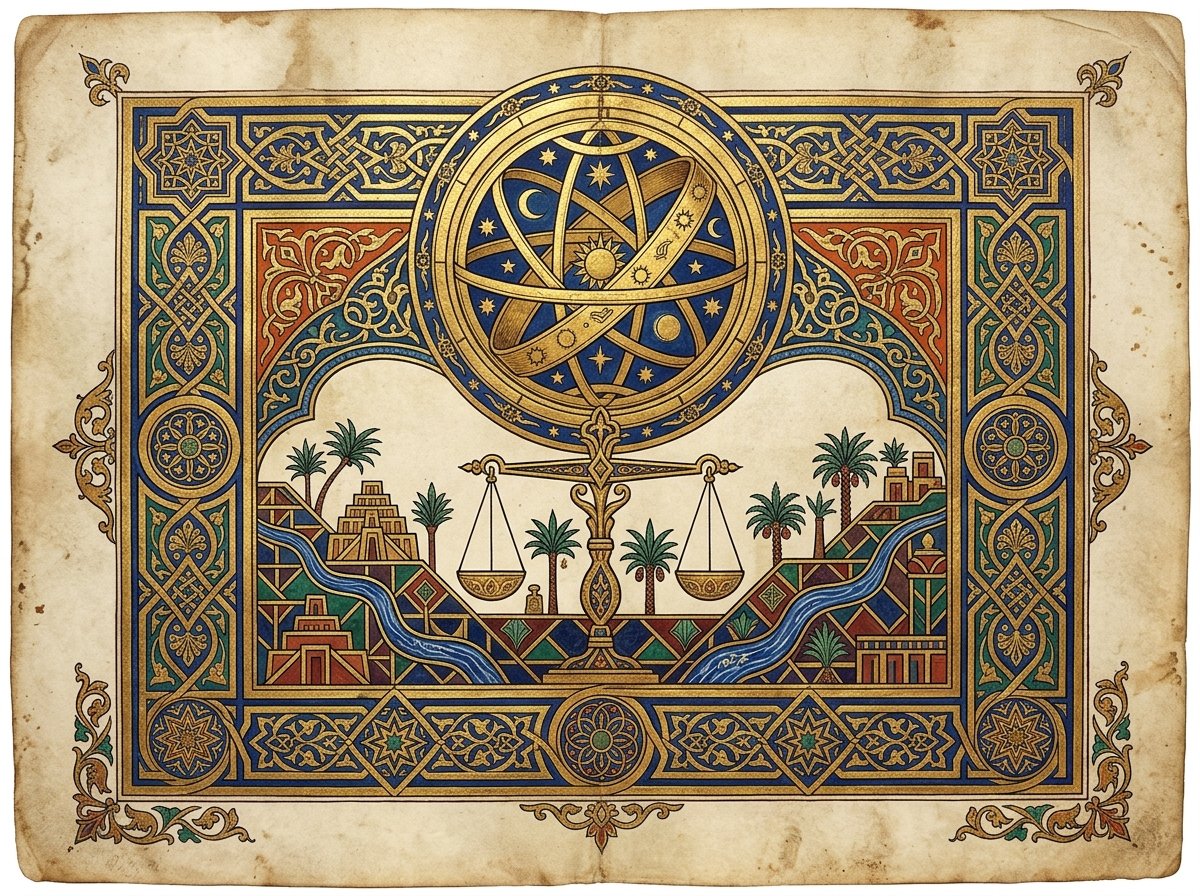
The academy at Nehardea became serious scholarship by the early third century CE, when Shemuel - known simply as Shemuel or Mar Shemuel - presided over it. Shemuel was a figure of extraordinary range: a Talmudic authority of the first order, an astronomer capable of saying that he knew the paths of the heavens as well as the streets of Nehardea, and a pragmatist who formulated one of rabbinic law's most durable principles: dina de-malkhuta dina - "the law of the land is the law." That ruling, recorded in Tractate Gittin of the Babylonian Talmud, gave Jews in every subsequent diaspora a framework for living inside foreign legal systems without surrendering their own. It was not a concession. It was strategy, articulated from a city that had been practising it for seven centuries. Nehardea's academy was eventually destroyed in a raid by the Palmyrene general Odaenathus in 259 CE - one of the shocks of Rome's crisis century. But the tradition it had built did not die with the city's walls. It moved, first to Pumbedita, and the line of Babylonian learning continued unbroken, running forward into the Talmud itself.
The record
Shemuel of Nehardea's legal principle dina de-malkhuta dina ("the law of the land is the law") is recorded in Tractate Gittin 10b of the Babylonian Talmud and appears also in Tractate Bava Kamma 113a-b and Tractate Bava Batra 54b-55a. Shemuel, a third-century CE amora and head of the Nehardea academy, is dated by scholars to approximately 165-254 CE. His astronomical observations, referenced in Tractate Berakhot 58b, gave rise to the "path of Shemuel" - a systematic lunar calendar calculation that demonstrates the breadth of the academy's intellectual life. These references are all within the Babylonian Talmud (Vilna edition), and are discussed in detail by Jacob Neusner in "A History of the Jews in Babylonia" (Brill, 1965-70), Volumes I-II.
There is something in the Nehardea story that repays attention beyond the chronicle itself. The city was not waiting. It was not in holding mode, marking time until the return to Zion. It was producing legal rulings that would govern Jewish life across continents for the next two millennia. It was calculating the calendar, training scholars, sustaining community, engaging with the imperial culture around it on its own terms. Exile, for the Jews of Nehardea, was not a pause. It was a form of life - full, productive, and, in the end, irreplaceable. The Talmud they helped shape is still studied today. Nehardea, by that measure, is not quite gone.