Lublin had the right kind of noise for Jewish self-government: merchants, fairs, scholars and enough traffic to make a council feel natural. For roughly two centuries, this was where the Council of Four Lands met and where Polish Jewry handled its own business.
The city’s Jewish prestige was never only bureaucratic. It was also learned, practical and public, the sort of Jewishness that knows how to negotiate with power without mistaking negotiation for surrender.
A parliament of the Jewish road
The Vaad Arba Aratzot used Lublin’s fairs as a gathering point for tax, legal and communal matters. That made the city a working capital for Polish Jewry, not in theory but in practice.
Lublin’s yeshivot, printers and scholars reinforced that status. The city could host argument because it already knew how to host people.
The Council of Four Lands
The Council of Four Lands met at and around the Lublin fairs for roughly two centuries and served as the de facto parliament of Polish Jewry. Its meetings tied together taxation, regulation and communal authority across a vast region.
YIVO Encyclopedia; Jewish Virtual LibraryThe city after the councils
Lublin’s later Jewish history is marked by study houses, destruction and memory. The city remembers what it meant to be central, even after the institutions that made it central were gone.
That is what the lamp says here: not that Polish Jewry had one capital forever, but that it knew how to build one when it needed one.
Yeshivat Chachmei Lublin opens
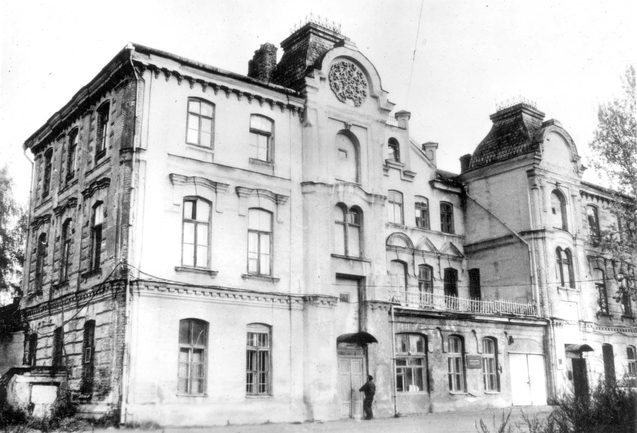
The Yeshivat Chachmei Lublin opened in 1930 as one of the most ambitious Orthodox institutions in interwar Europe. Its building still marks the city as a place where study remained public and proud even after the old council system had vanished.
Jewish Virtual Library; Lublin heritage recordsThe fairground lesson
Lublin matters because it shows Jewish self-rule in action. It was practical before it was romantic.
Some towns host fairs. Lublin hosted a people learning to govern itself.