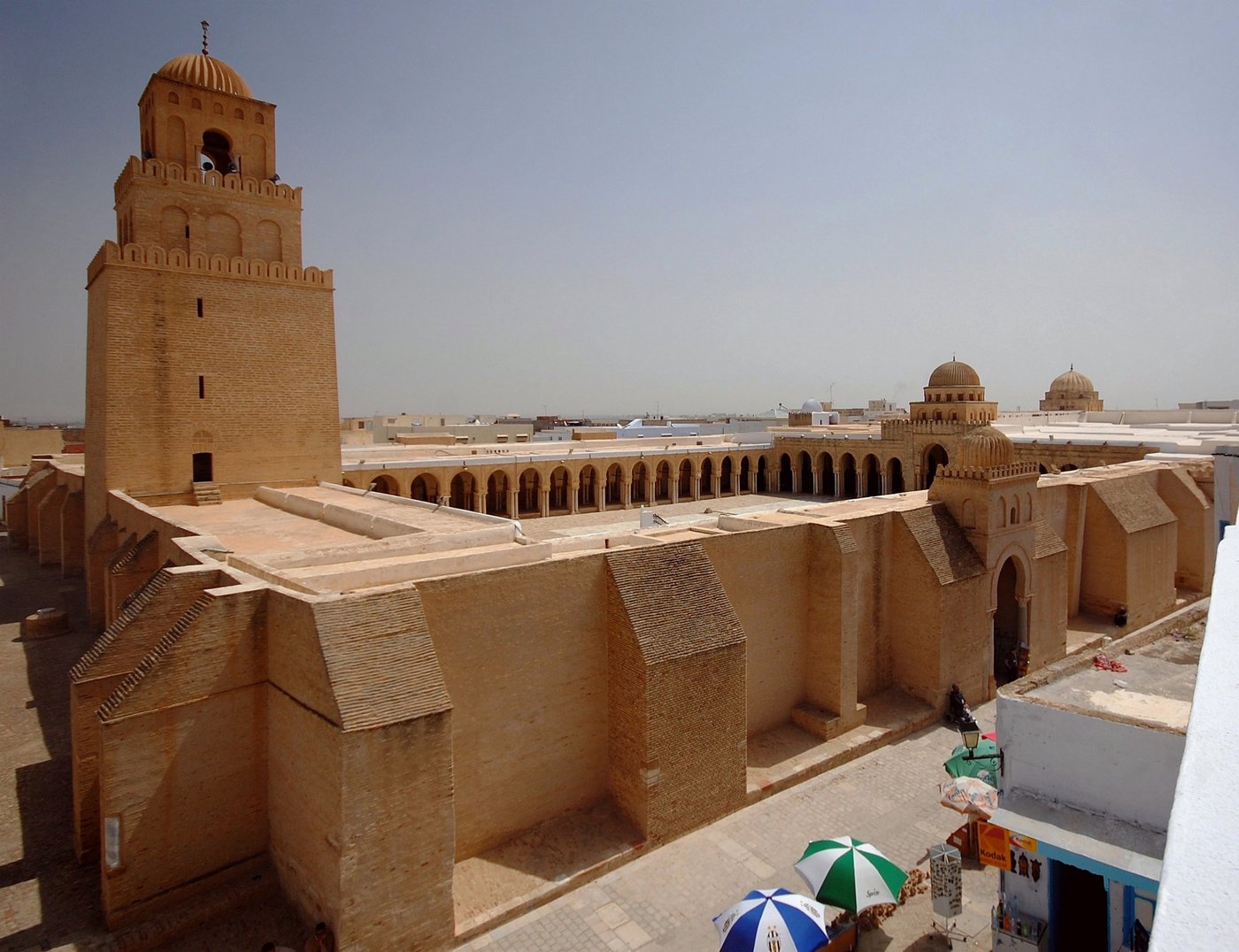
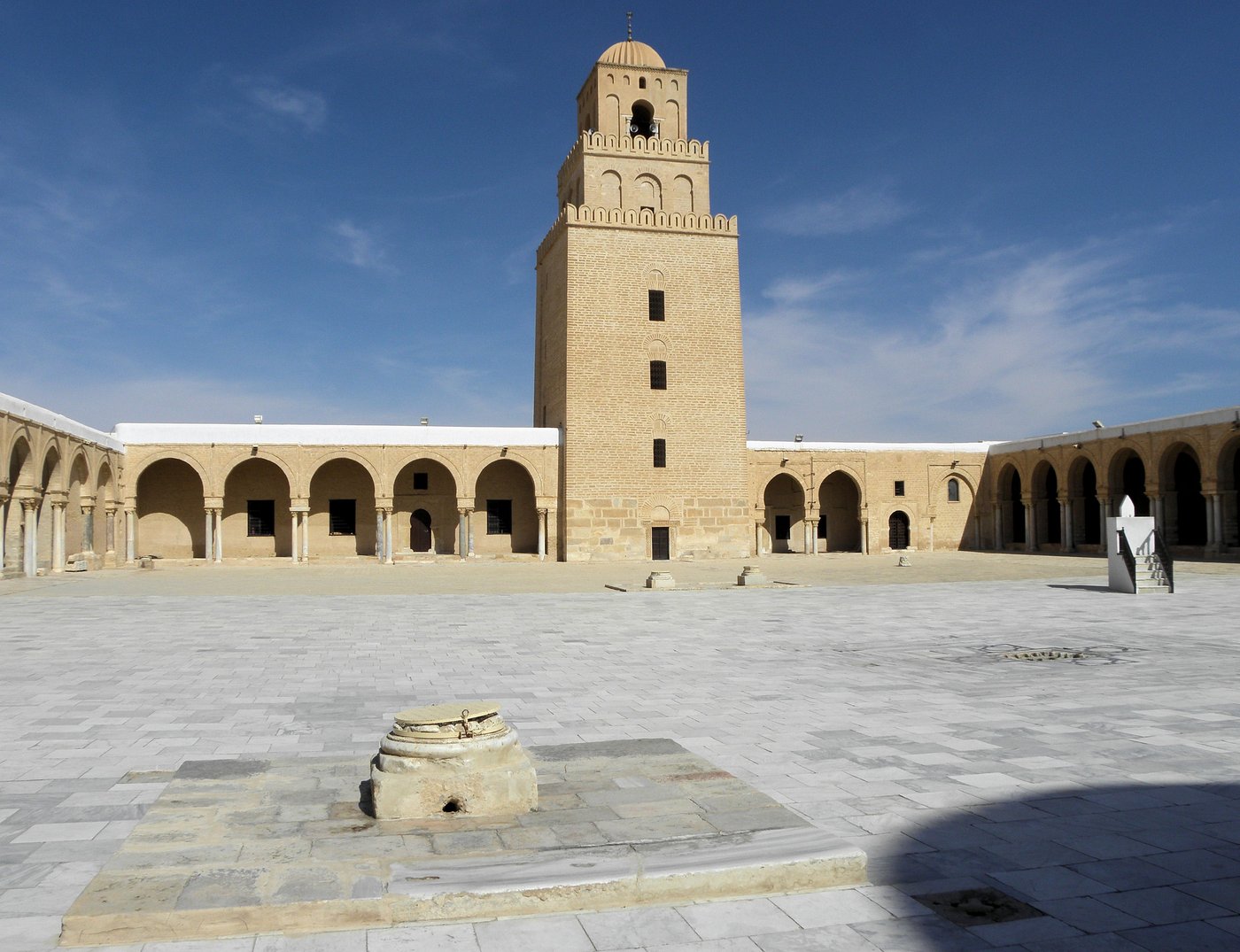
He arrived, as the best news always does, from the direction no one was watching. Sometime in the latter half of the ninth century a man named Eldad turned up in the Jewish community of Kairouan, in what is now Tunisia, and announced that he came from the tribe of Dan - not the community of Dan, not the town of Dan, but the ancient tribe itself, exiled beyond the rivers of Cush and living there, fully Jewish, fully free, under their own judges and their own law. He had a Hebrew dialect no one quite recognised. He had legal rulings that differed from the Babylonian norm. He had stories of Naphtali, Gad, and Asher living nearby, and of the sons of Moses - the Bene Moshe - dwelling behind the legendary river Sambatyon, which rested only on the Sabbath and roared with stones the rest of the week. The community of Kairouan was transfixed. They wrote immediately to the great Gaon of Babylon, Tzemach ben Hayyim, and asked: is this man telling the truth? Is any of this possible?
The Gaon wrote back with something more interesting than a flat answer. He treated Eldad's legal variations with careful attention - some he endorsed, some he flagged as diverging from Talmudic practice - and concluded that the whole account was broadly credible. This was not naivety. It was the communal mind doing what it always does: taking the story seriously enough to examine it, and finding that the examination itself was worth having. Whether Eldad's tribe had truly been sitting beyond the rivers since the Assyrian deportations, or whether he was a brilliant eccentric or a deliberate emissary from some real but more ordinary Jewish community further south, the response of the Gaonate was to engage - to treat the question of far Jewish survival as worth the ink.
The record
The letter from the Kairouan community to Gaon Tzemach ben Hayyim of the Sura academy, and Tzemach's reply, survive in the Cairo Geniza and in later manuscript copies. The interchange is dated by scholars to approximately 880-883 CE. Tzemach's responsum addresses Eldad's variant slaughter laws in detail, comparing them to Babylonian practice and noting specific divergences - evidence that the Gaon found the halakhic content substantive enough to analyse rather than dismiss. The text is discussed extensively by Abraham Epstein in his 1891 edition of the Eldad texts, Eldad ha-Dani, published in Pressburg, which remains the critical starting point for the primary sources.
What Eldad set in motion was not a geographical question but a theological one - or rather, a tribal one. The Lost Tribes were not lost in the sense of gone. They were lost in the sense of out of contact. The distinction mattered enormously to a people who understood themselves as a family, not merely a faith community. If Dan was out there - fighting their own wars, slaughtering their own animals according to their own inherited tradition, sitting under their own kings - then exile was a condition, not a destiny. The exile could end because it had never been total. The Sambatyon, resting on the Sabbath as if it too kept the law, became one of the most persistent images in Jewish thought not because people were credulous but because they were paying attention: even the rivers, the story said, were not free of obligation. Even the geography of separation was halakhic.
The record
The Sefer Eldad - the Book of Eldad - circulated in Hebrew across North Africa, Spain, and the Rhineland throughout the tenth and eleventh centuries, making it one of the earliest widely-copied vernacular-Hebrew travel narratives. Over fifteen manuscript recensions are known, with significant variants between them, suggesting active copying and adaptation rather than passive transmission. Judah ibn Tibbon's circle in twelfth-century Provence knew the text. So did Abraham ibn Ezra, who cites Eldad's slaughter laws in his Torah commentary on Leviticus. The manuscript tradition is surveyed in Elkan Nathan Adler's Jewish Travellers (Routledge, 1930), which prints the Hebrew alongside translation.
The tribes have never entirely stopped arriving. In each century some community has appeared - Beta Israel in Ethiopia, the Bnei Menashe of Mizoram, the Bene Ephraim of Andhra Pradesh - bringing with them practices that echo something very old and raising again the same question Kairouan asked in 880: is this possible? The answer has always been: let's look carefully. Let's write to the Gaon. The instinct to take the far claim seriously, to examine it rather than dismiss it, is the Eldad legacy - not the Sambatyon, not the warrior Danites, but the habit of treating the question of dispersed Jewish survival as worthy of the most careful attention the community could bring to bear. Eldad arrived from the edges and the centre responded. That is how a living tribe behaves.