The Jebusites were confident. Their city sat on a narrow limestone spur between the Kidron and Tyropoeon valleys, ringed by walls that had never been breached. When David came with his army they mocked him from the battlements: the blind and the lame could hold this place, they said. It was a taunt designed to sting - and it may have cost them everything.
David had been king of Judah at Hebron for seven years when the northern tribes at last anointed him king over all Israel (2 Samuel 5:1-5). He needed a capital that belonged to no single tribe, a city outside the old territorial assignments that could be his own. The Jebusite stronghold on Zion was perfect - ancient, formidable, contested by nobody in his coalition because nobody had ever managed to take it. When he took it, it became the City of David by right of conquest, and the whole story pivoted.
The record
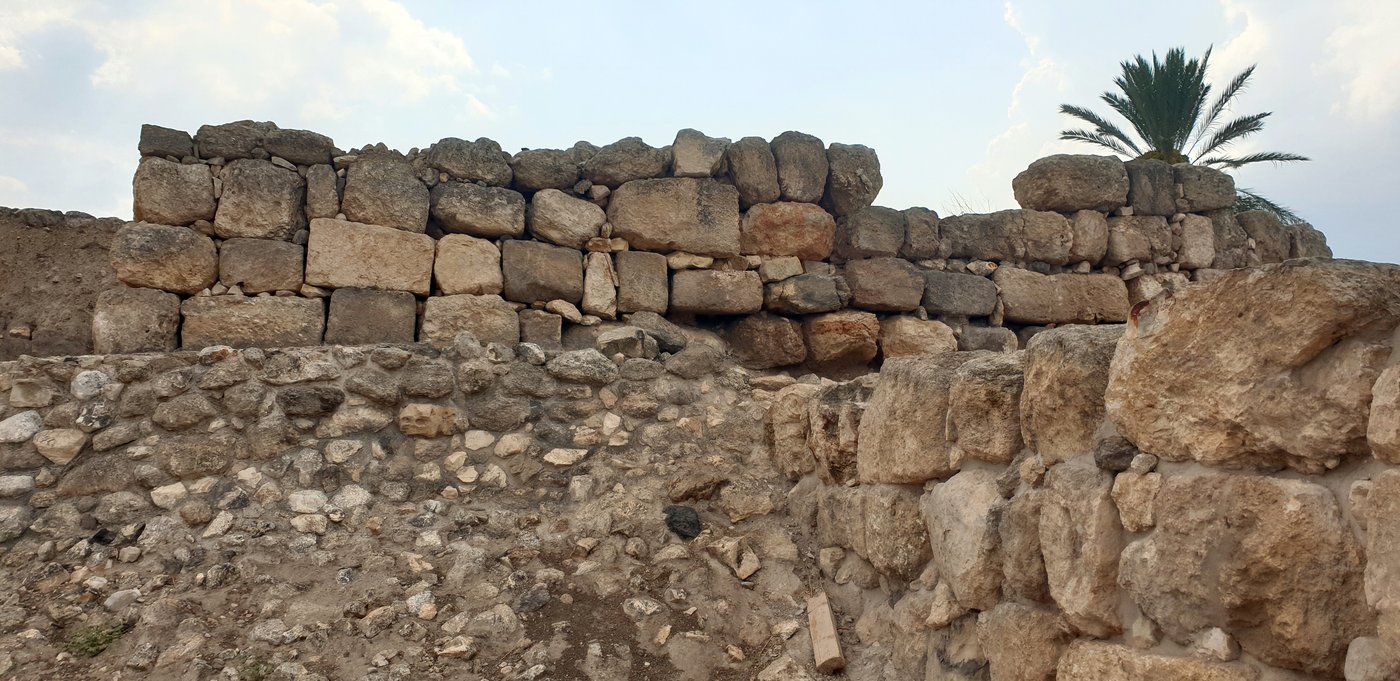
2 Samuel 5:6-9 records that David captured "the stronghold of Zion" and renamed it the City of David. The key to the assault may be the tsinnor - a Hebrew word translated variously as "water shaft" or "gutter" - which David instructs his men to use to enter the city. The 1867 survey by British engineer Charles Warren identified a vertical shaft inside the ancient city walls that gave access to the Gihon Spring below; this became known as Warren's Shaft. Archaeologists including Eilat Mazar (excavations 1997-2008, reported in Preliminary Report on the Area G Excavations, Shalem Press, 2007) identified the Late Bronze Age/Iron Age I fortification line on the City of David spur as the most plausible setting for this account.
What David did next was as shrewd as the assault itself. He brought the Ark of the Covenant up to Jerusalem in a great procession - the tribal palladium, the physical focus of covenant memory, now installed in his new capital. The city became at one stroke the seat of the king and the dwelling-place of the Ark. Political centre and sacred centre were fused, and they have never fully come apart in the Jewish imagination. Every prayer since that faces toward Jerusalem, every lament for its destruction, every vow to rebuild - all of it runs back to the moment David chose this ridge and made it ours.
The record
Archaeological work on the City of David spur has produced evidence of substantial Iron Age II construction, though the precise footprint of David's own building programme remains debated. The "Large Stone Structure" uncovered by Eilat Mazar in Area G and published in the Biblical Archaeology Review (September/October 2006) was proposed as part of David's palace complex, based on its stratigraphic position and associated pottery. The adjacent "Stepped Stone Structure" - a massive terraced retaining wall - is dated by ceramic evidence to the Iron Age I-II transition (roughly 1000 BCE), consistent with the biblical account of David's construction activity (2 Samuel 5:9, 11). Yigal Shiloh's earlier excavations (1978-1985, published as Excavations at the City of David I, Hebrew University, 1984) established the basic stratigraphic framework all subsequent work builds on.
The Jebusites did not vanish. David bought the threshing floor of Araunah the Jebusite as the site for an altar (2 Samuel 24:18-24) - the ridge just north of his citadel, the very ground where Solomon would later build the Temple. The city absorbed its former owners. This is how David governed: he took what was unconquerable and made it home, then kept building upward from that foundation, in every sense.
The record
The Siloam Tunnel - the 533-metre rock-cut channel that carries the Gihon Spring's water to the Pool of Siloam on the western side of the City of David spur - is inscribed with the Siloam Inscription, one of the oldest surviving examples of Hebrew script. The inscription records the moment the two teams of tunnellers, working from opposite ends, heard each other's pickaxes and broke through. It is attributed on epigraphic grounds (letter forms consistent with late 8th century BCE) and by 2 Kings 20:20 to King Hezekiah, not David, but it demonstrates the sustained significance of this water system across three centuries of Davidic rule. The original inscription is held at the Istanbul Archaeology Museum (inv. no. 2055T); a cast is displayed at the Israel Museum, Jerusalem.
One ridge, one shaft, one decision about where to bring the Ark - and Jewish geography was set for three thousand years. Jerusalem became the place the story keeps returning to not because of its size or its wealth, but because David made it the place where power and holiness were required to answer to one another. That demand has not faded. It still organises the calendar, the prayer, the longing.