The chain of transmission that opens the Mishnaic tractate Avot - the "Ethics of the Fathers" - begins with Moses and works its way forward through the generations, naming who passed the Torah to whom. By the time it reaches the early Second Temple period, it arrives at Antigonus of Sokho, student of Shimon the Righteous and one of the last figures in that list before the tradition branches into pairs of scholars, the zugot. His place in the chain is not an administrative footnote. It is a claim about continuity: that the wisdom handed down from Sinai came through him, intact, into the new world of post-exilic Judaism. Antigonus is the bridge between the High Priestly authority of the early return from Babylon and the rabbinic culture that would carry the people through everything that followed.
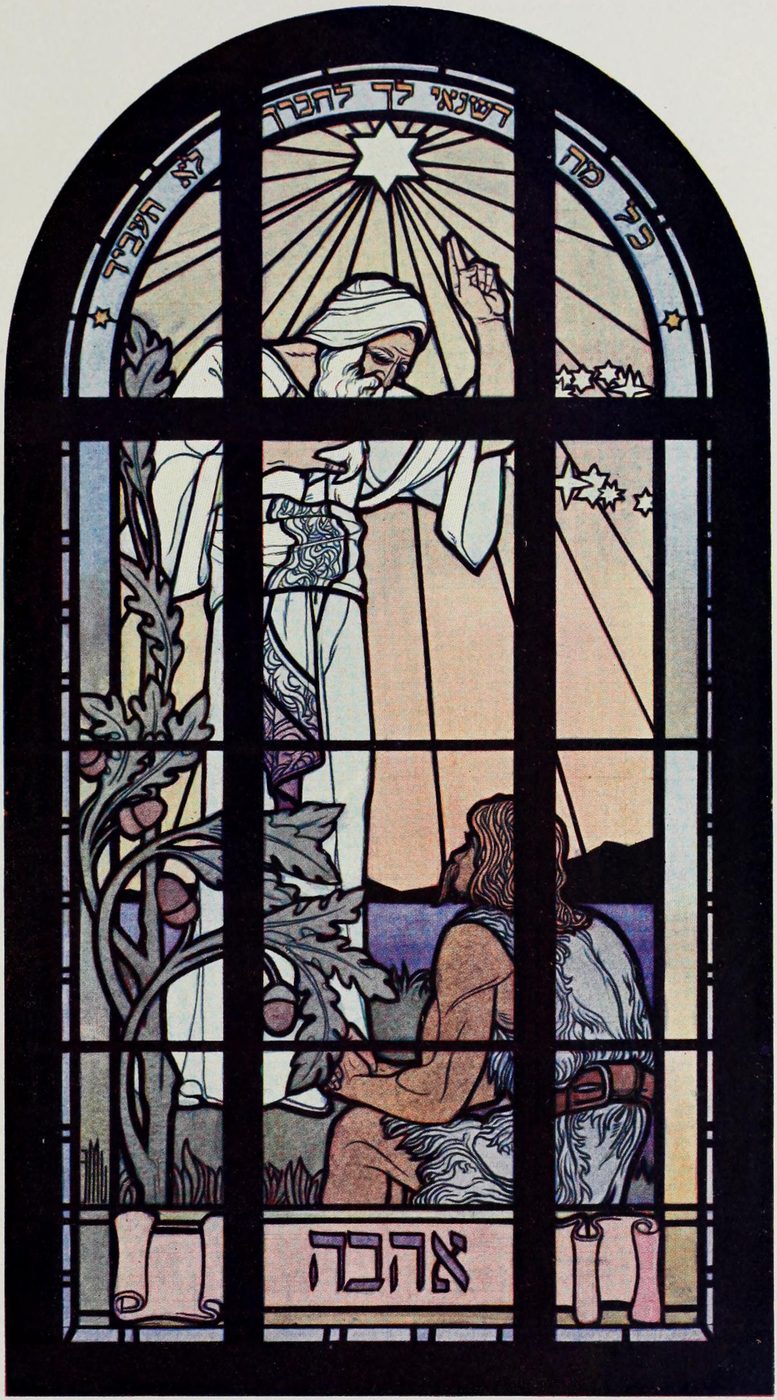
He is remembered for one teaching. Avot 1:3 records it in full: "Be not like servants who serve their master for the sake of receiving a reward, but be like servants who serve their master not for the sake of receiving a reward; and let the fear of Heaven be upon you." It is, on its face, a straightforward ethical instruction. Service should be its own discipline. Virtue should not be transactional. Work as though the act itself is the whole point, because love and reverence - not calculation - are what a servant of heaven brings to the relationship. Antigonus was teaching his students to locate their motivation inside themselves rather than in the expectation of return. It is a demanding ideal, and an admirable one.
The record
The sole surviving teaching of Antigonus of Sokho is preserved in Mishnah Avot 1:3, redacted by Rabbi Yehuda HaNasi c. 200 CE. The tractate Avot - tractate of the Fathers - is part of the order Nezikin in the Mishnah and is the primary source for the chain of rabbinic transmission stretching from Moses at Sinai through the pairs (zugot) of the Second Temple period. Antigonus is placed immediately after Shimon the Righteous (Simon the Just), who held the office of High Priest and is himself a figure noted by Josephus in his Antiquities of the Jews (Book XII). This sequence gives Antigonus a firm chronological anchor in the early-to-mid third century BCE, with his active teaching period usually estimated at c. 200-175 BCE by scholars such as Lawrence Schiffman (Texts and Traditions, KTAV, 1998).
The tradition records what happened next, and it is one of the stranger hinge-points in Jewish intellectual history. Antigonus had two students, named in the medieval text Avot de-Rabbi Natan as Tzadok and Boethus. They took their teacher's words and heard a different logic in them. If there is no reward, they reasoned, then there is no world to come - because why would a teacher demand servants work without hope of reward unless no reward existed? The inference is not the only possible one, and it is almost certainly wrong as a reading of Antigonus's intention, but it lodged. According to later tradition, Tzadok and Boethus each gathered disciples around this reading, and those disciples became, over time, two of the most consequential movements in Second Temple Judaism: the Sadducees and the Boethusians. Both movements rejected the oral Torah and denied the resurrection of the dead. Whether the etymology of "Sadducee" (Tzdukim) genuinely traces to Tzadok the student of Antigonus, or to the priestly line of Tzadok from the First Temple, is debated by scholars - but later rabbinic tradition in Avot de-Rabbi Natan confidently attributes the split to this misreading.
The record
The account of Tzadok and Boethus as students of Antigonus who misread his teaching appears in Avot de-Rabbi Natan, Chapter 5 (version A), a tannaitic midrash on Avot that was compiled and redacted over several centuries, with the relevant material likely crystallised by the early Amoraic period (third-fourth century CE). The text is preserved in manuscript and was edited critically by Solomon Schechter (Schechter, S., Aboth de-Rabbi Nathan, Vienna, 1887; republished New York, 1945). The debate over the etymology of "Sadducee" - whether it derives from Tzadok the student or from the Zadokite priestly line - is surveyed in detail by Albert Baumgarten ("The Name of the Pharisees", Journal of Biblical Literature, Vol. 102, No. 3, 1983) and remains unresolved. Both derivations are treated seriously in the scholarly literature.
There is something worth sitting with in this story. Antigonus was teaching integrity - work without calculation, serve without keeping score. His students transformed that teaching into a denial of the future. The Talmud does not present this as proof that Antigonus was wrong. It presents it as a lesson in how transmission can go awry, and in why the oral Torah matters: because a text alone, separated from the living tradition of interpretation, can be read almost any way. The teaching that began as an argument for purity of motive became, in two sets of hands, the foundation of a theological movement that the mainstream of Judaism spent centuries distinguishing itself from. Antigonus himself, the chain of Avot insists, belongs firmly in that mainstream - the link between Shimon the Righteous and the zugot. He taught what he taught. What his students made of it is a different story, and one the tradition has kept the receipts on ever since.
Antigonus of Sokho left one sentence. It has been studied, argued over, and built upon for more than two thousand years. That a single maxim about the motivation of service could splinter a movement, shape a theological controversy, and still be read aloud in synagogues each Shabbat - that is its own kind of answer to the question he posed. The tradition he passed on kept moving. The chain held.