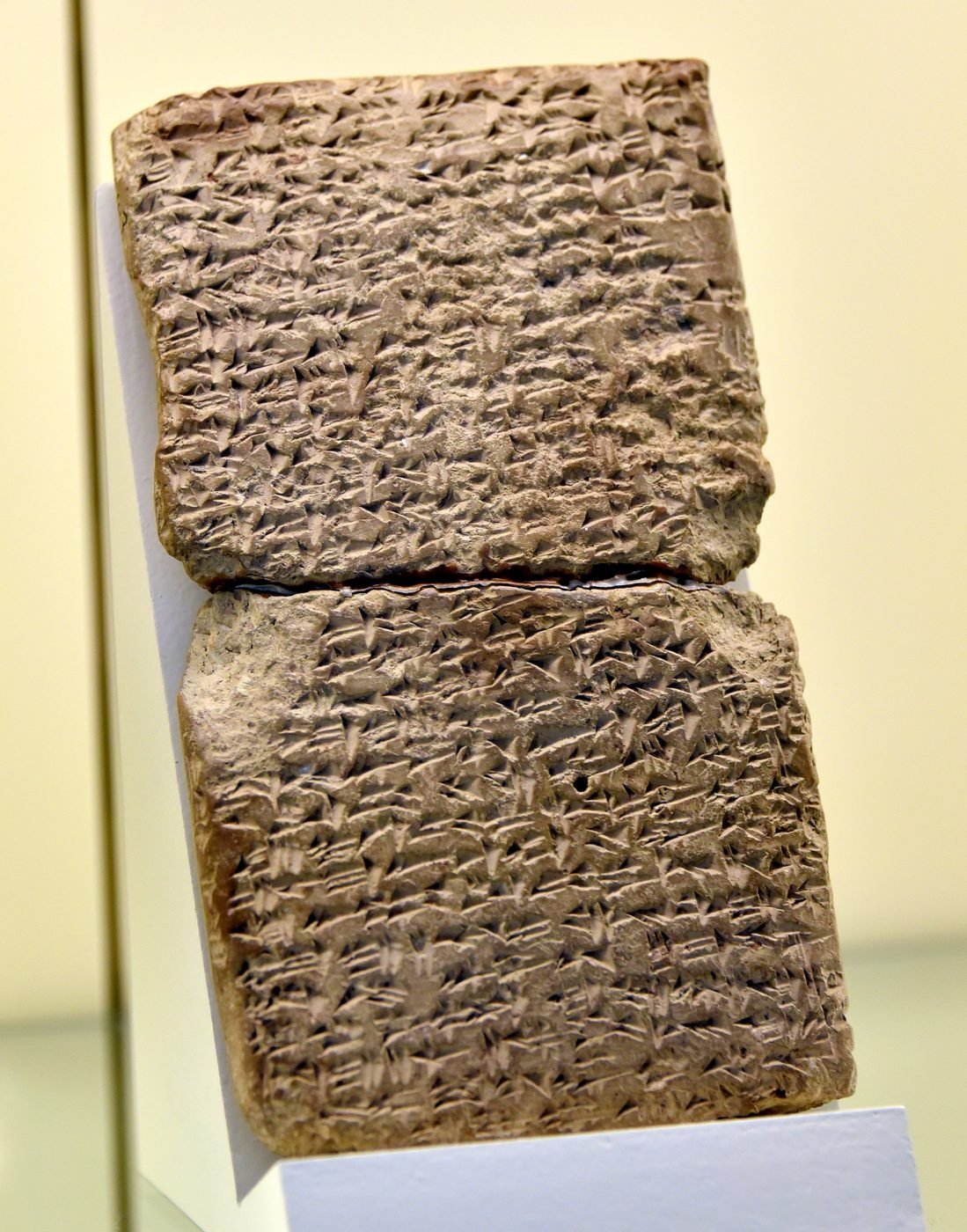
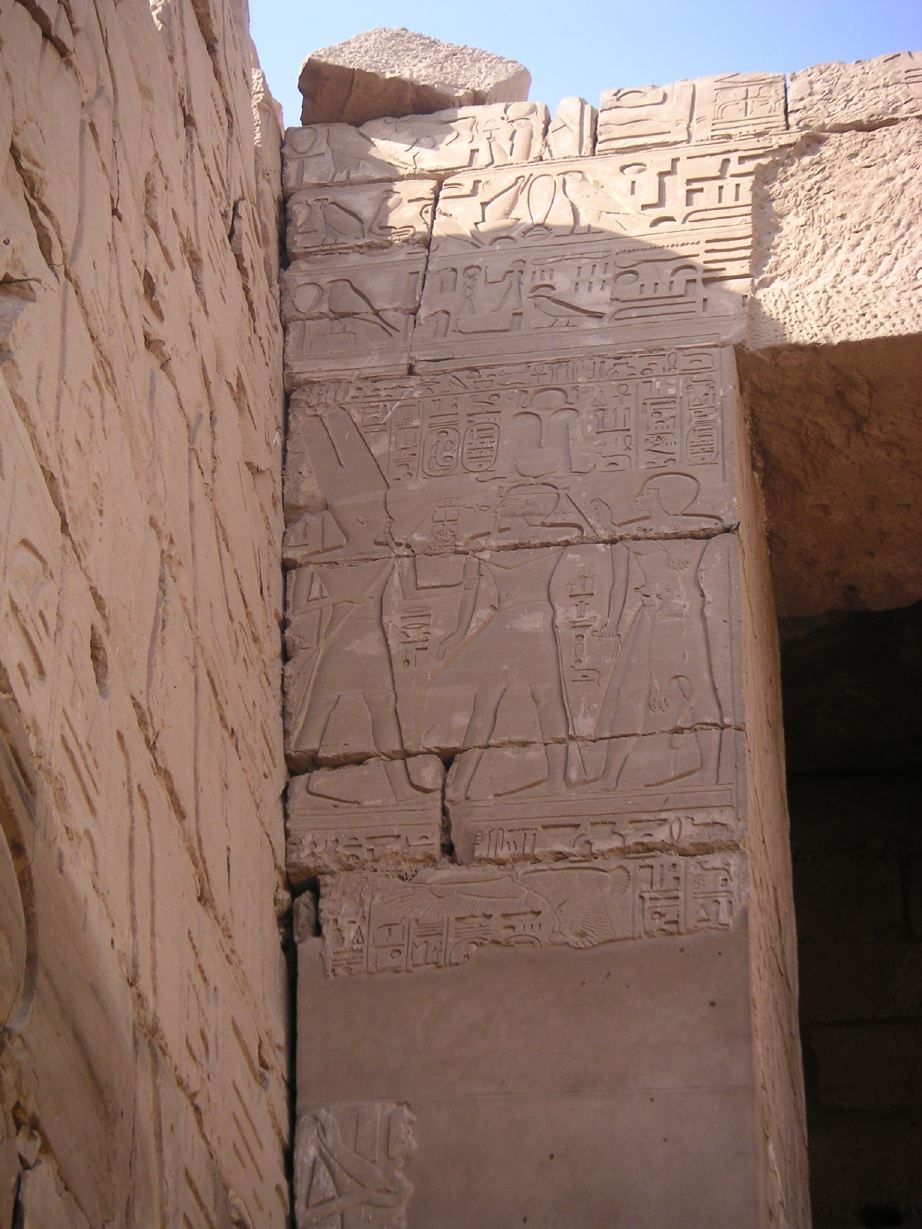
Somewhere in the turquoise mines of the Sinai peninsula, around 1700 BCE, a Semitic worker picked up a sharp stone and scratched a mark into the rock. Perhaps it was an ox-head, turned on its side. Perhaps it was a house. Perhaps it was a hand, or a water-line, or a mouth. The Egyptian overseers used hieroglyphs for their official inscriptions - thousands of signs, each requiring years of training, the exclusive property of scribes. What this worker cut was different: a small set of borrowed pictures, each standing not for a whole word or a concept but for a sound. A consonant. A letter. It was not, at that moment, understood to be one of the most consequential inventions in human history. It was probably a dedication to a goddess, scratched by someone who wanted to leave his name in the mountain.
The place was Serabit el-Khadim, a plateau in the southwestern Sinai where Egypt ran turquoise-mining operations for centuries, using Semitic labourers alongside Egyptian officials and soldiers. The workers were not Egyptian. They spoke a Semitic language - ancestral to Phoenician, to Hebrew, to Arabic, to every Semitic tongue that followed. They could see the hieroglyphs carved by their overseers; they understood, at least intuitively, the principle that marks on stone could carry speech. What they did was audacious in its simplicity: they stripped the system down. One sound, one sign. Twenty-odd symbols instead of hundreds. A writing system that anyone could learn.
The record
The proto-Sinaitic inscriptions were first discovered at Serabit el-Khadim in 1905 by the British Egyptologist Sir William Matthew Flinders Petrie during his survey of the site. Petrie recognised them as distinct from both hieroglyphics and any known Semitic script, and published them in his 1906 report "Researches in Sinai." The corpus currently stands at around forty inscriptions, carved on stone surfaces, stelae, and small votive objects. The key decipherment was advanced by the Semitist Alan Gardiner in 1916 (Journal of Egyptian Archaeology, vol. 3), who identified the acrophonic principle - each sign is a picture whose Semitic name begins with the sound the sign represents: 'aleph (ox), bet (house), gimel (camel or throw-stick), and so on - the same sequence preserved in the Hebrew, Greek, and ultimately Roman alphabets. One of the most important single objects is the Serabit sphinx (British Museum, EA41748), a small sandstone votive sphinx bearing a proto-Sinaitic inscription on its base that Gardiner read as containing the name of the Semitic goddess Ba'alat.
The acrophonic principle is almost absurdly elegant. The workers did not need to learn a new abstract symbol for each sound; they took pictures they already knew and used the first sound of the object's name as the value of the sign. The word for ox in their language was something like 'aleph - so the ox-head became the sign for the glottal stop that begins it. The word for house was bet - so a floor-plan of a house became the sign for 'b'. The word for water was mem - a wavy line became 'm'. The signs evolved, rotated, simplified across centuries: the ox-head turned upside down to become the Greek alpha, then the Roman A. The Semitic workers at Serabit el-Khadim were not, so far as we know, trying to make history. They were trying to leave a mark. They succeeded in ways that would have astonished them.
The record
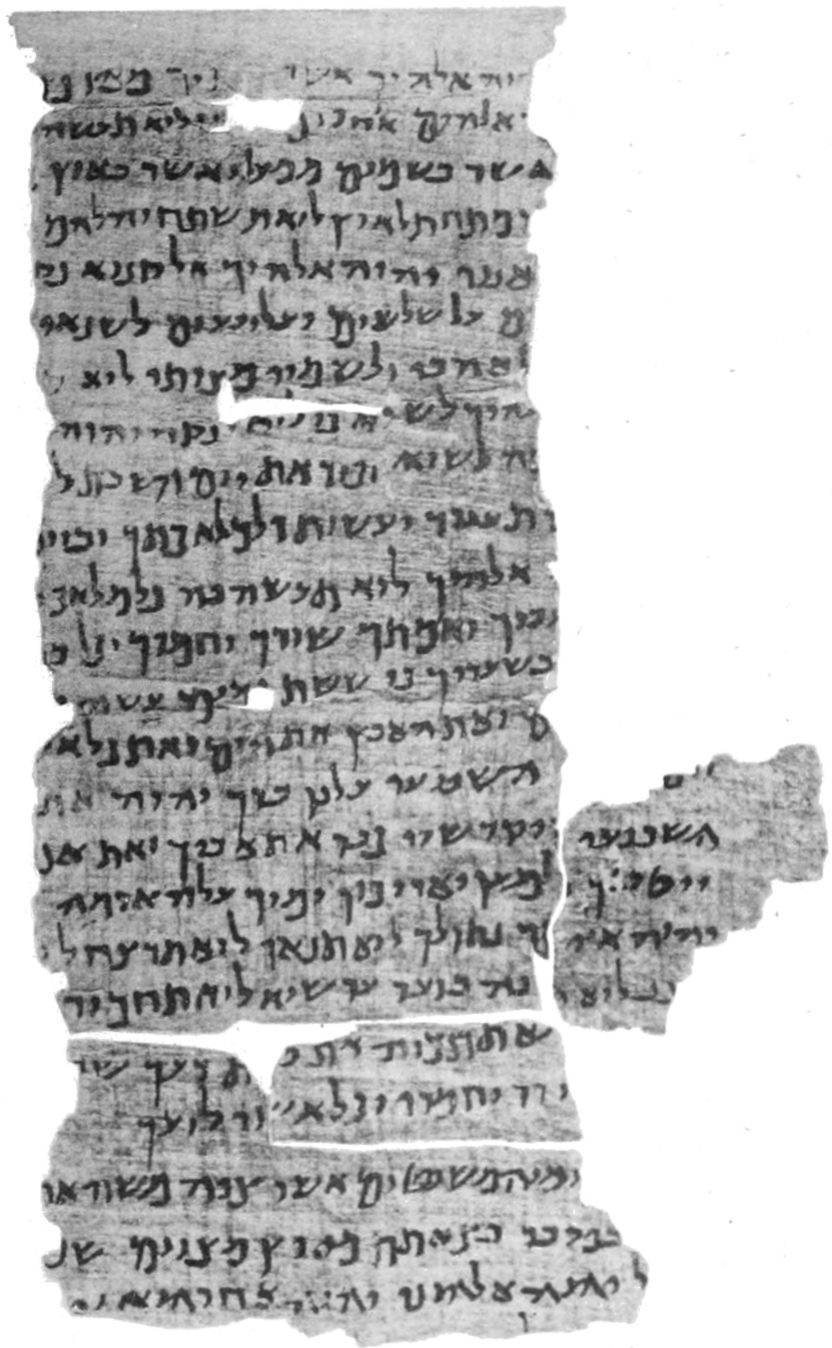
The transmission line from proto-Sinaitic to the Hebrew alphabet is traced through the Phoenician alphabet, which is attested from around 1050 BCE onwards in inscriptions across the Levant. The oldest securely dated multi-letter Phoenician inscription is the Ahiram sarcophagus from Byblos, Lebanon, dating to the eleventh or tenth century BCE (National Museum of Beirut). The Hebrew alphabet, sharing the same letter-names and order - aleph, bet, gimel, dalet - is a direct descendant. This is confirmed by the Izbet Sartah abecedary, a pottery shard inscribed with a proto-Hebrew alphabet sequence found at Izbet Sartah in Israel's Samaria foothills, dated to around 1200-1000 BCE (Israel Antiquities Authority). The letter order that generations of Jewish children learn as their aleph-bet is the same sequence that Semitic miners scratched into turquoise-mine rock in Sinai three and a half thousand years ago.
The Greeks adopted the Phoenician alphabet in the ninth or eighth century BCE, added vowel signs to the consonantal skeleton, and passed it westward. Latin took it from an Etruscan intermediary. The alphabets in common use today that descend from Phoenician - Latin, Greek, Cyrillic, Arabic, Hebrew - carry a distant memory of that Sinaitic invention. We do not know the name of the person who first scratched the ox-head for 'aleph into the Sinai sandstone. We do not know whether it was a single mind or a community working the idea out over generations. What we know is that the idea came from the Semitic world, in a mining camp in the desert, under the shadow of Egyptian power. The tribe that would later write Torah in that script was not yet Israel in the biblical sense, but the letters were already theirs.
There is something fitting about the fact that the alphabet was invented not in a palace or a temple but in a mine - by workers who had every reason to want a writing system simple enough to use without a scribe standing over their shoulder. The inscriptions at Serabit el-Khadim are not grand proclamations. They are dedications, names, small prayers. People leaving a record of themselves in rock. It worked beyond any reasonable expectation. The marks are still legible, in the letter on your screen, in the prayer book on the shelf, in every word set down in any alphabet anywhere on earth.